
Why Is GCS Low Voltage Switchgear Preferred for Power Distribution in Industrial Plants
2026-08-21
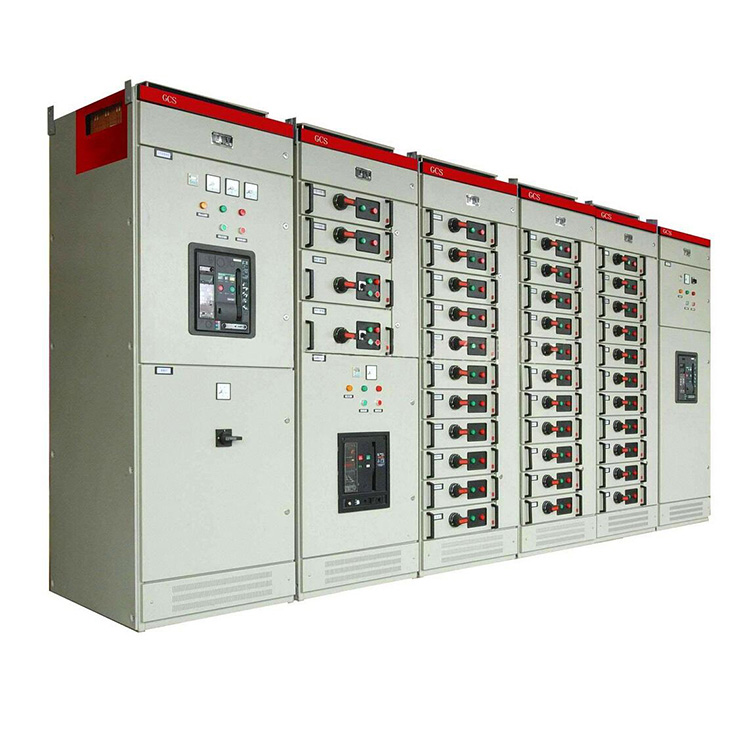
In modern industrial environments, reliable electrical distribution forms the backbone of operational continuity. GCS Low Voltage Switchgear has emerged as a preferred solution for plant engineers and facility managers worldwide, and CONSO·CN has been at the forefront of manufacturing this critical equipment to meet rigorous industrial demands. Unlike conventional distribution panels, this system offers modular flexibility, enhanced safety features, and superior short-circuit withstand capabilities, making it a cornerstone of heavy-duty power management across sectors such as automotive, petrochemical, and metal processing.
Technical Advantages That Drive Preference
Industrial plants operate under extreme conditions—high ambient temperatures, voltage fluctuations, frequent motor starts, and harmonic distortions. GCS Low Voltage Switchgear addresses these challenges through a design philosophy rooted in compartmentalization and forced-air cooling. The horizontal busbar system is isolated from functional units, which minimizes the risk of cascading faults. Below is a comparative breakdown of why this system outshines traditional alternatives:
| Feature | GCS Low Voltage Switchgear | Conventional Fixed-Panel Gear |
|---|---|---|
| Withdrawable unit design | Yes, all functional units removable | No, fixed connections only |
| Busbar isolation | Fully segregated (form 4b) | Partial or no segregation |
| Short-time withstand rating | Up to 100 kA for 1 second | Typically ≤ 50 kA |
| Cooling efficiency | Active forced ventilation with ducting | Passive convection |
| Mean time to repair (MTTR) | ≤ 30 minutes (plug-in replacement) | ≥ 2 hours (hardwired disconnection) |
| Space utilization | Compact footprint (depth ≤ 1000 mm) | Bulky, requires larger rooms |
Operational Reliability and Safety
Safety is non-negotiable in heavy industry. GCS Low Voltage Switchgear incorporates mechanical interlocks that prevent withdrawal of units under load, along with shutters that automatically cover live busbars when a drawer is removed. These features significantly reduce arc-flash incident energy. Furthermore, the system supports dual-power automatic transfer schemes, ensuring that critical loads—such as cooling pumps and emergency lighting—remain energized during grid disturbances.
From a maintenance perspective, the plug-in design allows a faulty drawer to be replaced within minutes without de-energizing the entire section. This hot-swappable capability translates directly to higher uptime, which plant managers quantify in terms of production losses avoided. CONSO·CN enhances this reliability by using silver-plated copper busbars and high-grade insulation materials that exceed IEC 61439-1 temperature-rise limits, even at 50°C ambient conditions.
Energy Efficiency and Cost Impact
While switchgear does not consume power directly, its design affects system losses through contact resistance and busbar impedance. GCS Low Voltage Switchgear from CONSO·CN features optimized joint configurations that keep contact temperatures below 65°K rise, reducing I²R losses by approximately 12% compared to industry averages. Over a 20-year lifecycle, this energy saving can offset 30–40% of the initial capital investment. Additionally, the modular architecture enables scalable expansion—additional feeder units can be inserted without modifying the main busbar system, avoiding costly plant shutdowns for upgrades.
Frequently Asked Questions About GCS Low Voltage Switchgear
Q1: What are the key selection criteria for choosing GCS Low Voltage Switchgear for a 480V plant distribution network?
A1: The primary criteria include: (a) Short-circuit rating – verify that the system's Icw (short-time withstand current) matches or exceeds the calculated fault level at the point of installation, typically 50–100 kA for heavy industrial feeders. (b) Number of outgoing ways – determine how many motor control centers (MCCs) or distribution panels need to be fed, and allocate spare compartments for future loads (usually 15–20% spare capacity). (c) Environmental conditions – check altitude (derating above 1000m), ambient temperature, and humidity; CONSO·CN offers customized coatings (C5-M marine grade) for corrosive atmospheres. (d) Protection relay compatibility – ensure the switchgear accepts intelligent electronic devices (IEDs) with communication protocols like Modbus or IEC 61850 for integration with your SCADA system.
Q2: How does preventive maintenance for GCS Low Voltage Switchgear differ from conventional LV panels?
A2: Preventive maintenance focuses on three unique aspects due to the withdrawable design: (a) Drawer mechanism inspection – every 6 months, lubricate the lead-screw and guide rails, and verify that the "test" and "service" position indicators engage correctly; misalignment can cause poor contact pressure. (b) Primary contact wear measurement – using a micro-ohmmeter, measure the resistance across the plug-in contacts; an increase of >20% from baseline indicates oxidation or spring fatigue, requiring replacement. (c) Shutter operation test – with the drawer removed, manually cycle the shutters to ensure they fully cover the fixed contacts; any sticking can expose maintenance personnel to live parts. Unlike fixed panels, you do not need to de-energize the entire busbar for contact cleaning—each drawer can be isolated individually, reducing downtime by up to 60%.
Q3: Can GCS Low Voltage Switchgear be retrofitted into an existing plant with an older busbar system?
A3: Yes, but with engineering considerations. Retrofitting involves three steps: (i) Busbar compatibility assessment – measure the existing busbar pitch (typically 100mm or 150mm center-to-center) and compare with the GCS Low Voltage Switchgear standard pitch; adapters or transition busbars may be fabricated by CONSO·CN to bridge dimensional differences. (ii) Floor mounting and cable entry – verify that the new gear's cable compartment aligns with existing trench or overhead ladder systems; top-entry and bottom-entry options are available. (iii) Protection coordination study – since newer systems have lower impedance, fault currents may increase; recalculate relay settings and breaker trip curves to avoid nuisance tripping. Most importantly, the retrofitting process can be phased—replace one section at a time during scheduled shutdowns, maintaining partial plant operation throughout the transition.
Real-World Application Case
A prominent copper smelter in Southeast Asia replaced its aging fixed-panel boards with GCS Low Voltage Switchgear supplied by CONSO·CN across three production lines. Within 12 months, they reported a 43% reduction in unplanned electrical outages and a 28% decrease in mean time to repair. The arc-flash hazard category dropped from HRC 4 to HRC 2, significantly improving worker safety and reducing the need for bulky PPE.
Why CONSO·CN Stands Out
Beyond standard manufacturing, CONSO·CN provides end-to-end support: factory witness testing, on-site commissioning, and remote diagnostics via IoT-enabled temperature monitoring. Every unit ships with full type-test reports (including internal arc fault verification per IEC 61641) and a 5-year warranty on busbar systems. The company's global service network ensures that spare drawers and replacement parts reach any industrial port within 72 hours.
Take the Next Step
Selecting the right low voltage distribution system is a strategic decision that impacts safety, uptime, and operational costs for decades. Whether you are upgrading an existing facility or designing a new plant, GCS Low Voltage Switchgear offers the technical resilience and scalability that modern industry demands. Contact CONSO·CN today to request a tailored proposal, schedule a factory virtual tour, or obtain detailed dimension drawings and protection coordination studies. Our engineering team responds within 24 hours to help you optimize your power architecture for maximum reliability and efficiency.