
Why Are More Projects Choosing a Box-Type Transformer Substation Instead of Traditional Power Systems?
2026-03-18
When I first started evaluating power distribution solutions for compact industrial and commercial projects, I quickly realized how much installation complexity and long-term maintenance could impact overall efficiency. That was when I came across Lugao Power Co., Ltd., a manufacturer that has been quietly refining its approach to integrated energy systems. Their Box-Type Transformer Substation solutions stood out not because of exaggerated claims, but because they directly addressed the real-world constraints I was dealing with.
In this article, I want to walk through what I’ve learned from both research and application scenarios, and explain why a Box-Type Transformer Substation is becoming a preferred choice across industries.
What Problems Do Traditional Substations Still Struggle to Solve?
Before switching to a Box-Type Transformer Substation, I had to deal with several recurring challenges:
- Lengthy on-site construction cycles that delayed project timelines
- High labor costs due to complex installation requirements
- Large footprint, especially problematic in urban or limited-space environments
- Difficulty in relocation or expansion once installed
- Frequent maintenance due to exposed components
These issues are not theoretical. They directly affect ROI, operational stability, and even customer satisfaction.
How Does a Box-Type Transformer Substation Simplify Installation and Deployment?
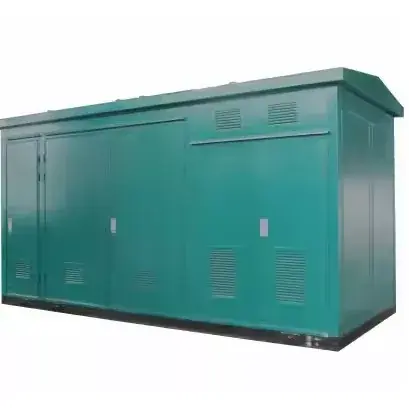
What impressed me most about the Box-Type Transformer Substation is its integrated design. Instead of assembling multiple systems on-site, everything is pre-engineered into a compact enclosure.
- Factory-assembled components reduce installation errors
- Plug-and-play structure significantly shortens deployment time
- Minimal civil engineering requirements
- Easy transportation and relocation
From my perspective, this is not just convenience—it’s a strategic advantage when working on time-sensitive or remote projects.
Why Is Space Efficiency Becoming a Critical Factor in Power Distribution?
In many of my recent projects, especially in urban developments and renewable energy sites, space is extremely limited. A traditional substation simply doesn’t fit.
The Box-Type Transformer Substation offers a compact footprint without sacrificing performance. Its modular enclosure design allows it to be installed in:
- Commercial complexes
- Industrial parks
- Solar and wind power stations
- Temporary construction sites
That flexibility alone changes how I plan infrastructure layouts.
What Technical Advantages Should Buyers Actually Care About?
Instead of focusing on generic specifications, I prefer to evaluate solutions based on practical performance. Here’s how a Box-Type Transformer Substation compares:
| Feature | Traditional Substation | Box-Type Transformer Substation |
| Installation Time | Several weeks to months | Few days to weeks |
| Space Requirement | Large area | Compact footprint |
| Mobility | Fixed | Relocatable |
| Maintenance Exposure | High | Protected enclosure |
| Integration Level | Separate components | Fully integrated system |
This comparison helped me justify the transition in several projects.
Can Reliability and Safety Be Improved with an Integrated Design?
One concern I initially had was whether a compact system would compromise safety. In practice, the opposite turned out to be true.
A well-designed Box-Type Transformer Substation includes:
- Fully enclosed structure to protect against environmental factors
- Optimized internal layout for heat dissipation
- Built-in protection systems for overload and short circuits
- Reduced risk of human error during installation
From an operational standpoint, this translates into fewer unexpected shutdowns and lower maintenance frequency.
Is It a Cost-Effective Choice in the Long Run?
At first glance, some buyers focus only on initial procurement costs. I used to do the same. But after evaluating lifecycle costs, the value becomes clearer.
- Reduced installation labor costs
- Shorter project timelines leading to faster ROI
- Lower maintenance expenses
- Improved operational efficiency
When I calculate total cost of ownership, the Box-Type Transformer Substation consistently proves to be a smarter investment.
What Should You Look for When Choosing the Right Supplier?
Not all manufacturers deliver the same level of quality. When I evaluated suppliers like Lugao Power Co., Ltd., I focused on:
- Engineering capability and customization options
- Quality control during manufacturing
- Compliance with international standards
- Real project references and application cases
A reliable supplier doesn’t just sell equipment—they provide solutions tailored to your project.
Are You Ready to Upgrade Your Power Distribution Strategy?
If you’re still relying on traditional substations, it might be time to reconsider your approach. From my experience, switching to a Box-Type Transformer Substation is not just a technical upgrade—it’s a shift toward smarter, more efficient infrastructure planning.
If you want to explore how this solution can fit your specific project, I strongly recommend reaching out to a trusted manufacturer. Contact us today to discuss your requirements, request detailed specifications, or get a customized solution that aligns with your operational goals.