
Why Are More Power Projects Choosing European Type Substation Solutions?
2026-04-10
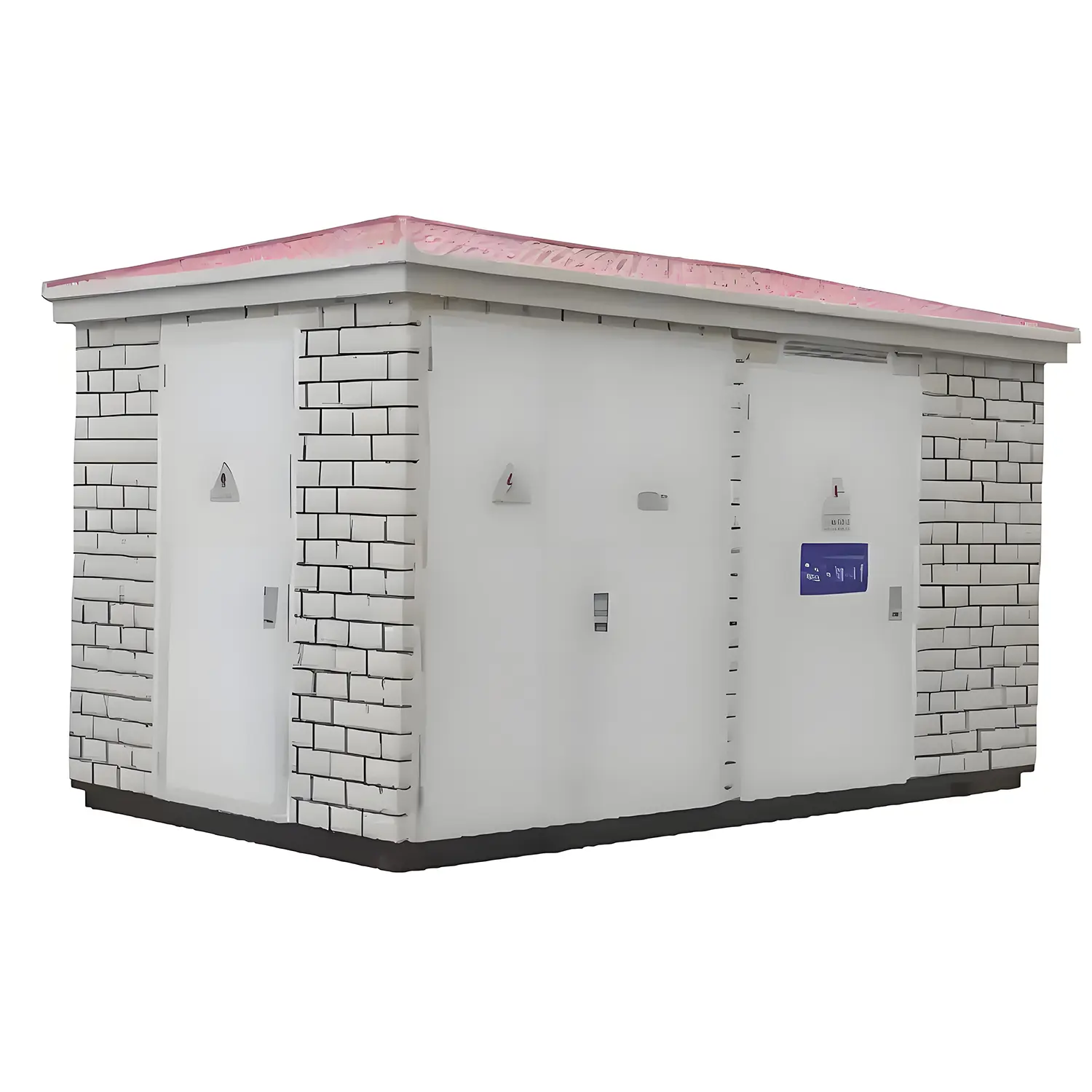
When I evaluate modern distribution equipment for industrial sites, commercial developments, and utility infrastructure, I do not only look at the rated parameters on paper. I focus on whether the equipment can simplify installation, reduce maintenance pressure, and stay reliable in real outdoor conditions. That is exactly why Lugao Power Co.,Ltd gradually comes into view when I discuss practical substation choices with buyers looking for a dependable European Type Substation. Instead of treating compact substations as a generic category, I prefer to study how design integration, safety verification, enclosure protection, and project adaptability work together in real applications. For buyers who want a balance between footprint, safety, service life, and engineering convenience, a well-designed European Type Substation is often one of the most efficient answers.
In my experience, many buyers are not struggling to find a substation supplier. They are struggling to find a solution that is compact without being cramped, durable without being overly complicated, and cost-effective without creating long-term operational trouble. A quality European Type Substation helps solve those concerns by combining transformer equipment, high-voltage components, low-voltage distribution, and protective enclosure functions into one coordinated system that is easier to deploy and easier to manage over time.
What Makes A European Type Substation So Practical For Modern Distribution Needs?
I often see projects lose time and budget because the power distribution scheme becomes too fragmented. Separate equipment rooms, extra civil work, more cable routing complexity, and longer commissioning cycles can all create avoidable pressure. A compact prefabricated arrangement changes that equation.
- I can save installation space in urban or restricted project areas.
- I can reduce on-site construction complexity by using a more integrated structure.
- I can improve project coordination because the main functional sections are organized in one enclosure.
- I can shorten delivery-to-commissioning timelines when the design is prepared in advance.
- I can simplify maintenance planning with a clearer equipment layout.
This is where the appeal of a European Type Substation becomes very clear. It is not only about compact size. It is about turning a traditionally complicated distribution arrangement into a more manageable and more standardized solution for actual users.
| Buyer Concern | How A European Type Substation Helps |
| Limited installation space | Compact integrated structure reduces footprint |
| Slow project progress | Prefabricated design supports faster site deployment |
| Complicated system coordination | HV, transformer, and LV sections are combined more efficiently |
| Outdoor operating pressure | Protective enclosure design helps improve environmental resistance |
| Long-term maintenance burden | Integrated layout supports easier inspection and service planning |
How Can I Judge Whether A European Type Substation Is Truly Reliable?
I never like vague claims such as “stable quality” or “excellent performance” unless they are backed by something more concrete. Real buyers usually think the same way. They want evidence that the equipment can handle electrical stress, thermal load, and outdoor operating demands rather than just polished wording.
That is why I pay special attention to whether the product has been seriously tested and whether the supplier can clearly explain how the unit performs under operating conditions. When a manufacturer emphasizes verified withstand capability, temperature control behavior, structural integrity, and standard-based testing, I see that as a sign of engineering maturity rather than simple sales language.
A dependable European Type Substation should give buyers confidence in several areas:
- Electrical insulation strength under expected voltage conditions
- Short-circuit tolerance for system protection and operational resilience
- Thermal stability for insulation life and service continuity
- Enclosure durability for outdoor installation
- Grounding continuity and structural soundness after testing
From a purchasing perspective, these points matter because hidden weakness does not usually show up on day one. It appears later as overheating, premature aging, insulation decline, maintenance disruption, or unplanned outage risk. A properly engineered European Type Substation helps reduce those long-tail problems before they become expensive.
Why Does Compact Design Matter So Much In Real Projects?
Compactness is not only a matter of appearance. I see it as a direct response to modern site conditions. In industrial parks, renewable energy installations, mixed-use developments, and urban utility upgrades, available space is often tight and project schedules are even tighter. Bulky distribution structures can increase both land-use pressure and installation difficulty.
With a better-integrated European Type Substation, I can often approach the project with more flexibility. The unit can fit into a more controlled space, reduce the need for additional construction support, and make the overall system look more organized. This is especially valuable in projects where aesthetics, footprint, and safety all matter at the same time.
| Project Type | Why Compact Layout Helps |
| Urban distribution networks | Fits space-constrained environments with cleaner integration |
| Industrial parks | Supports organized distribution planning near production zones |
| Commercial complexes | Improves power distribution efficiency without large equipment rooms |
| Residential communities | Helps balance reliable supply with compact site arrangement |
| Infrastructure and energy projects | Allows standardized deployment in demanding field conditions |
What Product Advantages Do Buyers Usually Care About Most?
When I think like a buyer instead of like a catalog editor, the most important product advantages are never random. They usually connect directly to cost, risk, ease of use, and project confidence. For a substation product, buyers generally want answers to very practical questions.
- Will it perform safely in outdoor conditions?
- Will it handle long-term operation without excessive maintenance?
- Will the configuration match my project voltage and capacity needs?
- Will the supplier support OEM or layout customization?
- Will the quality level hold up in international or demanding projects?
These are exactly the areas where a strong European Type Substation solution can stand out. Instead of being just another enclosed transformer package, it becomes a power distribution product designed around user pain points. I find that this matters a lot because most customers are not buying a box. They are buying installation efficiency, operating confidence, and fewer future headaches.
From that angle, the core value can be summarized like this:
| Advantage Area | Practical Value For Buyers |
| Integrated structure | Improves project efficiency and reduces system fragmentation |
| Outdoor protective enclosure | Supports use in challenging environmental conditions |
| Low-maintenance concept | Helps reduce service interruptions and upkeep pressure |
| Customizable design | Better fits project-specific voltage, capacity, and layout needs |
| Engineering-oriented verification | Gives buyers stronger confidence before installation and operation |
How Does Customization Change The Buying Decision?
I have noticed that many projects fail to get full value from standardized equipment simply because the actual site conditions are not standardized. Grid structure, local regulations, load profile, installation environment, and user expectations all vary. That is why customization matters so much during supplier selection.
A flexible European Type Substation option is useful because it allows me to consider factors such as:
- Required voltage class
- Transformer capacity
- Internal arrangement and access design
- Project-specific distribution needs
- Installation preferences for different operating environments
When a manufacturer can support OEM or tailored configuration, I do not have to force a project into a rigid template. Instead, I can align the equipment with the actual power distribution plan. For developers, contractors, utilities, and industrial buyers, that means better system compatibility and fewer compromises during installation.
This is one reason why a customized European Type Substation often delivers better total value than a one-size-fits-all alternative. The real savings are not only in purchase cost. They also appear in smoother deployment, better fit, and more predictable operation after commissioning.
Why Do Outdoor Protection And Low Maintenance Matter So Much?
Outdoor equipment does not get judged only by how it performs in ideal conditions. It gets judged by how it behaves after heat, moisture, dust, temperature variation, and daily operating wear have had time to test it. I always treat enclosure quality and maintenance demand as serious buying factors, not secondary details.
A well-built European Type Substation is attractive because it is meant to function as a protected distribution unit rather than a collection of exposed components. This brings several advantages:
- Better resistance to external environmental interference
- More organized internal equipment arrangement
- Reduced need for complicated protective construction around the unit
- Improved convenience for routine inspection and maintenance planning
- More stable long-term service expectations when the unit is properly selected
Low maintenance is especially important for sites where downtime is expensive or where frequent manual servicing is inconvenient. In my view, that makes the European Type Substation a smart choice for users who want dependable distribution performance without adding unnecessary operational burden.
Which Applications Benefit Most From A European Type Substation?
I would not recommend the same distribution product for every situation, but there are several application scenarios where this type of solution makes particular sense. It works best when compact structure, organized integration, and outdoor suitability all carry real value.
- Urban power distribution projects that need efficient land use
- Factories and industrial parks requiring organized, reliable supply
- Commercial facilities where appearance and compactness both matter
- Residential infrastructure that needs safe and space-conscious distribution
- Renewable energy and infrastructure projects that demand robust field performance
For these cases, a well-matched European Type Substation can reduce installation pressure while still supporting stable operation. I especially like it in projects where the owner wants a complete solution rather than managing multiple separate equipment systems.
Why Do Professional Buyers Look Beyond Price Alone?
Price always matters, but serious buyers usually know that a low initial quotation does not automatically mean a better decision. In power equipment procurement, hidden costs can emerge through delayed installation, poor fit, difficult maintenance, weak reliability, or inconsistent support. I have seen too many projects pay more later because they tried to save too much at the beginning.
That is why I think the better question is not “What is the lowest price?” but “What solution will perform reliably and efficiently over the full project cycle?” A thoughtfully designed European Type Substation can create value in ways that are easy to overlook during a simple price comparison:
| Cost Perspective | Long-Term Impact |
| Purchase price | Only one part of the total project cost |
| Installation efficiency | Can reduce labor, time, and coordination pressure |
| Maintenance demand | Affects lifetime operational spending |
| Reliability | Influences downtime risk and service continuity |
| Customization support | Improves fit and reduces costly adaptation later |
When I look at procurement this way, the right European Type Substation is not merely equipment. It becomes part of a smarter distribution strategy.
How Can I Choose The Right Supplier With More Confidence?
I usually tell buyers to look for more than attractive brochures. A reliable supplier should be able to discuss project requirements clearly, explain configuration options logically, support customization when needed, and present product strengths in a way that aligns with real engineering concerns.
Before I move forward with a supplier, I want to know:
- Can they support the voltage and capacity I need?
- Can they adapt the layout to the project situation?
- Do they understand outdoor and application-specific requirements?
- Can they communicate clearly during inquiry, design, and delivery?
- Do their products reflect serious attention to reliability and practical operation?
When those answers are clear, choosing a European Type Substation becomes much easier and much safer from a project management perspective.
Why Is Now A Good Time To Upgrade Your Distribution Plan?
Power projects are under pressure to be faster, cleaner, more reliable, and easier to maintain than before. That is why integrated distribution equipment is becoming more attractive across industrial, commercial, and infrastructure markets. If you are planning a new installation or upgrading an existing system, this is a good time to review whether a modern European Type Substation can give you a better balance of compact structure, operational confidence, and project efficiency.
If you are comparing solutions and want a product that supports practical outdoor use, organized internal integration, flexible configuration, and stronger long-term value, Lugao Power Co.,Ltd is worth considering. If you want to discuss specifications, project requirements, or OEM options, contact us today and send your inquiry. I believe the right European Type Substation should do more than complete a power system on paper. It should make your project easier to build, easier to manage, and more reliable in daily operation.