
Why Are More Power Projects Choosing American Type Substation Solutions?
2026-04-02
When I look at what buyers actually worry about in a distribution project, I rarely see them asking for more features in the abstract. What they usually want is a practical answer to a few stubborn questions. Can the equipment save space, stay reliable outdoors, reduce installation complexity, and keep maintenance manageable over time? That is exactly where Lugao Power Co.,Ltd enters the conversation naturally. In many real distribution scenarios, a well-designed American Type Substation offers a more balanced solution than traditional separated equipment layouts, especially when project teams need compact structure, dependable protection, and easier field deployment.
I have noticed that many contractors, industrial users, developers, and utility-related buyers face the same frustration. They need equipment that performs steadily, but they also need to control footprint, labor cost, downtime risk, and future servicing pressure. A distribution scheme may look fine on paper, yet once it reaches the site, the challenges become painfully real. Space is limited. Civil work becomes expensive. Outdoor exposure adds uncertainty. Maintenance access gets overlooked. This is why I believe the value of a thoughtfully engineered American Type Substation should be discussed in practical language rather than technical jargon alone.
In this article, I want to explain how I evaluate this type of equipment from a buyer’s point of view, what problems it helps solve, and why it continues to attract attention in industrial parks, commercial developments, residential projects, and infrastructure upgrades. I will also break down the product advantages in a way that feels useful for decision-makers, engineers, and sourcing teams who need more than surface-level product descriptions.
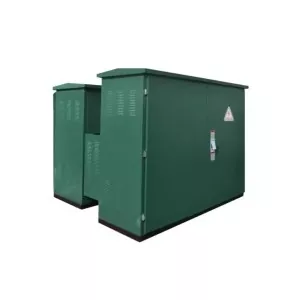
What Makes A Modern American Type Substation So Appealing?
I see the appeal beginning with integration. Instead of scattering separate distribution components across a more complicated installation layout, this kind of substation combines major functional sections into one compact outdoor solution. That matters because every extra structural requirement on site usually creates another cost, another coordination issue, and another possible delay.
From a project execution perspective, I find that an integrated American Type Substation can make planning more straightforward in several important ways:
- I can simplify site layout and reduce the burden of crowded installation zones.
- I can shorten coordination time between civil work and electrical deployment.
- I can reduce the number of exposed system interfaces that often complicate operation and maintenance.
- I can improve visual neatness for projects where appearance and order matter.
- I can create a more efficient path from delivery to commissioning.
Buyers often underestimate how valuable those points become later. During procurement, many people compare only the initial unit cost. After installation starts, they realize that equipment selection affects labor hours, foundation work, cable routing, service access, and long-term manageability. That is why I do not judge a product like this only by nameplate data. I judge it by how much real project friction it removes.
How Does This Equipment Help Me Solve Common Site Problems?
When I evaluate a distribution product for a live project, I usually ask one direct question first. What headache will this prevent for me? In the case of an American Type Substation, the answer is not limited to one issue. It helps address several site problems at once.
| Common Buyer Pain Point | Why It Becomes A Problem | How An American Type Substation Helps |
|---|---|---|
| Limited installation space | Urban, industrial, and commercial projects often have tight layouts | Its compact integrated structure reduces footprint pressure |
| Complex field coordination | Multiple separate devices increase installation and wiring complexity | Integrated design makes deployment more organized and practical |
| Outdoor operating concerns | Weather exposure can affect service stability and enclosure durability | Outdoor-oriented construction supports stable use in demanding environments |
| Maintenance inconvenience | Poor accessibility can raise downtime and service cost | Reasonable maintenance access supports easier inspection and servicing |
| Long-term reliability worries | Equipment failure disrupts production, buildings, and public services | Well-engineered protection, insulation, and thermal design support dependable operation |
This is one reason I think buyers should not treat this equipment as a generic box on a quotation sheet. A good American Type Substation is not simply about combining parts. It is about making the whole distribution arrangement easier to live with after purchase.
Why Do Reliability And Safety Matter More Than Fancy Specifications?
I have seen many buyers get distracted by overly promotional language, but on serious power projects, reliability and safety always return to the top of the list. If a substation is expected to serve industrial loads, commercial facilities, housing communities, or utility-related networks, then the question is simple. Will it operate steadily under real conditions, not just ideal ones?
That is where a strong design philosophy matters. I look for several things in a product category like this:
- Stable insulation performance that supports safe operation over time
- Effective thermal control that helps reduce stress on internal components
- Durable enclosure protection for outdoor service conditions
- Mechanical strength that supports long-term use
- Thoughtful grounding and protection arrangements that reduce operational risk
In my experience, these are not secondary details. They directly affect service life, shutdown risk, maintenance frequency, and buyer confidence. A well-developed American Type Substation should help users feel that the equipment is built for daily reality rather than showroom language.
For this reason, I also pay attention to whether the manufacturer has built its offering around actual field needs. Buyers are not only purchasing metal, insulation, and switch components. They are purchasing confidence that the system can remain dependable when the project is already running and the pressure is no longer theoretical.
Where Can This Kind Of Substation Deliver The Most Value?
I think one of the strongest advantages of the American Type Substation is how flexible it is across application environments. It is not limited to one niche. In fact, I often find it especially attractive when the project team needs outdoor distribution performance without giving up layout efficiency.
Typical scenarios where I see strong value include:
- Industrial parks that need practical and compact distribution support
- Commercial complexes that want organized equipment placement and dependable service
- Residential communities that require stable power delivery with controlled space usage
- Infrastructure and public utility upgrades where outdoor installation is necessary
- Expansion projects that need a more efficient distribution arrangement than traditional layouts
These application settings share one thing in common. They cannot afford weak reliability or inefficient site use. That is why I often describe the American Type Substation as a strong fit for projects that want a realistic compromise between performance, footprint, and deployment convenience.
Can A Compact Design Still Make Maintenance Easier?
Some buyers worry that compact equipment automatically means difficult maintenance. I understand that concern, because many products do sacrifice serviceability in the name of reduced size. But I do not think that tradeoff should be accepted as inevitable. Good compact design should still leave enough practical access for routine inspection, cleaning, replacement work, and operational checks.
When I compare products in this category, I care about maintenance logic almost as much as electrical performance. I want to know whether the structure allows personnel to work without unnecessary frustration. I want to know whether servicing tasks can be handled efficiently. I want to know whether regular upkeep becomes a burden or stays manageable.
That is one of the reasons buyers continue to pay attention to manufacturers with a more mature engineering approach. If the internal arrangement is sensible and the access design is practical, then a compact American Type Substation can still support maintenance efficiency instead of fighting against it.
For many end users, that turns into measurable value:
- Less service time during routine maintenance
- Lower risk of avoidable downtime
- Better working convenience for field personnel
- More predictable long-term operating cost
How Do I Judge A Supplier Instead Of Only Judging A Product?
I never believe a good product page alone is enough. The real sourcing decision should also include the manufacturer behind the equipment. When I assess a supplier, I look beyond sales language and ask whether the company seems capable of supporting real project requirements.
Here is the checklist I would personally use:
| Evaluation Point | What I Want To See | Why It Matters |
|---|---|---|
| Engineering experience | Clear understanding of power distribution applications | Reduces the chance of mismatched product recommendations |
| Manufacturing capability | Stable production and quality control processes | Improves consistency across delivered equipment |
| Standards awareness | Ability to align with recognized testing or certification expectations | Supports export confidence and project acceptance |
| Customization support | Willingness to adapt to project-specific requirements | Helps buyers match equipment to actual site needs |
| Communication efficiency | Clear technical response and practical sales coordination | Makes procurement smoother and reduces misunderstanding |
That is why companies such as Lugao Power Co.,Ltd tend to stand out more when buyers are comparing not only specifications, but also sourcing confidence. For me, a supplier becomes more valuable when it can translate product capability into project clarity.
What Should Buyers Ask Before Requesting A Quote?
I think a quote request becomes much more useful when the buyer already knows what project realities need to be addressed. Instead of asking only for price, I would prepare a few practical questions first. This makes the supplier’s response more relevant and helps avoid back-and-forth later.
If I were preparing an inquiry for an American Type Substation, I would usually clarify the following:
- What installation environment will the equipment face?
- How limited is the available site footprint?
- What load requirements and distribution goals must be supported?
- Are there special expectations for maintenance access or operating convenience?
- Does the project have any certification, compliance, or export-related preferences?
- Will the substation be used in an industrial, commercial, residential, or infrastructure setting?
These questions help the conversation move from generic catalog selling to real project matching. In my view, that is the difference between simply buying equipment and making a smarter procurement decision.
Why Do I See This Product As A Long-Term Value Choice?
I do not see the American Type Substation as a short-term purchasing shortcut. I see it as a long-term value option when the project needs compact structure, dependable outdoor performance, sensible maintenance planning, and efficient power distribution in one package. Its strength is not that it tries to do everything. Its strength is that it solves several high-priority project problems at the same time.
For buyers who are tired of overcomplicated installations, space pressure, and maintenance headaches, this product category deserves serious attention. A carefully selected American Type Substation can support smoother project execution today and reduce operational stress tomorrow. That combination matters far more than flashy wording.
If you are comparing distribution solutions and want a practical recommendation based on your actual project conditions, now is the right time to move the conversation forward. Share your voltage level, capacity requirement, installation environment, and project application with Lugao Power Co.,Ltd. We welcome serious project discussions, and we are ready to help you identify the right American Type Substation solution for your needs. Contact us today and leave your inquiry to start a more efficient and reliable power distribution plan.