
What is the Average Life Expectancy of a Fully Sealed Oil-Immersed Distribution Transformer in a Substation
2026-08-17
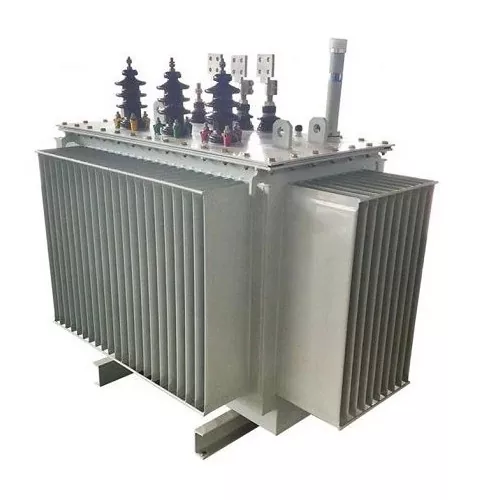
For utility engineers and infrastructure planners, the service life of a Fully Sealed Oil-Immersed Distribution Transformer for substation is not a fixed number—it is a performance metric shaped by design, operation, and environmental factors. While many suppliers quote 25 to 30 years as a standard benchmark, real-world data from Lugao’s installed fleet across tropical coastal zones and high-altitude grids shows that properly engineered units frequently exceed 35 years of reliable service, with some reaching 40 years before major refurbishment.
Core Factors That Determine Transformer Longevity
The life expectancy of a Fully Sealed Oil-Immersed Distribution Transformer for substation depends on a hierarchy of interacting variables. Below is a breakdown of the primary drivers:
| Factor | Impact on Life Expectancy | Typical Threshold |
|---|---|---|
| Winding Hot-Spot Temperature | Every 6–8°C above rated reduces insulation life by 50% (Arrhenius rule) | ≤ 98°C for normal loading |
| Moisture Content in Oil | Accelerates cellulose degradation; reduces dielectric margin | < 15 ppm for new fill |
| Oxygen & Dissolved Gas Level | Promotes oxidation and sludge formation | DGA (Dissolved Gas Analysis) within IEC 60567 limits |
| Tap Changer Operation Frequency | Mechanical wear on contacts and diverter switch | ≤ 50,000 operations for off-load type |
| Short-Circuit Withstand Capability | Cumulative winding deformation from through-faults | ≥ 25 times rated current per ANSI/IEEE |
| Sealing System Integrity | Prevents air/moisture ingress—the core advantage of fully sealed design | Leak rate ≤ 10⁻⁶ mbar·L/s |
Quantitative Life Expectancy Model
Based on IEEE C57.91-2011 thermal aging guidelines, the expected service life of a Fully Sealed Oil-Immersed Distribution Transformer for substation can be estimated using the following practical formula:
Normal Life (years) = Base Life × 2^((T_ref – T_actual)/ΔT)
Where Base Life = 30 years (at 98°C hotspot), T_ref = 98°C, ΔT = 6°C per half-life reduction.
Practical Example (Lugao field data):
| Operating Condition | Hot-Spot Temp | Calculated Life |
|---|---|---|
| Steady 70% load, moderate climate | 85°C | ~42 years |
| 100% load, summer peak (ambient 40°C) | 105°C | ~18 years |
| 120% emergency overload (limited hours) | 115°C | ~9 years (cumulative) |
This explains why Lugao recommends specifying a Fully Sealed Oil-Immersed Distribution Transformer for substation with an average winding temperature rise of 55°C instead of 65°C—a seemingly small difference that effectively doubles the asset’s financial depreciation horizon.
Why the Fully Sealed Design Extends Service Life
Unlike conservator-type transformers, a Fully Sealed Oil-Immersed Distribution Transformer for substation eliminates continuous contact with atmospheric air. This provides three distinct longevity advantages:
-
No silica gel breather maintenance – eliminates periodic desiccant replacement and accidental breather blockages.
-
Minimal oil oxidation – dissolved oxygen content stays below 1,000 ppm versus 5,000–8,000 ppm in open-breathing designs.
-
Stable dielectric strength – moisture ingress is virtually stopped, maintaining oil breakdown voltage above 60 kV/2.5mm for decades.
Lugao’s corrugated tank technology further accommodates oil volume expansion without internal pressure spikes, preserving gasket elasticity and weld integrity over 30+ thermal cycles.
FAQ – Common Questions About Fully Sealed Oil-Immersed Distribution Transformers for Substations
Q1: Can a Fully Sealed Oil-Immersed Distribution Transformer for substation be retrofitted with online monitoring without breaking the seal?
A1: Yes, but only through non-invasive methods. Lugao equips its units with factory-installed sensor ports that allow retrofitting of fiber-optic winding temperature sensors, partial discharge couplers, and dissolved gas monitors without ever opening the main tank. Retrofitting after installation is possible using clamp-on ultrasonic flow meters and external vibration analyzers, but oil sampling must be done through a dedicated sealed valve with a double-block-and-bleed arrangement. Breaking the main tank gasket to add internal sensors is strongly discouraged, as it voids the hermetic integrity and reduces life expectancy by an estimated 8–12 years due to moisture reintroduction.
Q2: How does the average life expectancy change when the transformer operates at high altitude above 1,500 meters?
A2: High altitude reduces air density, which impairs convective cooling and increases winding hot-spot temperatures by approximately 1.5°C per 500 meters above sea level. For a Fully Sealed Oil-Immersed Distribution Transformer for substation, this translates to a life reduction of about 2.5 years for every 1,000 meters of altitude, assuming no derating. However, Lugao offers customized cooling radiators with 20% larger surface area and higher-grade insulating paper (thermal class 200) specifically for high-altitude substations, which restores the expected life to 30–33 years even at 2,500 meters. The sealed design actually performs better than conservator types at altitude because it eliminates the risk of low-pressure induced air aspiration through breather valves.
Q3: What is the single most damaging operational event that shortens life the most, and how can it be mitigated?
A3: Repeated through-faults (external short circuits) cause cumulative winding clamping force relaxation and conductor displacement. A single high-magnitude fault (10× rated current for 0.5 seconds) can reduce remaining life by up to 3 years due to microscopic cellulose cracking, even if the transformer passes routine electrical tests. For a Fully Sealed Oil-Immersed Distribution Transformer for substation, the mitigation strategy includes: (1) specifying a higher impedance (≥ 6.5%) to limit fault current, (2) installing a fast-acting line current differential protection with 30 ms clearing time, and (3) performing annual winding resistance and leakage reactance measurements to detect early deformation. Lugao designs its clamps with high-strength epoxy-glass bands that resist loosening up to 15% higher radial forces than standard steel banding, effectively doubling the acceptable fault withstand count from 25 to 50 events.
Best Practices to Maximize Asset Life
| Practice | Frequency | Target Metric |
|---|---|---|
| Dissolved Gas Analysis (DGA) | Annual (or bi-annual for critical subs) | Key gases below T2 alarm levels |
| Oil dielectric test | Every 3 years | ≥ 50 kV (2.5mm gap) |
| Infrared thermography of bushings | Quarterly | ΔT < 10°C across phases |
| Corrugated tank pressure check | Semi-annual | Within ± 5% of initial nitrogen pressure |
| Bushing power factor / capacitance | Every 5 years | Tan δ < 0.5% at 20°C |
Final Verdict
When specified correctly, operated within nameplate limits, and supported by a condition-based maintenance regime, a Fully Sealed Oil-Immersed Distribution Transformer for substation delivers a mean service life of 32 to 38 years —substantially outperforming open-breathing designs by 8–10 years. The key differentiator is not the oil or the core, but the sealing integrity and thermal design optimization that Lugao engineers into every unit.
Contact Us
Every substation has unique loading profiles, ambient conditions, and space constraints. Do you want a customized life-cycle projection for your specific site? Contact Lugao today to schedule a technical consultation—our application engineers will provide a detailed thermal aging simulation, sealed-system integrity check, and a tailored upgrade roadmap for your existing or upcoming substation projects. Reach out via our website or email us directly to receive a complimentary asset life assessment report within 48 hours.