
What Causes Pressure Buildup Inside a Sealed Type 3-Phase Oil Immersed Distribution Transformer and How Is It Relieved
2026-07-13
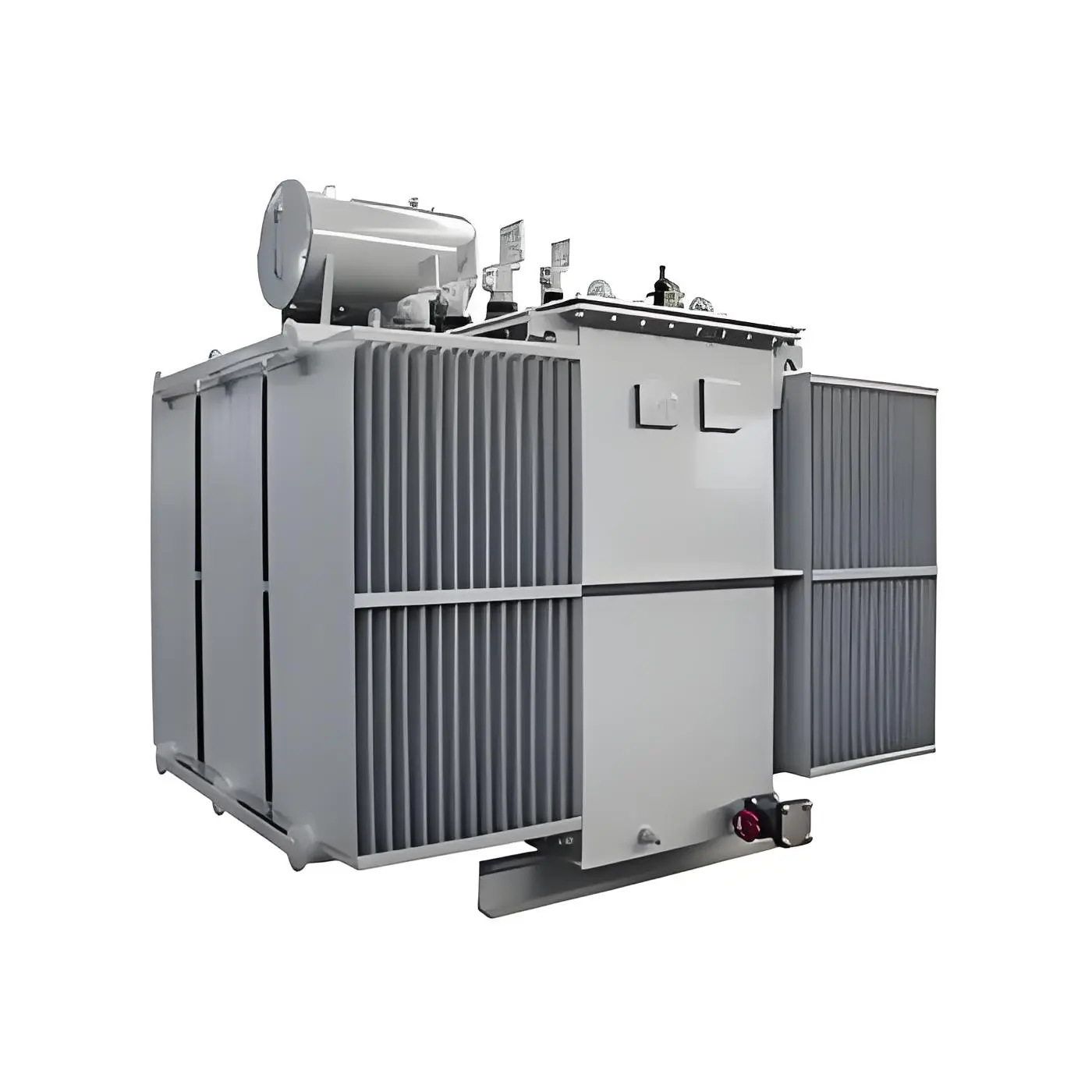
For utility engineers, facility managers, and procurement specialists, the Sealed type 3-phase oil immersed distribution transformer remains the backbone of medium-voltage power distribution networks. Unlike conservator-type units, this design operates with a fixed oil volume and a hermetically sealed tank. This engineering choice delivers lower maintenance and reduced moisture ingress, but it introduces a critical operational challenge: internal pressure dynamics. At Lugao, we have spent over two decades manufacturing thousands of these units, and we regularly field the same concern—what builds pressure inside, and how does the system safely manage it?
The Physics of Internal Pressure
Pressure inside a Sealed type 3-phase oil immersed distribution transformer is not a sign of failure; it is a predictable physical response. The primary driver is thermal expansion. Under normal loading, the mineral oil or alternative dielectric fluid heats from ambient temperature (typically 20°C) to steady-state operating temperatures between 85°C and 105°C. This 65–85°C temperature swing causes the oil volume to expand by approximately 0.07% per °C, resulting in a 4.5–6% total volume increase within a rigid tank.
The second contributor is dissolved gas generation. Even under normal operation, minute quantities of hydrogen, methane, and ethylene form from localized hot spots and partial discharges. While these gases remain dissolved under pressure, they raise the overall internal pressure beyond pure thermal calculation. Abnormal events—such as overloads, short circuits, or core faults—accelerate gas production dramatically.
How Pressure Is Quantified and Managed
Every Sealed type 3-phase oil immersed distribution transformer from Lugao is designed with a specific maximum allowable working pressure (MAWP), typically 50–70 kPa for standard units and up to 100 kPa for high-strength designs. The table below summarizes pressure sources and their typical contributions:
| Pressure Source | Normal Contribution | Abnormal Contribution | Detection Method |
|---|---|---|---|
| Oil thermal expansion | 25–40 kPa | 45–60 kPa (overload) | Winding temperature sensors |
| Dissolved gases (normal) | 5–10 kPa | N/A | Dissolved Gas Analysis (DGA) |
| Fault gases (arcing/overheating) | N/A | 80–150 kPa+ | Buchholz relay / sudden pressure relay |
| Ambient temperature swing | 5–15 kPa (day/night) | 20 kPa (extreme weather) | Tank surface thermocouple |
Engineered Relief Mechanisms: Passive and Active
Lugao incorporates three distinct layers of pressure relief in every Sealed type 3-phase oil immersed distribution transformer, ensuring both safety and service continuity.
First Layer – Gas Cushion (Passive)
Each tank includes a nitrogen or dry-air cushion occupying 8–12% of the internal volume. This compressible gas layer absorbs volumetric oil expansion without significant pressure rise. When oil expands, the gas compresses; when oil contracts during cold starts, the gas expands—preventing vacuum formation that could pull in moisture.
Second Layer – Spring-Loaded Pressure Relief Valve (Active)
Mounted on the tank cover, this valve is calibrated to open at a set threshold (typically 55–65 kPa for standard units). Upon activation, it vents excess gas or oil vapor to the atmosphere through a flame-arrestor outlet. The valve reseats automatically once pressure drops 15–20% below the opening setpoint.
Third Layer – Rupture Disc (Emergency)
For catastrophic fault events where pressure exceeds 120–150 kPa within milliseconds, a non-resealing rupture disc bursts, providing a large-diameter vent path. This prevents tank explosion or permanent deformation. The disc must be replaced post-event—a clear indicator that internal inspection and DGA are urgently required.
Real-World Pressure Scenarios
Consider a Sealed type 3-phase oil immersed distribution transformer rated at 2500 kVA, operating at 90% load on a 40°C summer day. The top-oil temperature reaches 98°C. Thermal expansion alone generates 38 kPa. With dissolved hydrogen at 80 ppm, the total steady-state pressure reads 52 kPa—just under the 55 kPa relief valve setting. The gas cushion compresses from 10% to 7.5% volume, maintaining equilibrium.
If a downstream fault suddenly drives load to 180% for 30 seconds, winding hot-spot temperatures spike to 140°C. Pressure climbs to 68 kPa, the relief valve opens for 2.3 seconds, vents 4.2 liters of gas mixture, and reseats. The transformer continues operating—this is the engineered resilience Lugao builds into every unit.
Frequently Asked Questions (FAQ)
Q1: Does pressure buildup in a Sealed type 3-phase oil immersed distribution transformer indicate internal arcing or a fault condition?
A: Not necessarily. Gradual pressure rise from normal load cycling and ambient temperature changes is expected and harmless. However, a sudden pressure spike (more than 20 kPa within 60 seconds) or repeated relief valve operations strongly suggests internal arcing, core overheating, or serious partial discharge. In such cases, immediate DGA sampling and winding resistance tests are mandatory. Lugao recommends installing continuous online pressure monitoring for units above 2 MVA to distinguish normal thermal pressure from fault-driven pressure.
Q2: What is the maximum safe pressure limit for a Sealed type 3-phase oil immersed distribution transformer before permanent damage occurs?
A: For standard corrugated-tank designs, the tank withstands 70–80 kPa without permanent distortion. Beyond 100 kPa, the corrugated fins may deform, reducing cooling efficiency. At 150 kPa, tank seam failure becomes a real risk. Lugao designs its heavy-duty series with 100 kPa MAWP and a 2.0 safety factor against burst, meaning the rupture disc activates at 140–150 kPa, well below the 200+ kPa burst threshold of welded seams. Always consult the nameplate—each unit specifies its MAWP and test pressure (typically 1.3x MAWP for factory hydrostatic tests).
Q3: Can I manually vent pressure from a Sealed type 3-phase oil immersed distribution transformer during maintenance, and what is the correct procedure?
A: Yes, but only when the transformer is de-energized and cooled to below 50°C top-oil temperature. Never vent a hot, loaded unit—hot oil spray can cause severe burns and fire risks. The correct procedure: (1) Isolate and earth the transformer, (2) Locate the dedicated vent plug (usually ½" NPT with a sealing washer), (3) Slowly crack the plug by half a turn while standing off to the side, (4) Allow gas to escape until a steady oil drip appears (indicating all gas is purged), (5) Retighten to specified torque (15–20 Nm). Lugao provides a dedicated venting port with a capture fitting on all models to prevent oil spillage. Always replace the O-ring after venting—compressed seals lose elasticity over time.
Monitoring and Predictive Maintenance
Modern Sealed type 3-phase oil immersed distribution transformer owners are moving from calendar-based to condition-based maintenance. Lugao recommends installing:
-
Continuous tank pressure transducers (0–100 kPa, 4–20 mA output)
-
Top-oil and winding temperature simulators
-
Online DGA monitors for hydrogen and carbon monoxide (early fault indicators)
These tools allow operators to track pressure trends against load profiles. A rising baseline pressure over months—even without relief valve operation—indicates gradual gas accumulation from minor overheating, prompting proactive oil reclamation or cellulose insulation drying.
Conclusion: Trust the Engineering, But Verify
Pressure buildup is an inherent characteristic of every Sealed type 3-phase oil immersed distribution transformer, not a design flaw. The combination of a gas cushion, calibrated relief valves, and emergency rupture discs provides three independent safety layers. However, no passive device replaces active monitoring and routine inspection. Lugao transformers are factory-tested to exceed IEC 60076 and IEEE C57.12.00 standards, but field conditions vary—a pressure trend log is your best early warning system.
For over 18 years, Lugao has supplied rugged, high-efficiency Sealed type 3-phase oil immersed distribution transformers to utilities, renewable plants, and industrial sites across 40+ countries. Our engineering team provides free pressure-calculation sheets and remote diagnostics support.
Contact Us – If you are specifying a new transformer or troubleshooting an existing unit, reach out to our technical sales group. We offer customized MAWP ratings, stainless-steel rupture discs for corrosive environments, and IoT-ready pressure monitoring kits. Your reliability is our reputation—let us help you keep every Sealed type 3-phase oil immersed distribution transformer running safely, efficiently, and without unexpected shutdowns.