
What Are the Key Differences Between a Thermal Relay and a Circuit Breaker
2025-12-18
When designing or maintaining an electrical control system, understanding your protection devices is crucial. Two key components often mentioned are the Thermal Relay and the Circuit Breaker. While both serve to protect electrical circuits, their core functions, applications, and operating principles are fundamentally different. Choosing the correct device, such as a reliable XUCKY Thermal Relay, ensures optimal safety and longevity for your equipment, particularly motors.
The primary distinction lies in their purpose. A Circuit Breaker is designed to protect the wiring and the circuit itself from short circuits and significant overloads that could cause fire hazards. It acts swiftly, interrupting the current almost instantly when a fault is detected. In contrast, a Thermal Relay (often called a thermal overload relay) is specifically engineered to protect electric motors from damage caused by prolonged overcurrent situations that lead to overheating. It mimics the motor's thermal characteristics and trips after a calculated time delay, allowing for harmless temporary overloads like motor startup.
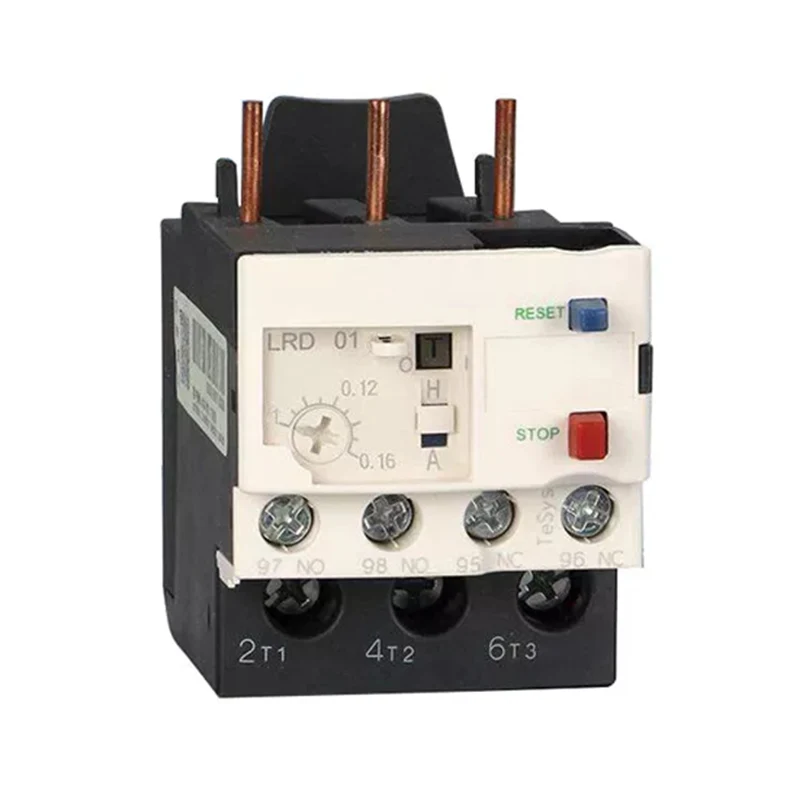
Core Differences at a Glance:
| Feature | Thermal Relay | Circuit Breaker |
|---|---|---|
| Primary Purpose | Motor overload protection | Circuit protection against short circuit & overload |
| Operation Basis | Heat generated by overcurrent (Bimetallic strip) | Electromagnetic (instant) & thermal (delayed) tripping |
| Trip Action | Normally opens a control circuit to stop the contactor | Directly opens the main power circuit |
| Reset Method | Manual reset (after cool-down) | Can be manual or automatic |
| Key Strength | Precise motor thermal modeling, prevents burnout | Fast short-circuit interruption, protects wiring |
Why Choose a XUCKY Thermal Relay?
XUCKY offers precision-engineered thermal relays with features designed for durability and accurate protection:
-
Adjustable Current Setting: Fine-tune the trip current to match your motor's full load amperage (FLA).
-
Ambient Temperature Compensation: Maintains consistent performance regardless of surrounding temperature changes.
-
Trip Class Selection: Choose classes (e.g., Class 10A) to define the trip time under overload, matching your motor's thermal capacity.
-
Robust Construction: Built with high-quality bimetallic strips and contacts for a long operational life and reliable tripping.
Thermal Relay FAQ
Q: Can I use a thermal relay alone to protect a circuit?
A: No. A Thermal Relay cannot interrupt high fault currents. It must be used in conjunction with a contactor and a circuit breaker or fuse. The breaker provides the short-circuit protection, while the XUCKY Thermal Relay provides the dedicated overload protection.
Q: How do I know if my thermal relay has tripped?
A: Most thermal relays, including XUCKY models, feature a visual trip indicator (often a flag or button that pops out). Additionally, the auxiliary contact changes state, which can be wired to a warning lamp or PLC input to alert an operator.
Q: After a trip, why must I wait before resetting my thermal relay?
A: The internal bimetallic strip needs time to cool down and return to its original shape. Resetting it immediately, before the motor has cooled, could lead to insufficient protection and potential motor damage. XUCKY relays are designed with this safety principle in mind.
Understanding these differences is key to designing safe and efficient systems. For motor-centric applications, integrating a dedicated Thermal Relay like those from XUCKY is non-negotiable for preventing costly motor failures.
Need help selecting the right protection for your application? Contact our expert team at XUCKY today for a personalized consultation and ensure your motors are safeguarded with precision.