
What Are the Key Components of a Box Type Substation
2026-01-06
When planning a reliable and efficient power distribution network, understanding the anatomy of a Box Type Substation is crucial. These compact, prefabricated units are the workhorses of modern electrical infrastructure, delivering power safely and efficiently to residential, commercial, and industrial sites. At TOONICE, we specialize in engineering robust and intelligent Box Type Substation solutions built with premium components for maximum uptime and safety. This blog will break down the key components that make these systems so effective.
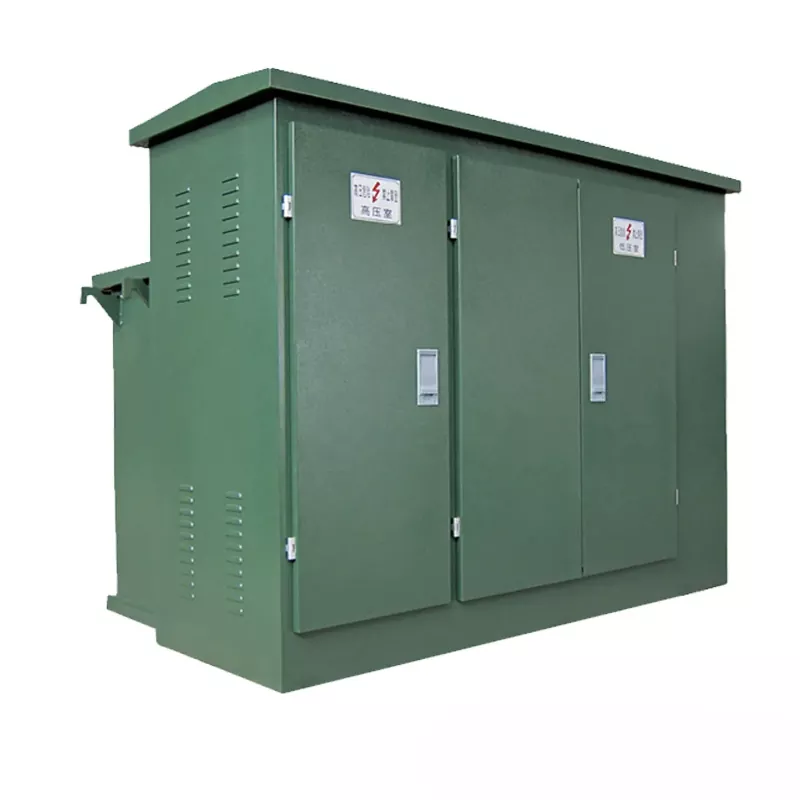
The core components of a standard Box Type Substation can be categorized into three main sections:
-
High-Voltage (HV) Compartment: This section receives the incoming high-voltage power from the utility grid.
-
HV Circuit Breaker/Switch: Isolates and protects the circuit from faults.
-
Lightning Arresters: Protect equipment from voltage surges caused by lightning.
-
HV Busbar System: Conducts the high-voltage power within the compartment.
-
-
Transformer Compartment: The heart of the substation where voltage conversion happens.
-
Distribution Transformer: Steps down the high-voltage electricity to a lower, usable voltage (e.g., from 11kV to 415V).
-
-
Low-Voltage (LV) Compartment: This section distributes the stepped-down power to the end users.
-
LV Circuit Breakers/MCCBs: Provide protection and control for outgoing feeder circuits.
-
LV Busbar System: Distributes the low-voltage power.
-
Protection & Metering Relays: Monitor electrical parameters and trigger alarms or shutdowns during abnormalities.
-
Earthing System: Ensures safety by providing a path for fault currents.
-
For a clearer comparison of the two primary switchgear types used, see the table below:
| Feature | AIS (Air-Insulated Switchgear) | GIS (Gas-Insulated Switchgear) |
|---|---|---|
| Insulation Medium | Air | SF6 Gas |
| Space Requirement | Larger | Compact (up to 70% smaller) |
| Maintenance | Requires more frequent inspection | Minimal, sealed for life |
| Ideal For | Outdoor applications with ample space | Space-constrained urban or indoor sites |
| Environmental Impact | Lower | Uses SF6 gas (a potent greenhouse gas) |
Box Type Substation FAQ
Q: What is the typical lifespan of a Box Type Substation?
A: A well-maintained Box Type Substation from a quality manufacturer like TOONICE can have a lifespan of 25 to 40 years. The longevity depends on factors such as the quality of components, environmental conditions, adherence to a regular maintenance schedule, and the operational load profile.
Q: How do you ensure the safety of a Box Type Substation?
A: Safety is multi-layered. It starts with robust, compliant design using segregated compartments to separate HV, transformer, and LV sections. Key features include secure interlocking systems to prevent accidental access to live parts, proper earthing, integrated fault protection relays, and the use of fire-retardant materials. TOONICE units exceed standard safety certifications.
Q: Can a Box Type Substation be customized for specific needs?
A: Absolutely. While standardized designs exist, leading providers like TOONICE excel at customization. This can include specific transformer ratings (kVA), choice of switchgear type (AIS or GIS), particular busbar materials, additional metering schemes, communication interfaces for SCADA, and special climatic protections for extreme environments.
Understanding these components and considerations is vital for selecting the right substation. A reliable unit ensures not only continuous power but also the long-term safety and economic efficiency of your operation.
Ready to power your project with a superior, component-driven solution? Contact the experts at TOONICE today. Our engineering team is ready to discuss your requirements and provide a tailored Box Type Substation that delivers unwavering reliability and performance. Contact us for a detailed consultation and quote.