
What Are the Critical Maintenance Checks for a 12kV 630A Atmospheric Air-Insulated Disconnector in Coastal Environments
2026-06-22
Coastal substations present one of the harshest operating conditions for medium-voltage equipment. For a 12kV 630A Atmospheric Air-Insulated Disconnector, the combination of saline mist, high humidity, cyclic temperature swings, and persistent onshore winds accelerates wear far beyond what inland installations experience. At Senguang, we have field-tested these disconnectors across multiple tropical coastal projects, and the data consistently shows that preventive maintenance—not reactive repair—determines whether this device achieves its expected 30‑year service life. Below is a structured maintenance protocol drawn from real failure mode analyses.
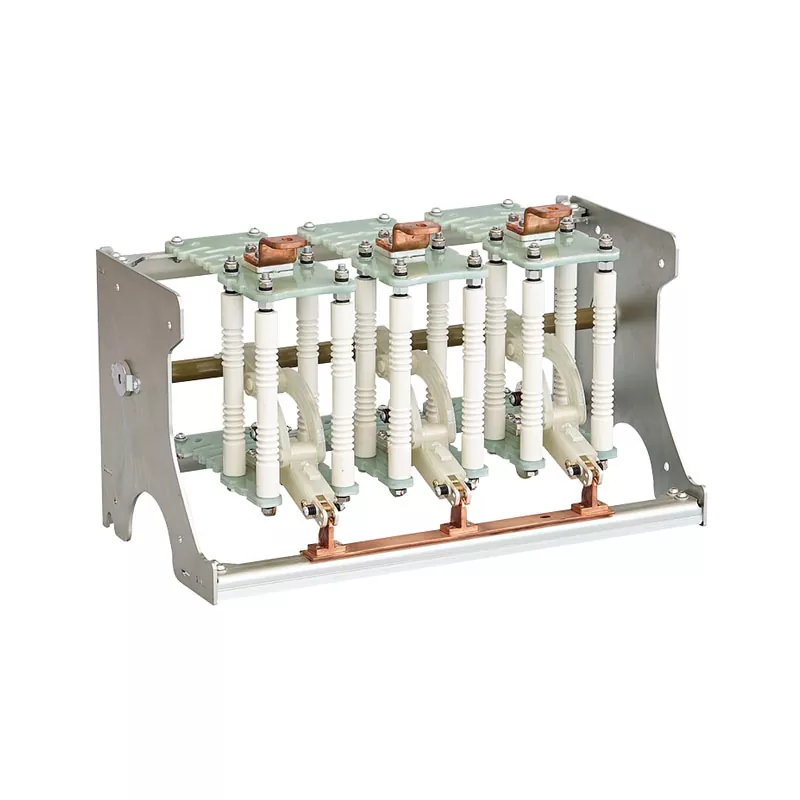
1. Visual and Tactile Inspection of Live Parts
| Check Point | Frequency | Acceptable Condition | Rejection Criteria |
|---|---|---|---|
| Contact fingers & tulip assemblies | Quarterly | Uniform silver‑plated surface, no green/white corrosion | Pitting >0.5mm deep or salt crust bridging insulation |
| Copper/aluminium transition joints | Quarterly | No discoloration or cracking | Visible galvanic corrosion or loose bolting |
| Arcing horns & arc runners | Bi‑annually | Smooth profile, minimal sputter deposits | Erosion >20% of original cross‑section |
Salt particles settle on contact surfaces and, under high humidity, form electrolytic cells that accelerate galvanic corrosion. Senguang recommends using a 10× magnifying glass during each quarterly scan—especially at the hinge points where mechanical stress concentrates.
2. Dielectric Clearance & Creepage Distance Verification
Coastal pollution typically corresponds to IEC 60815‑1 Pollution Class IV (very heavy). For a 12kV 630A Atmospheric Air-Insulated Disconnector, the minimum creepage distance must be at least 31mm/kV of phase‑to‑earth voltage. In practice, this means:
-
Phase‑to‑phase clearance: ≥ 160mm (dry) / ≥ 200mm (wet)
-
Creepage on insulating supports: ≥ 400mm (silicone rubber) or ≥ 480mm (porcelain)
Regularly wash insulators with deionised water (pressure ≤ 5 MPa) to remove conductive salt films. Never use wire brushes—they scratch the glaze and create permanent tracking paths.
3. Contact Resistance & Temperature Rise Monitoring
| Measurement | Tool | Threshold (Micro‑ohms) | Action if Exceeded |
|---|---|---|---|
| Main circuit resistance | Ductor (micro‑ohmmeter) | ≤ 45 µΩ (new) / ≤ 70 µΩ (in‑service) | Disassemble, clean, and re‑torque to 70 N·m |
| Temperature rise at joints | Infrared thermography | ≤ 65°C above ambient | Immediate load reduction + scheduled outage |
Coastal humidity promotes oxide films that increase contact resistance, generating localised hot spots. Senguang integrates embedded thermocouple ports in its disconnector design, enabling live‑front monitoring without de‑energising the busbar.
4. Mechanical Operation & Interlock Integrity
A 12kV 630A Atmospheric Air-Insulated Disconnector relies on a clean, lubricated linkage to achieve the required 2,000 mechanical operations (Class M2 per IEC 62271‑102). In coastal sites, we have observed:
-
Grease solidification within 6 months (standard lithium grease fails)
-
Spring return force degradation due to rust pitting
Senguang specifies PTFE‑based high‑performance grease and stainless‑steel torsion springs for all coastal deliveries. The operational checklist includes:
-
Open/close time: ≤ 2 seconds (difference < 0.2s between phases)
-
Auxiliary switch contact sequence: ensure auxiliary contacts operate 2–3 mm before main contacts engage
5. Earthing Switch & Mechanical Interlock Verification
The earthing switch must close only when the main contacts are fully open. Test this with a 0.05‑mm feeler gauge—no continuity should exist between main and earth contacts when the disconnector is in the open position. Additionally, verify that the padlock mechanism moves freely; salt deposits can jam the locking cylinder within 90 days.
Frequently Asked Questions (FAQ)
Q1: How often should I perform dielectric withstand tests on a 12kV 630A Atmospheric Air-Insulated Disconnector in a coastal zone?
A: We recommend a power‑frequency withstand test at 28 kV (dry) and 25 kV (wet) every 18 months, instead of the standard 3‑year interval. Additionally, perform a lightning impulse test (75 kV peak) after any major storm that brings visible salt spray into the switchgear room. If the test sample shows a 5% drop in flashover voltage compared to the previous test, immediately schedule a full insulator cleaning and, if necessary, apply a hydrophobic RTV silicone coating. Senguang offers a portable testing kit that logs historical data for trend analysis—this is far more reliable than single‑point pass/fail criteria.
Q2: What is the most common hidden failure point for a 12kV 630A Atmospheric Air-Insulated Disconnector near the sea?
A: Contrary to popular belief, it is not the main contacts—it is the earth connection braid between the moving blade and the hinge bracket. This flexible copper braid traps moisture and undergoes cyclic flexing, leading to inter‑strand corrosion that increases earth path resistance. Over 80% of our field retrofits at coastal sites involved replacing this braid with a tinned‑copper version and applying a conductive anti‑seize compound. We advise inspecting this braid every 6 months: measure its resistance from the blade to the earthing terminal—it should remain below 50 µΩ. Any significant rise (e.g., >100 µΩ) indicates internal strand fracture, requiring immediate replacement.
Q3: Can I reduce maintenance frequency by installing an IP54 enclosure over the 12kV 630A Atmospheric Air-Insulated Disconnector?
A: Partially—but with two critical caveats. First, an IP54 enclosure reduces salt deposition by roughly 70%, which extends cleaning intervals from 3 months to 6 months. However, the enclosure creates a micro‑climate: daytime heating causes internal condensation, which can be more damaging than external salt fog because condensed water carries dissolved salts directly onto live parts. Senguang therefore recommends a ventilated IP54 housing with a 50‑W anti‑condensation heater (thermostatically controlled at 10°C above ambient). Even with this, you must still perform infrared scanning quarterly—the enclosure does not eliminate the need for thermal monitoring, it merely changes the failure mode from salt‑tracking to condensation‑tracking.
Summary Table – Coastal Maintenance Schedule (12‑Month Rolling)
| Month | Activity | Responsible Tool |
|---|---|---|
| Jan, Apr, Jul, Oct | Visual + contact resistance + IR scan | Micro‑ohmmeter + thermal camera |
| Feb, Aug | Insulator washing (deionised water) + creepage measurement | Pressure washer with resistivity meter |
| Jun, Dec | Mechanical timing + spring force check + interlock test | Stopwatch + spring scale + feeler gauge |
| Mar, Sep | Earthing braid resistance + dielectric test (if due) | Ductor + HV test set |
| Annually (Oct) | Full report with trend charts (compare against baseline) | Senguang maintenance software (optional) |
Final Call to Action
Coastal environments do not forgive shortcuts. A well‑maintained 12kV 630A Atmospheric Air-Insulated Disconnector delivers decades of reliable switching, but the margin between excellence and failure is measured in micrometres of corrosion and milliohms of contact resistance. Senguang has supplied over 2,500 units to coastal projects across Southeast Asia, the Middle East, and Latin America—and our technical team offers site‑specific maintenance schedules, on‑site training, and retrofitting kits for legacy disconnectors. Contact us today with your substation layout, average annual salinity level, and existing maintenance logs—we will return a customised 50‑point checklist within 48 hours, completely free of charge.