
How to Choose the Right AC 400V Surge Protective Device for Your Panel
2026-06-10
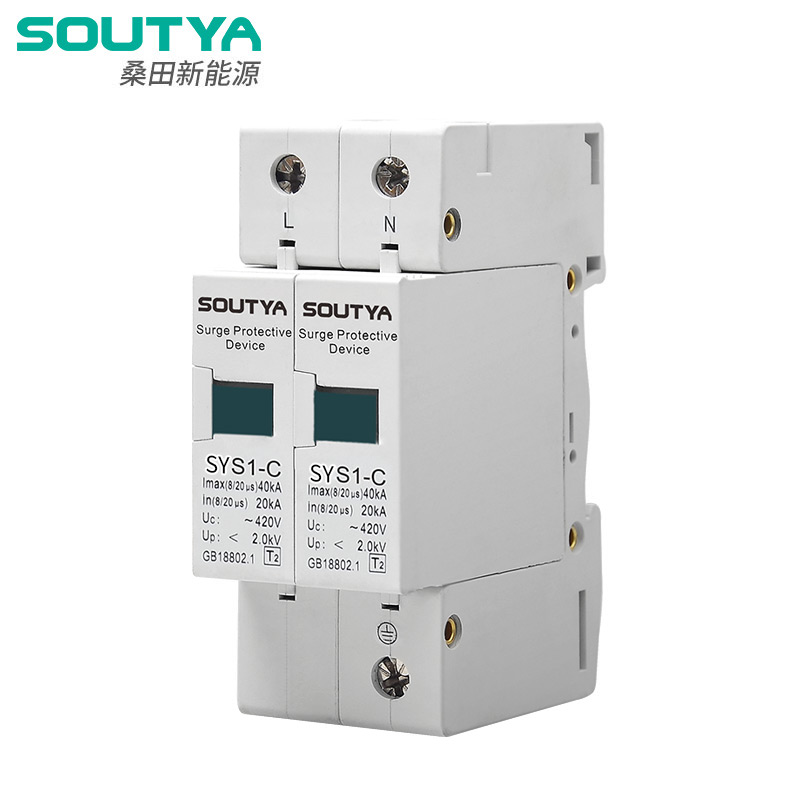
Selecting the correct AC 400V Surge Protective Device ensures long-term safety for three-phase industrial and commercial electrical panels. Soutya provides a proven range of SPDs designed for reliability under real-world surge events.
Key Selection Criteria
Use the table below to evaluate a suitable AC 400V Surge Protective Device:
| Parameter | What to Look For | Why It Matters |
|---|---|---|
| Nominal Voltage (Un) | 400V ±10% | Matches three-phase supply |
| Max Continuous Voltage (Uc) | ≥ 440V AC | Prevents thermal runaway |
| Impulse Current (Iimp) | 12.5kA – 25kA (Type 1) | Withstands direct lightning hits |
| Nominal Discharge Current (In) | ≥ 20kA (8/20µs) | Handles induced surges |
| Voltage Protection Level (Up) | ≤ 2.0kV | Safeguards sensitive loads |
| Short-circuit withstand | ≥ 10kA | Coordination with upstream breakers |
Installation & Coordination List
-
Location: Directly at the main incoming distribution board.
-
Wiring length: Keep connecting leads below 0.5m each.
-
Backup protection: Use gG fuse or MCB rated per Soutya datasheet.
-
End-of-life indicator: Green/red window on the AC 400V Surge Protective Device.
AC 400V Surge Protective Device – FAQ
Q1: What is the difference between Type 1 and Type 2 for an AC 400V Surge Protective Device?
A: A Type 1 AC 400V Surge Protective Device is designed for the main distribution board of a building with external lightning protection (LPS). It can handle direct lightning current (10/350µs waveform). A Type 2 is installed downstream, typically at sub-distribution boards, and protects against induced switching surges (8/20µs waveform). For full protection, Soutya recommends combining both types.
Q2: How do I know if my AC 400V Surge Protective Device has failed?
A: Most modern devices, including those from Soutya, include a mechanical status indicator. A green color means normal operation; red means the internal MOV (metal oxide varistor) has degraded and the device must be replaced. Additionally, a remote signaling contact can send a failure alert to your BMS or PLC.
Q3: Can I install an AC 400V Surge Protective Device without an upstream circuit breaker?
A: No. An upstream overcurrent protection device (fuse or MCB) is mandatory. It disconnects the SPD during a thermal runaway or short circuit failure, preventing fire. For a Soutya AC 400V Surge Protective Device, use a 63A gG fuse or a C-curve 63A MCB with a breaking capacity ≥ 10kA.
Final Check
Always verify that the AC 400V Surge Protective Device carries a valid IEC/EN 61643-11 certification. Soutya SPDs meet this standard with third-party test reports.
Contact us today for a customized SPD selection table matching your panel’s fault current and surge environment.