
How Does an Electrical Transformer Increase or Decrease Voltage
2026-01-27
At the heart of every power grid and countless electronic devices lies a fundamental component: the Electrical Transformer. This ingenious piece of equipment is responsible for safely and efficiently stepping voltage up or down, making the transmission and use of electricity possible as we know it. At Toonice, we specialize in providing reliable and high-performance Electrical Transformer solutions for a wide range of industrial and commercial applications. But how exactly does this vital piece of technology accomplish its task? Let’s delve into the science behind it.
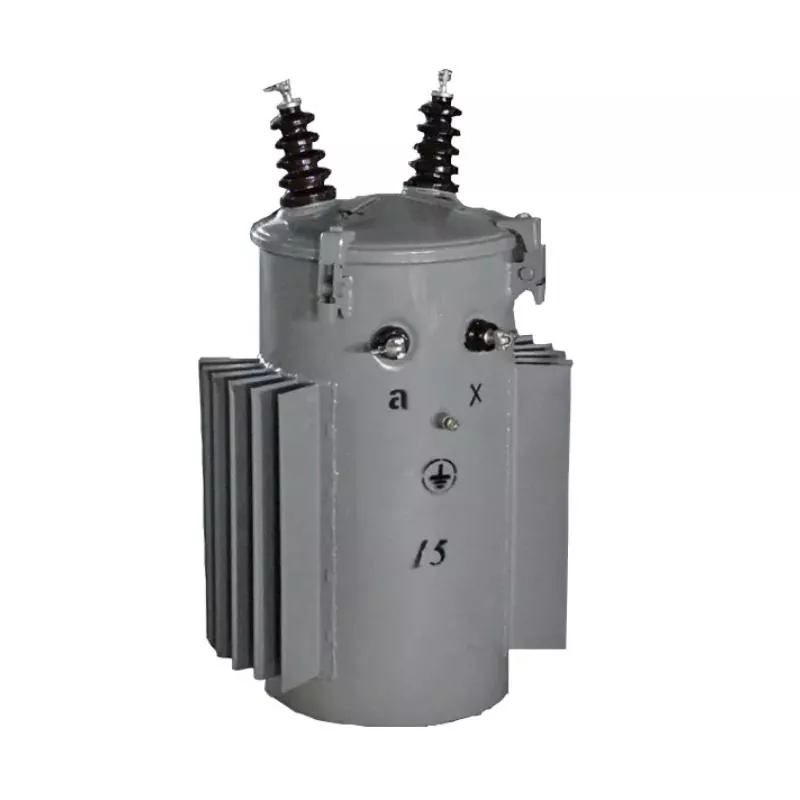
The core principle is electromagnetic induction, discovered by Michael Faraday. A basic Electrical Transformer consists of two coils of insulated wire, known as the primary and secondary windings, wrapped around a common iron core.
-
Step-Up Transformer: To increase voltage, the transformer has more turns on the secondary coil than on the primary coil. The input voltage on the primary winding creates a changing magnetic field in the core. This changing field then induces a higher voltage in the secondary winding due to its greater number of turns.
-
Step-Down Transformer: To decrease voltage, the opposite is true. The secondary coil has fewer turns than the primary. The same changing magnetic field induces a lower voltage in the secondary winding.
Crucially, while voltage changes, the transformer's power (ignoring minor losses) remains relatively constant. This means when voltage increases, current proportionally decreases, and vice versa. This is key for efficient long-distance power transmission, where high voltage and low current minimize energy loss.
The following table summarizes the key differences:
| Transformer Type | Turns Ratio (Secondary:Primary) | Voltage Change | Current Change | Primary Application |
|---|---|---|---|---|
| Step-Up | Greater than 1:1 | Increases | Decreases | Power generation stations for transmission |
| Step-Down | Less than 1:1 | Decreases | Increases | Local substations and end-user equipment |
Electrical Transformer FAQ
Q: Can a transformer work with direct current (DC)?
A: No, a standard Electrical Transformer cannot work with pure DC. It requires a changing magnetic field to induce voltage in the secondary coil. Direct current provides a constant, un-changing field, which will not induce a continuous voltage. Transformers are designed specifically for alternating current (AC) systems.
Q: What are the main energy losses in a transformer?
A: The primary losses in an Electrical Transformer are copper losses (I²R losses due to resistance in the windings), iron or core losses (hysteresis and eddy current losses in the core), and stray losses. High-quality designs from manufacturers like Toonice focus on using superior materials and precise engineering to minimize these losses, enhancing efficiency.
Q: Why is transformer oil used?
A: Transformer oil serves two critical functions: insulation and cooling. It provides superior electrical insulation between live parts and the grounded tank. It also circulates, absorbing heat from the core and windings and dissipating it through the radiator, thus preventing overheating and ensuring the Electrical Transformer operates reliably over its long service life.
Understanding how a transformer manipulates voltage is key to appreciating the complexity and elegance of our electrical infrastructure. Selecting the right transformer is critical for system safety, efficiency, and longevity.
Contact Us Today
Whether you need a custom-designed unit or a standard model for your project, Toonice has the expertise and product range to meet your specific needs. Contact us for a consultation, and let our team help you find the perfect Electrical Transformer solution.