
How Does a Series Reactor Improve Power System Stability?
2026-04-15
In modern electrical systems, voltage fluctuations, harmonic distortion, and inrush current spikes can create severe operational risks for industrial users. A series reactor is one of the most effective components used to protect equipment, stabilize current flow, and enhance system reliability. This article explains how series reactors work, where they are used, and how choosing the right one can reduce downtime, improve safety, and extend equipment lifespan.
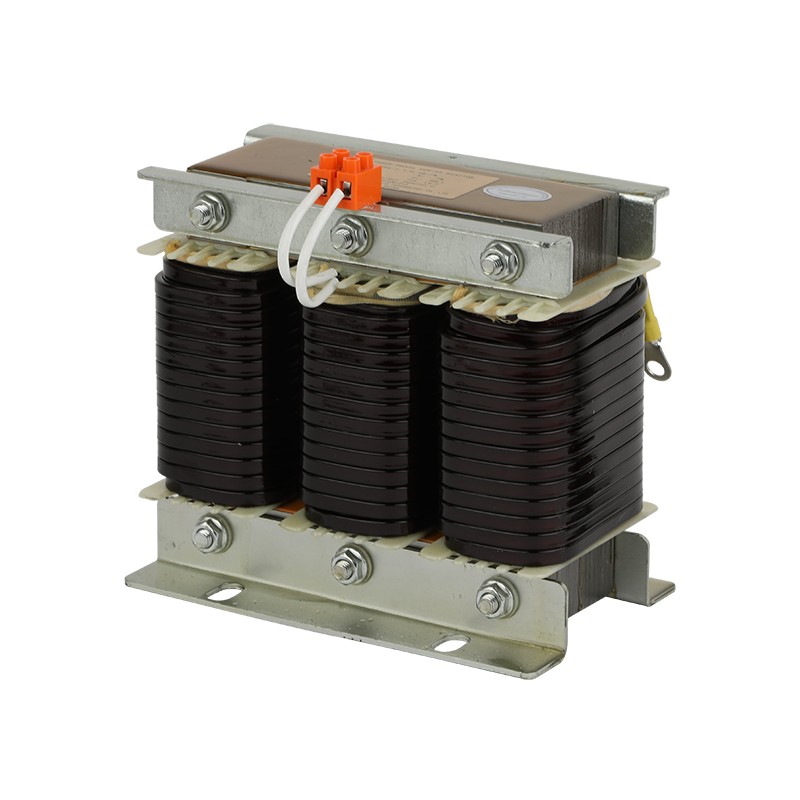
Table of Contents
- 1. What Is a Series Reactor?
- 2. How Does a Series Reactor Work?
- 3. Why Is a Series Reactor Important in Power Systems?
- 4. Common Applications of Series Reactors
- 5. Key Benefits for Industrial Users
- 6. How to Choose the Right Series Reactor
- 7. Product Comparison Table
- 8. FAQ
- 9. Conclusion
1. What Is a Series Reactor?
A series reactor is an inductive electrical component connected in series with a circuit to limit current, suppress harmonics, and stabilize electrical flow. It is widely installed in capacitor banks, motor drives, inverters, and power distribution systems where current control is critical.
Unlike resistive devices that dissipate excess energy as heat, a series reactor stores energy magnetically and releases it smoothly, making it highly efficient for long-term industrial operation.
2. How Does a Series Reactor Work?
A series reactor operates by adding inductive reactance into the circuit. This reactance resists sudden changes in current flow, thereby controlling excessive current spikes.
When harmonic currents or surge currents appear:
- The reactor slows the rise of current.
- It reduces waveform distortion.
- It protects capacitors and switching devices.
- It minimizes resonance risks in capacitor compensation systems.
This function becomes especially valuable in systems with variable frequency drives (VFDs), where non-linear loads often create electrical disturbances.
3. Why Is a Series Reactor Important in Power Systems?
Many industrial facilities experience hidden power quality issues that lead to:
- Premature capacitor bank failure
- Transformer overheating
- Circuit breaker nuisance tripping
- Reduced motor efficiency
- Unexpected production downtime
Installing a properly matched series reactor significantly reduces these risks. In harmonic-rich environments, reactors act as a protective barrier between unstable power input and sensitive electrical assets.
For factories operating around the clock, this means fewer interruptions and lower maintenance costs.
4. Common Applications of Series Reactors
Series reactors are commonly used in the following sectors:
| Application Area | Purpose |
|---|---|
| Capacitor Banks | Suppress harmonics and prevent resonance |
| Variable Frequency Drives | Reduce current distortion and protect rectifiers |
| Renewable Energy Systems | Improve inverter output stability |
| Industrial Automation Lines | Prevent voltage spikes affecting controllers |
| Power Distribution Networks | Enhance grid current balance |
5. Key Benefits for Industrial Users
Choosing a high-quality series reactor provides measurable operational advantages:
- Lower harmonic distortion levels
- Extended capacitor and inverter lifespan
- Reduced maintenance frequency
- Improved system efficiency
- Enhanced safety margin for sensitive equipment
At Geyue Electric, engineered series reactors are designed for demanding industrial environments where performance consistency is essential.
6. How to Choose the Right Series Reactor
Selecting the correct reactor depends on several technical parameters:
- Rated voltage and current capacity
- Percentage impedance requirement
- Target harmonic frequency range
- Environmental operating temperature
- Installation space limitations
Before purchasing, evaluate whether your system requires detuned filtering, harmonic mitigation, or surge suppression. Matching the wrong impedance level may reduce effectiveness.
For detailed product specifications, users can review Geyue Electric’s official product page: Series Reactor Product Information
7. Product Comparison Table
| Type | Best Use | Main Advantage |
|---|---|---|
| Dry Type Series Reactor | Indoor installations | Easy maintenance |
| Iron Core Reactor | Heavy industrial loads | High overload tolerance |
| Air Core Reactor | High harmonic environments | Excellent linearity |
8. FAQ
Q1: Can a series reactor reduce harmonic distortion?
Yes. It limits harmonic current propagation and protects downstream equipment from waveform distortion.
Q2: Is a series reactor necessary for capacitor banks?
In systems with harmonic presence, absolutely. Without one, capacitor banks face higher resonance and overheating risk.
Q3: How long does a series reactor last?
With proper installation and operating conditions, industrial-grade reactors often last 10–20 years.
Q4: What happens if reactor impedance is incorrectly selected?
Improper impedance can lead to inadequate filtering, overheating, or reduced protection performance.
9. Conclusion
A series reactor is more than just a passive electrical component—it is a critical safeguard for power quality, equipment longevity, and operational continuity. Whether used in capacitor banks, drive systems, or industrial automation networks, the right reactor helps eliminate hidden electrical risks before they become costly failures.
Looking for dependable power protection solutions? Geyue Electric delivers precision-engineered series reactors built for stable performance in demanding environments. Contact us today to find the right solution for your system and improve your power reliability with confidence.