
How Does a Load Break Switch Integrate with Fuse Protection in a Switchgear Assembly
2026-05-06
In modern power distribution systems, the integration of a Load Break Switch with fuse protection within a switchgear assembly is a proven strategy for achieving reliable overcurrent protection and load switching. At Wzonpa, we engineer high-performance load break switches that seamlessly coordinate with fuses to safeguard transformers and distribution lines.
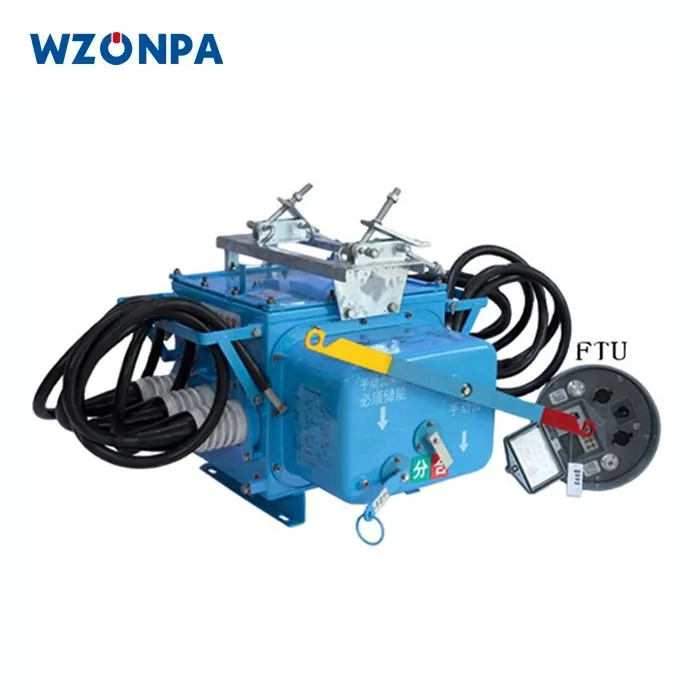
Core Integration Mechanism
A Load Break Switch is designed to open and close circuits under normal load conditions, but it lacks the ability to interrupt short-circuit currents. Fuses fill this gap by detecting and clearing high fault currents. When combined in a switchgear assembly, the Load Break Switch handles frequent load switching while the fuse acts as a backup protection element.
| Feature | Load Break Switch Role | Fuse Role |
|---|---|---|
| Normal load switching | Open/close daily operations | Not involved |
| Short-circuit protection | Withstands fault current | Melts and interrupts fault |
| Cost efficiency | Lower than circuit breaker | Very economical |
| Maintenance | Resettable after operation | One-time replacement required |
Integration Topologies
There are three standard ways a Load Break Switch integrates with fuses in a Wzonpa switchgear assembly:
-
Load Break Switch with Fuse-Switch Combination – The fuse is mounted on the moving contact of the Load Break Switch. When the fuse blows, a striker mechanism trips the switch, opening all three phases simultaneously.
-
Separate Fuse Compartment – The Load Break Switch occupies one compartment, while fuses are housed in a dedicated drawer. Interlocking ensures the switch cannot be opened unless the fuses are removed or replaced properly.
-
External Fuse Mounting – For outdoor switchgear, fuses are installed on the line side of the Load Break Switch, providing visible isolation and easy replacement.
Wzonpa recommends the first method for transformer protection due to its compact footprint and positive three-phase opening.
Electrical Coordination Table
| Fault Current Level | Response Device | Operating Time |
|---|---|---|
| Below fuse pre-arcing threshold | Load Break Switch remains closed, normal load switching | Continuous |
| Moderate overload (2–5× rated) | Fuse operates after delay; Load Break Switch may open via striker | 0.1 to 20 seconds |
| High short-circuit (>10× rated) | Fuse clears within half cycle; Load Break Switch trips open | <10 milliseconds |
Load Break Switch FAQ – Common Questions
Question 1: Can a Load Break Switch interrupt a short-circuit current without a fuse?
Answer: No. A standard Load Break Switch is not designed to interrupt short-circuit currents. It can only make and break normal load currents up to its rated continuous current. Without a fuse or circuit breaker, the switch would be destroyed by arcing and contact welding during a fault. The fuse is essential for short-circuit protection.
Question 2: How do I know if the fuse in my Load Break Switch switchgear assembly has operated?
Answer: Most integrated designs include a fuse striker or microswitch that triggers a mechanical flag or auxiliary contact. When the fuse blows, the striker pushes a mechanism that changes the position indicator on the Load Break Switch from “closed” to “tripped.” Some Wzonpa models also provide a remote alarm contact for SCADA systems, allowing operators to detect fuse failure without visual inspection.
Question 3: What happens if only one fuse blows in a three-phase Load Break Switch assembly?
Answer: A single blown fuse creates a single-phasing condition, which can damage three-phase motors or transformers. To prevent this, quality switchgear assemblies use a trip bar actuated by any fuse striker. When one fuse blows, its striker forces the Load Break Switch to open all three poles simultaneously. Wzonpa assemblies always include this three-phase trip mechanism to comply with IEC 60265-1 safety standards.
Performance Advantages of Wzonpa Integration
-
Reduced arc flash incident energy
-
Lower total ownership cost compared to molded case circuit breakers
-
Visual isolation provided by the Load Break Switch open position
-
Easy fuse replacement without de-energizing the entire busbar
For critical applications such as ring main units (RMUs) and pad-mounted transformers, Wzonpa offers certified load break switch-fuse combinations tested up to 40kA short-circuit making capacity.
Contact Us
Ready to optimize your switchgear assembly with a reliable Load Break Switch and fuse coordination? Contact Wzonpa today for technical datasheets, coordination calculations, and a customized distribution solution for your project.