
How Do You Size a 1000 Kva Pad Mounted Transformer for a Three-Phase Distribution System
2026-07-02
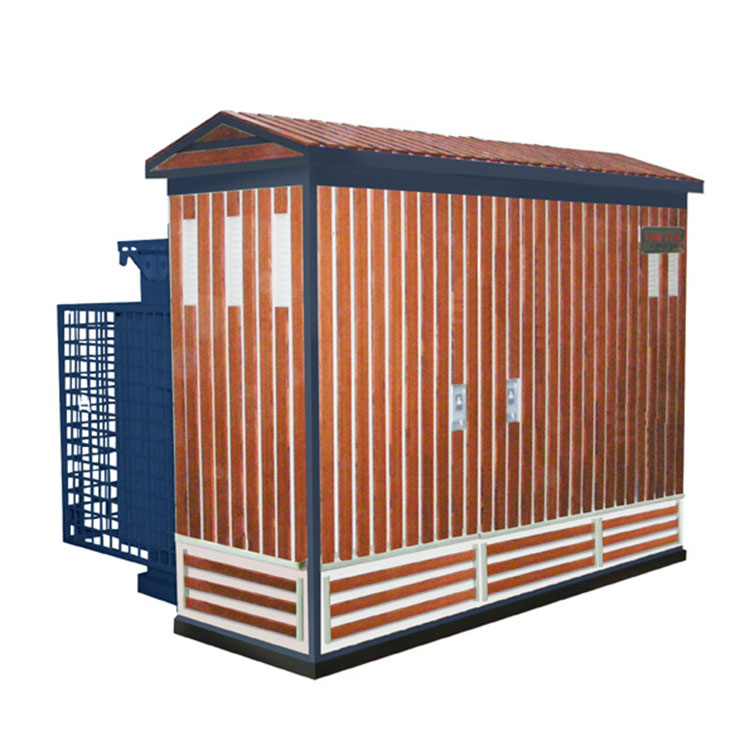
Sizing a 1000 Kva Pad Mounted Transformer for a three-phase distribution network is not a guesswork exercise—it is a calculated engineering decision that affects system reliability, voltage regulation, fault current levels, and long-term operating costs. Whether you are upgrading an industrial park, expanding a commercial complex, or designing a utility-grade substation, the wrong size leads to premature failure, nuisance tripping, or excessive no-load losses. This guide walks through the step-by-step methodology used by engineers at Conso, a trusted manufacturer of medium-voltage distribution equipment, to correctly specify a 1000 Kva Pad Mounted Transformer for real-world three-phase loads.
Step 1 – Gather the Actual Load Profile
Before opening any catalog, collect 12–24 months of historical demand data. For new installations, calculate the connected load in kVA and apply a diversity factor. The key formula is:
Total Three-Phase Load (kVA) = (Volts × Amps × √3) / 1000
For example, a commercial building with 480V secondary and 1,200A full-load current draws:
(480 × 1200 × 1.732) / 1000 = 998 kVA → a 1000 Kva Pad Mounted Transformer is the closest standard rating. However, always verify the peak demand and load growth over the next 5–10 years. Conso recommends adding a 15–20% buffer for future HVAC, EV chargers, or data center expansion.
Step 2 – Determine the Primary and Secondary Voltages
Three-phase distribution systems commonly use primary voltages of 4.16 kV, 12.47 kV, or 13.8 kV, with secondary voltages of 208Y/120V, 480Y/277V, or 600V. The turns ratio must match your utility’s feed. A 1000 Kva Pad Mounted Transformer from Conso can be wound for multiple taps (e.g., ±2 × 2.5%) to accommodate incoming voltage fluctuations. Always confirm the system grounding (wye-wye, delta-wye, or delta-delta) because this affects zero-sequence impedance and ground fault protection.
Step 3 – Calculate Short-Circuit Current and Impedance
Per ANSI/IEEE C57.12.00, the standard impedance for a 1000 Kva Pad Mounted Transformer ranges from 5.0% to 6.5% for three-phase units. Higher impedance reduces short-circuit current but increases voltage drop under load. Use this formula to find the available fault current at the secondary terminals:
I_sc = (I_full_load × 100) / %Z
Where I_full_load = (kVA × 1000) / (V_secondary × √3).
For a 480V secondary with 5.5% impedance:
I_full = (1000 × 1000) / (480 × 1.732) = 1,203 A
I_sc = 1,203 × 100 / 5.5 = 21,873 A
This value must be lower than the interrupting rating of your downstream breakers. Conso provides factory test reports for every 1000 Kva Pad Mounted Transformer to validate impedance and short-circuit withstand capability.
Step 4 – Verify Voltage Regulation and Efficiency
Voltage regulation = (No-load voltage – Full-load voltage) / Full-load voltage × 100%. For a 1000 Kva Pad Mounted Transformer, typical regulation is 2–4% at unity power factor. Higher efficiency (≥98.5% at 50% load) reduces annual energy losses—critical for DOE 2016 or CSA C802.2 compliance. Below is a comparison of efficiency at different loading points for a standard Conso unit:
| Load Level | Efficiency (%) | Losses (W) |
|---|---|---|
| 25% | 97.2 | 1,850 |
| 50% | 98.6 | 2,100 |
| 75% | 98.4 | 2,650 |
| 100% | 98.0 | 3,400 |
Data based on Conso’s high-grade core steel and copper windings.
Step 5 – Evaluate Ambient Temperature and Altitude
ANSI derating factors apply when ambient exceeds 40°C or altitude surpasses 1,000 meters. For every 10°C above 40°C, reduce the nameplate kVA by 2–3%. A 1000 Kva Pad Mounted Transformer installed in desert climates or high-altitude mining sites may need a forced-air cooling system (fans) or a larger kVA rating. Conso offers custom enclosures with weather-shielded fins and stainless steel hardware for corrosive environments.
Step 6 – Select Accessories and Protection
-
Tap changer – off-circuit or on-load (for voltage regulation)
-
Surge arresters – for lightning protection on overhead primary lines
-
Temperature gauges – with alarm and trip contacts
-
Oil-level indicators – for mineral-oil or biodegradable fluid fill
-
Fused disconnect switch – or vacuum circuit breaker on the primary side
Conso integrates all these into a compact, tamper-resistant enclosure with padlocking provisions and grounding bushings.
Step 7 – Final Checklist Before Ordering
| Parameter | Required Value for 1000 Kva Pad Mounted Transformer |
|---|---|
| Primary voltage | Utility-provided (e.g., 12.47 kV) |
| Secondary voltage | Load requirement (e.g., 480Y/277V) |
| Impedance (%) | 5.0 – 6.5% (coordinate with utility) |
| Cooling type | ONAN (standard) or ONAF (with fans) |
| BIL rating | 95 kV (primary) / 30 kV (secondary) |
| Enclosure type | NEMA 3R or IP54 (outdoor) |
| Tap range | ±2 × 2.5% or ±5% |
| Frequency | 50 Hz or 60 Hz |
Frequently Asked Questions about the 1000 Kva Pad Mounted Transformer
Q1: Can a 1000 Kva Pad Mounted Transformer handle a 120% continuous overload for 2 hours daily?
A: No – continuous overload above 100% accelerates insulation aging (per the Arrhenius equation). For 120% load, you need either a Conso unit with ONAF cooling (fans add 15–20% capacity) or you should size up to 1250 kVA. Brief emergency overloads (up to 130% for 30 minutes) are acceptable if the ambient is below 30°C and the unit has never been previously overloaded. Always consult the factory thermal curves.
Q2: What is the typical oil volume and weight for a 1000 Kva Pad Mounted Transformer, and does that affect pad design?
A: A standard 1000 kVA unit with mineral oil holds approximately 250–300 gallons (950–1,150 liters) of dielectric fluid, with a total shipping weight of 4,500–5,500 kg (10,000–12,000 lbs). The concrete pad must be engineered for this dead load plus a safety factor of 1.5. Conso provides certified mounting drawings with anchor-bolt locations and center-of-gravity data to ensure your pad does not crack or settle over time.
Q3: How often should I perform dissolved gas analysis (DGA) on a 1000 Kva Pad Mounted Transformer?
A: For a new Conso unit, perform a baseline DGA after 6 months of service, then annually for the first 3 years. After that, every 2 years under normal loading, or quarterly if the unit experiences frequent switching surges or partial overloading. Key gases to monitor: hydrogen (H₂) > 150 ppm, methane (CH₄) > 100 ppm, and ethylene (C₂H₄) > 100 ppm indicate thermal or electrical faults. Any rising trend above IEEE C57.104 thresholds demands immediate investigation.
Putting It All Together
Correctly sizing a 1000 Kva Pad Mounted Transformer means balancing present demand, future growth, voltage regulation, fault withstand, thermal duty, and environmental derating. Skipping any step leads to outages, reduced equipment life, or utility penalties for power factor and harmonics. Conso manufactures each 1000 Kva Pad Mounted Transformer with full-type testing per IEEE/ANSI standards, including impulse, temperature rise, and sound-level tests, so you receive a unit that matches your exact system parameters.
Ready to specify your next transformer? Contact Conso today for a free sizing review – our engineering team will analyze your load data, utility requirements, and site conditions to recommend the optimal 1000 Kva Pad Mounted Transformer with a customized datasheet, 3D layout, and 24/7 technical support. Reach us at [email protected] or call +1-800-555-CONSO – we respond within 4 business hours.