
How Do Modern MV Active Power Filters Reduce Energy Loss and Improve Power Factor
2026-02-10
In today’s demanding industrial and commercial electrical environments, maintaining a clean and efficient power supply is paramount. Poor power quality, characterized by harmonics and poor power factor, leads directly to increased energy losses, higher utility bills, and equipment stress. This is where modern MV Active Power Filter APF SVG technology, such as the advanced solutions from Wzonpa, steps in as a critical asset. These intelligent systems not only purify your electrical network but also deliver substantial efficiency gains by tackling the root causes of energy waste.
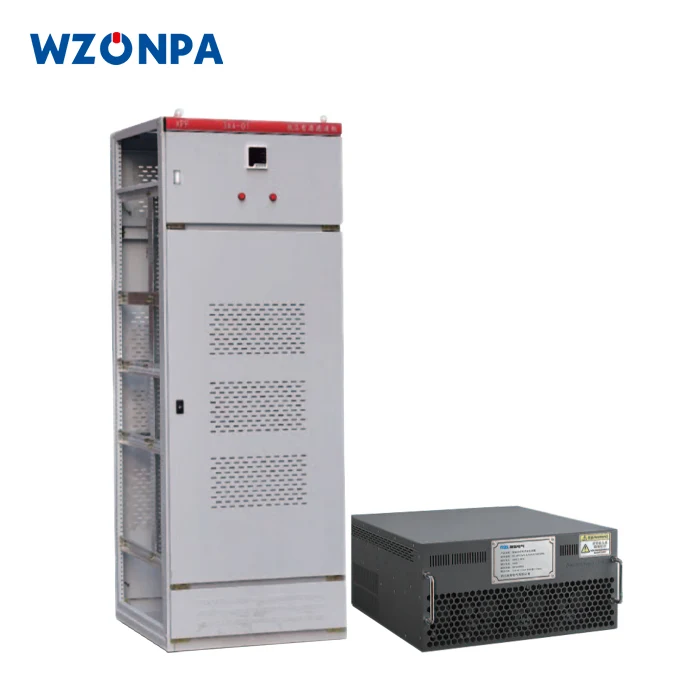
Modern MV Active Power Filter APF SVG units from Wzonpa function as real-time corrective devices. They inject precise compensating currents to counteract disturbances, delivering two primary benefits for energy efficiency:
-
Reduction of Energy Losses: Harmonics create additional current flow that does no useful work but generates excess heat in transformers, cables, and motors. This represents pure energy loss.
-
By eliminating lower-order harmonics (e.g., 5th, 7th, 11th), Wzonpa MV Active Power Filter APF SVG systems significantly reduce these wasteful currents.
-
This directly lowers RMS current, minimizing I²R heating losses across the entire distribution system.
-
-
Improvement of Power Factor: A low power factor, often caused by reactive power from inductive loads, results in higher apparent power demand and penalty fees from utilities.
-
Wzonpa’s SVG (Static Var Generator) functionality provides dynamic, lagging or leading reactive power compensation.
-
It brings the power factor close to unity, reducing the burden on the grid infrastructure and eliminating penalty charges.
-
The following table summarizes the direct economic and technical impacts:
| Problem | Effect | Wzonpa MV Active Power Filter APF SVG Solution | Result |
|---|---|---|---|
| Current Harmonics | Increased RMS current, overheating, wasted energy | Active filtering of harmonic currents | Lower I²R losses, reduced cooling costs |
| Poor Power Factor | High apparent power, utility penalties, reduced system capacity | Dynamic reactive power injection (SVG mode) | PF correction to ~1.0, avoided penalties |
| Voltage Fluctuations | Equipment malfunction, process instability | Fast reactive support stabilizes voltage | Improved equipment lifespan and reliability |
MV Active Power Filter APF SVG FAQ
What is the main difference between APF and SVG functions within a hybrid system?
The APF function focuses on eliminating harmonic currents for a cleaner waveform, while the SVG function dynamically manages reactive power to correct the power factor and stabilize voltage. Wzonpa's integrated systems perform both tasks simultaneously.
Can a single MV Active Power Filter APF SVG unit handle multiple types of loads?
Yes, a modern device like those from Wzonpa is designed to monitor the entire network at the point of common coupling. It generates a compensation current that counteracts the aggregate distortion and reactive power demand from all downstream nonlinear and inductive loads.
How significant can the energy savings from installing such a system be?
Savings are highly dependent on the initial power quality but are often substantial. Users can typically expect a 5-15% reduction in overall energy consumption by eliminating harmonic losses, plus 100% savings on power factor penalty fees, leading to a rapid return on investment.
Implementing a Wzonpa MV Active Power Filter APF SVG is a strategic investment in operational efficiency and cost control. Our expert team can conduct a detailed site analysis to quantify your potential savings and design an optimal solution for your specific network challenges.
Contact us today for a complimentary power quality audit and discover how much your facility can save.