
Can an Indoor High Voltage Load Switch Be Used for Motor Starting Applications
2026-06-11
When designing medium-voltage motor control circuits, engineers often ask whether an Indoor High Voltage Load Switch can replace a contactor or circuit breaker for direct motor starting. At Toonice, we provide expert guidance on load break switching. The short answer is: yes, but with significant limitations and proper fuse coordination. This post explains the technical boundaries, backed by standards and practical application data.
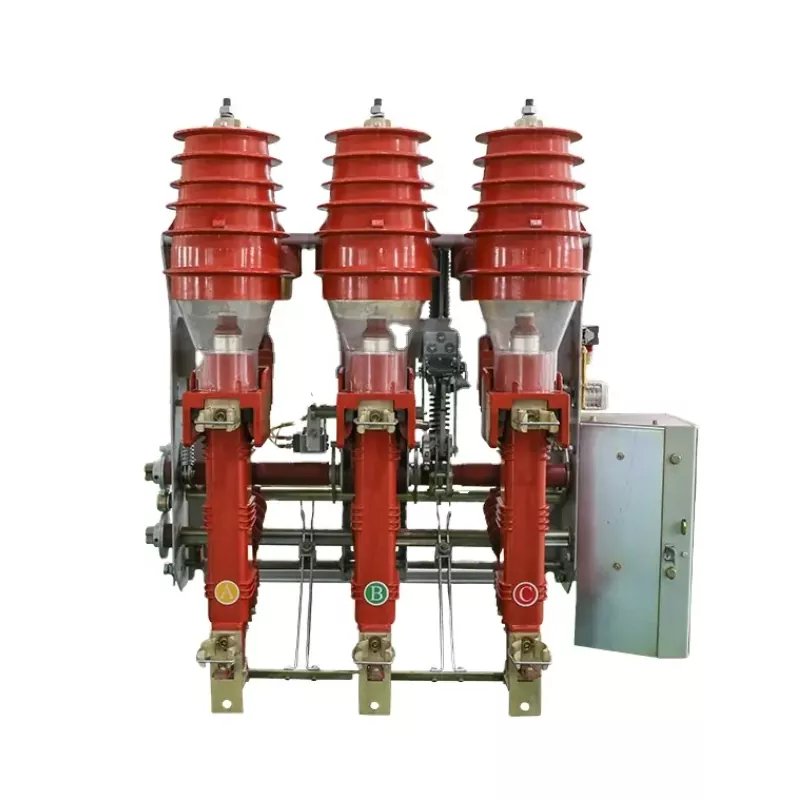
Understanding the Role of an Indoor High Voltage Load Switch
An Indoor High Voltage Load Switch is designed to make and break normal load currents up to its rated value (e.g., 630A, 1250A). Unlike a circuit breaker, it cannot interrupt short-circuit currents. Instead, it relies on series fuses for fault protection. This characteristic directly impacts motor starting suitability.
| Feature | Indoor High Voltage Load Switch + Fuse | Motor Contactor | Circuit Breaker |
|---|---|---|---|
| Make/break normal load current | Yes | Yes | Yes |
| Interrupt short-circuit current | No (fuse needed) | No | Yes |
| Withstand motor inrush (6–8x FLC) | Yes, if fuse delays | Limited | Yes |
| Frequent switching (starts/hour) | Low (2–5) | High (up to 40) | Medium (10–20) |
| Cost per feeder | Low to medium | Medium | High |
Key Limitations for Motor Starting
A motor starting application involves high inrush current (typically 6–8 times full load current) during acceleration. An Indoor High Voltage Load Switch must withstand this inrush without contact welding or pre-arcing the fuse. Toonice recommends verifying three parameters:
-
Making capacity – The switch must be rated for the peak inrush (e.g., 10 kA peak for a 630A switch).
-
Fuse type – Use back-up fuses with time-delay characteristics (e.g., 2–10 seconds for motor start).
-
Duty cycle – Limit starts to 2–4 per hour to avoid contact erosion.
Why Some Applications Work Well
For small to medium motors (up to 500 kW at 6–10 kV), a fused Indoor High Voltage Load Switch is an economical choice. Typical suitable cases include:
-
Pumps, fans, and compressors with infrequent starts (≤5 per hour)
-
Standby or emergency motor feeders
-
Transformer-motor combinations where the transformer already limits short-circuit current
Toonice has supplied thousands of such switches for auxiliary motors in power plants and industrial plants, where cost savings over a circuit breaker exceed 40%.
Indoor High Voltage Load Switch FAQ – Common Questions
Q1: Can an Indoor High Voltage Load Switch safely disconnect a running motor under normal conditions?
A1: Yes, provided the motor current does not exceed the switch’s rated normal current (e.g., 630A). The switch is designed to break inductive loads like motors, but it will draw an arc that is extinguished by the internal arc chute. However, you must never attempt to break a stalled rotor or short-circuit condition – that requires the fuse. For normal stopping of a healthy motor, the switch operates safely within its load-breaking capability. Always check the manufacturer’s breaking current curve, as motor power factor (typically 0.2–0.3 during start, 0.8 at full speed) affects arc extinction.
Q2: What happens if a motor fault occurs while using an Indoor High Voltage Load Switch?
A2: The switch contacts will open on command, but the arc will not self-extinguish because the short-circuit current (e.g., 20 kA) far exceeds the switch’s breaking capacity (typically 1–2 kA for load breaking). This would destroy the switch. Therefore, a properly coordinated current-limiting fuse is mandatory. When a fault occurs, the fuse melts within half a cycle, clearing the current before the switch contacts separate. The switch then opens only the tiny residual current. Toonice always provides fuse coordination charts to ensure the fuse operates before the switch’s breaking limit.
Q3: Can I use an Indoor High Voltage Load Switch for reversing or plugging of a motor?
A3: No. Reversing or plugging a motor requires switching under stalled or near-stalled rotor conditions, where current remains at 6–8 times full load for several seconds. An Indoor High Voltage Load Switch is not rated for breaking such locked-rotor currents – it will cause contact welding and arc flash. For reversing starters, use a vacuum contactor with appropriate short-circuit protection. If you must use a load switch, add a dedicated reversing contactor upstream. Toonice advises against any application involving breaking high inrush more than five times per year.
Best Practices from Toonice
To safely use an Indoor High Voltage Load Switch for motor starting:
-
Always install back-up fuses sized for motor locked-rotor current (class “2” coordination preferred).
-
Limit starts to ≤5 per hour for thermal endurance.
-
Ensure the switch has a rated making capacity ≥ motor inrush peak.
-
Use a control scheme that prevents load break during fault conditions.
| Motor Power (kV) | Switch Rating (A) | Recommended Starts/Hour | Fuse Rating (A) |
|---|---|---|---|
| 200–400 kW @ 6kV | 200 | ≤5 | 40–80 time-delay |
| 400–630 kW @ 10kV | 400 | ≤3 | 100–160 time-delay |
| 630–1000 kW @ 10kV | 630 | ≤2 | 200–250 back-up |
Conclusion and Contact
An Indoor High Voltage Load Switch can be used for motor starting in infrequent, low-duty applications with proper fuse protection. It is not a substitute for a contactor or circuit breaker in high-cycle or reversing duties. Toonice offers complete fused load switch solutions with certified coordination studies.
Contact us today to review your motor starting specification – our engineers will recommend the safest and most cost-effective switching solution for your medium-voltage system.