
Are Low Voltage Knife Switches Still Allowed Under Current Electrical Standards
2026-11-16
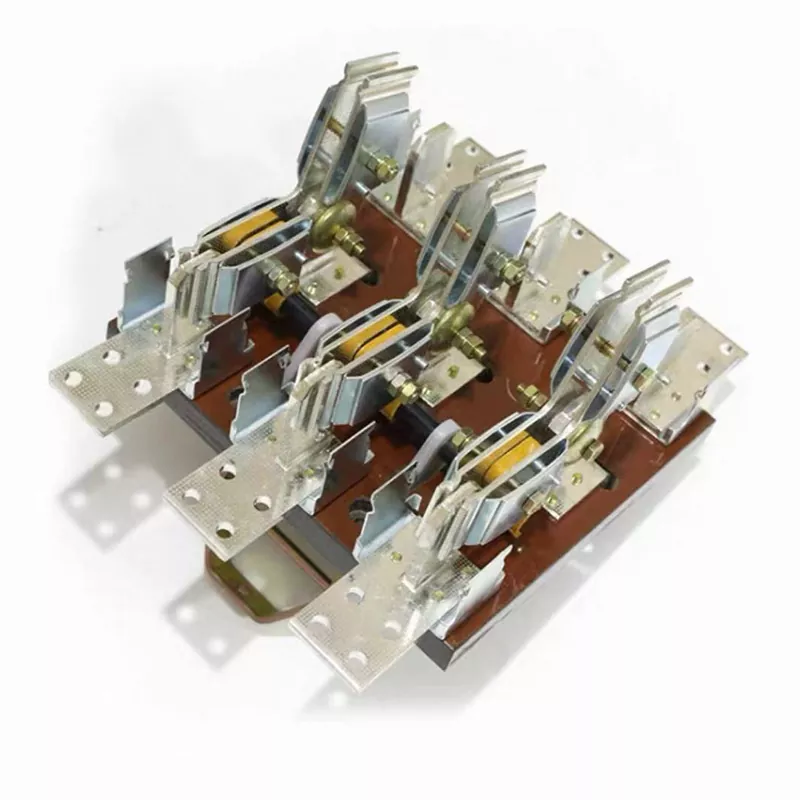
Electrical engineers and facility managers often ask whether a Low Voltage Knife Switch remains a compliant choice in modern power distribution systems. The short answer is yes—provided the device is correctly specified, installed, and maintained in line with the applicable standards. At Junray, we design and manufacture Low Voltage Knife Switches that meet recognized requirements for isolation and visible disconnection, and this guide explains what compliance actually looks like in practice.
The Standards Landscape at a Glance
Compliance is not a single rule but a set of overlapping requirements. The table below summarizes the main considerations that determine whether a Low Voltage Knife Switch is acceptable in a given installation.
| Standard / Requirement | What It Covers | Practical Implication for a Low Voltage Knife Switch |
|---|---|---|
| IEC 60947-3 | Switch-disconnector performance, making/breaking capacity | Device must carry and interrupt rated current and provide isolation |
| UL 98 | Enclosed and dead-front switches | Enclosure, markings, and ratings must match the application |
| Local electrical codes (e.g., NEC, IEC-based national codes) | Installation rules, disconnecting means | Visible break and lockout capability are typically required |
| Arc-flash and workplace safety rules | Operation and maintenance procedures | Correct rating, labeling, and PPE procedures are mandatory |
Key Conditions for Continued Acceptance
A Low Voltage Knife Switch stays compliant when the following conditions are satisfied:
-
Correct voltage and current rating for the circuit, including fault withstand capability.
-
Visible isolation that satisfies lockout/tagout and disconnecting-means rules.
-
Proper enclosure and ingress protection for the environment.
-
Suitable duty classification (for example, AC-23 for mixed inductive loads).
-
Documented maintenance and inspection to preserve performance over time.
Where Knife Switches Fit Today
Modern installations increasingly use molded-case circuit breakers and load break switches, yet the Low Voltage Knife Switch retains clear advantages in specific roles:
| Application | Why a Low Voltage Knife Switch Works Well |
|---|---|
| Main isolation in industrial panels | Clear visible break for maintenance safety |
| Transformer and generator disconnection | Simple, robust, and easy to verify |
| Retrofit and replacement projects | Direct form-fit-function substitution |
| High-vibration or harsh environments | Fewer moving parts and rugged construction |
Junray supplies Low Voltage Knife Switches in multiple pole configurations, current ratings, and enclosure styles so specifiers can match the device to the duty and the code.
Common Compliance Pitfalls
Even a compliant product can fail an inspection when applied incorrectly. Watch for undersized ratings, missing interlocking, inadequate terminal torque, and enclosures that do not suit the location. Always confirm that the selected Low Voltage Knife Switch carries the marking and test evidence required by the authority having jurisdiction.
FAQ
Q: Is a Low Voltage Knife Switch permitted as a main disconnecting means?
A: Yes, in most jurisdictions a Low Voltage Knife Switch is accepted as a disconnecting means when it provides a visible break, can be locked in the open position, and is rated for the circuit voltage and current. Confirm local code wording and ensure the device is marked for isolation duty.
Q: Does a Low Voltage Knife Switch provide overload protection?
A: No. A Low Voltage Knife Switch is primarily a switching and isolation device. Overload and short-circuit protection must be provided by fuses or circuit breakers coordinated with the switch rating, so always verify the protective device upstream or downstream.
Q: How often should a Low Voltage Knife Switch be inspected?
A: Inspection frequency depends on duty and environment, but a practical baseline is a visual check every six months and a full maintenance review annually. For a Low Voltage Knife Switch in heavy-duty or dusty locations, shorten the interval and check contact condition, blade alignment, and terminal tightness.
Q: Can an old Low Voltage Knife Switch be upgraded rather than replaced?
A: In many cases yes. A Low Voltage Knife Switch can be replaced with a modern equivalent that matches mounting, polarity, and ratings, restoring compliance without redesigning the panel. Verify the new device meets current standards before installation.
Contact Us
Need help confirming whether a Low Voltage Knife Switch meets your local standards? Contact Junray today for product datasheets, compliance documentation, and application support—our engineers will help you select the right Low Voltage Knife Switch for your project and keep your installation fully compliant.