

Top High Voltage Switchgear Manufacturers Powering Global Energy Systems
2026-11-27
Global energy systems are shifting faster than most switchgear catalogs can keep up with. Grid upgrades, renewable interconnections, and industrial electrification all depend on high voltage switchgear that can handle more stress with fewer surprises. That turns the manufacturer choice into a system-level risk decision rather than a routine procurement detail. CNKEEYA has been carving out a distinct position in this competitive space, and what follows highlights the manufacturers actually shaping the next wave of energy infrastructure.
The Unsung Engineering Choices Behind Dependable High Voltage Gear
Reliability in high voltage gear rarely comes from a single breakthrough. It accumulates in the choices that never make the spec sheet: how a bushing sheds water under morning fog, whether a copper joint was torqued to a value derived from thermal cycling rather than a generic table, and where a drain hole was placed so condensation cannot pool inside an enclosure. These decisions are easy to overlook because they happen long before commissioning, often in a supplier's prototype bay or on a repair crew's truck.
One telling example is the way conductor surface finish gets treated. A barely visible burr or sharp edge can concentrate electrical stress enough to start partial discharge, slowly eroding insulation long before a fault appears. Engineers who chase long service life will radius edges, control plating thickness, and inspect castings for porosity that finite element models often assume away. It is not glamorous work, but it shifts failure from a surprise event to a predictable maintenance item.
Thermal behavior matters just as much as dielectric strength. A breaker that passes type tests in a climate-controlled lab can behave very differently after years of load cycling in coastal humidity. Bolted connections relax, oxidation creeps into contact surfaces, and cooling paths get obstructed by fine dust. Designing for that reality means selecting materials with compatible expansion rates, using spring washers where relaxation is expected, and choosing surface treatments that survive salt spray instead of only looking good on a drawing.
Why Fault Interruption Still Separates the Market Leaders
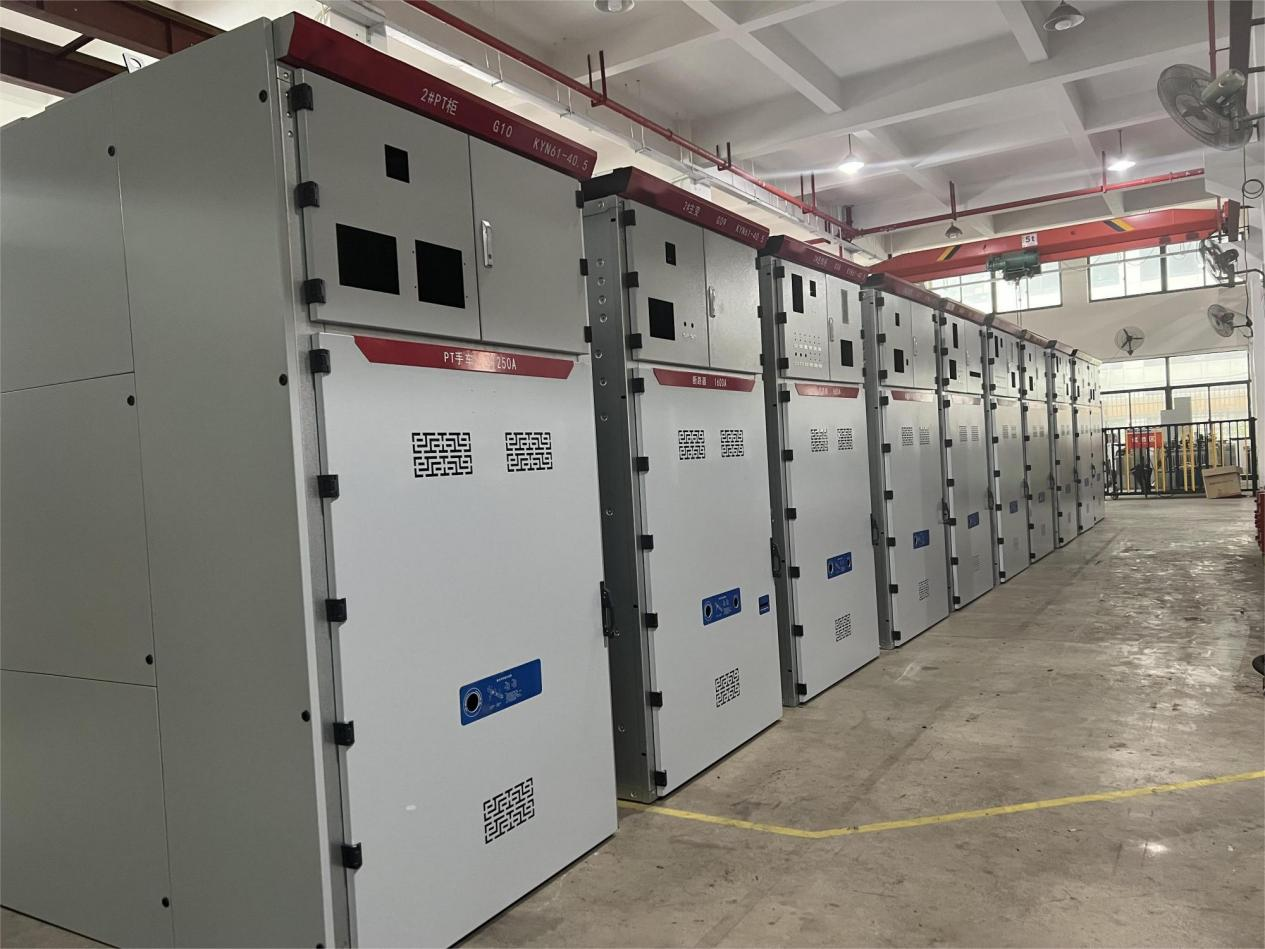
Most switchgear can open a circuit under normal load. The gap between competent and exceptional shows up only when a real fault hits—line-to-line short, ground fault, arc flash. In those milliseconds, current spikes can exceed rated levels by an order of magnitude, and the device that interrupts cleanly without letting plasma linger or contacts weld shut is the one that keeps a facility running. Market leaders don't win on catalog specs alone; they win because their interruption technology has been beaten into shape through thousands of staged fault tests, each one revealing a new way energy tries to cheat the gap.
A less obvious differentiator is how the interruption mechanism behaves after the first half-cycle. Cheap breakers might extinguish the arc on a zero crossing, but the dielectric strength recovery is so slow that a restrike happens on the next voltage peak. That restrike is what turns a minor event into a burned busbar or a transformer with internal damage. Leading designs incorporate gas flow, magnetic blowout, or vacuum gap geometry that actively stretches and cools the arc column, forcing a definitive current zero and holding it there. The difference is invisible in a brochure, but after one major fault, a plant engineer can tell you exactly which brand earned its price premium.
Finally, there is the matter of repeatability. A breaker might interrupt a fault once and be taken out of service immediately for inspection. The leaders engineer for multiple consecutive interruptions before any maintenance is required, because real networks often see a second or third fault when a tree branch swings back into a line or a failed cable splice keeps re-energizing the circuit. That margin of resilience—not just interrupting once, but interrupting the third time with the same speed and arc control—is what quietly separates the top tier from everyone else in the market.
How Modern Switchgear Sheds Weight Without Losing Muscle
A lot of the weight in older switchgear came from copper bus and steel enclosures that were sized by habit rather than necessity. Modern designs lean on shaped aluminum conductors, selective silver plating at joints, and welded aluminum frames that hold up under arc-fault testing without the mass of previous generations. The bus itself often uses hollow or ribbed profiles, so you keep the current-carrying cross-section where it matters and drop material everywhere else.
Vacuum interrupters have also changed the mechanical equation. Because the contact gap is small and the arc is contained, the operating mechanism no longer needs to be a heavy spring-and-linkage assembly built for long travel and generous margins. A compact magnetic actuator can produce the same closing and opening force with fewer moving parts, which trims weight from the frame and lowers the load on the floor or mounting structure.
Thermal modeling deserves much of the credit for the leaner look. Instead of adding copper or steel as a blanket safety factor, engineers simulate continuous current, overload, and short-circuit conditions and remove material only where temperatures remain within limits. The result is equipment with tapered conductors, deliberate cutouts, and thinner enclosure walls that still meet the same heat-rise and fault-duty ratings as its heavier predecessors.
The Vendor Questions Utility Teams Ask Behind Closed Doors
Behind closed doors, utility procurement teams rarely linger on brochure specs. They want to know who actually owns the failure when a firmware update bricks a field device at 2 a.m. The conversation moves quickly to remediation timelines, on-call engineering access, and whether the vendor has ever walked away from a P1 incident without a root-cause report.
A recurring question is less about the product and more about the roadmap. Teams ask which features are truly on the near-term schedule versus which ones exist mainly in slideware. They press for the names of reference sites with similar load profiles, and they ask if those references are still running the current release or quietly pinned to an older one.
Interoperability tends to dominate once trust is established. Utility engineers want plain answers about data export formats, API rate limits, and whether the vendor treats the historian as a partner or a competitor. The hardest questions often surface around vendor lock-in: what it costs to leave, how long migration takes, and who keeps the configuration history if the contract ends.
Regional Manufacturing Hubs Are Shortening Supply Chains Fast
A floor manager in Monterrey no longer waits eight weeks for a shipment out of Shenzhen. That wait has dropped to five days, and the difference isn't some marginal gain in carrier software—it's geography. Suppliers have been pulling away from distant megafactories and setting up inside regional clusters where a truck route matters more than a container vessel. The result is that inventory buffers are shrinking, factory floors are tighter, and production schedules stop hinging on a port halfway around the world.
What is changing is not just distance; it is the speed at which problems get solved. When a batch of stamped housings arrives with a burr, an engineer can drive across the state line the same afternoon instead of booking a flight across an ocean. This kind of overlap—design, die-making, plating, and assembly all within a few hundred kilometers—cuts the quiet costs that used to hide inside long lead times: expedited freight, safety stock, and duplicated quality checks. Regional hubs are absorbing more of those steps and, in the process, turning supply chains from month-long pipelines into short loops that can be adjusted without weeks of planning.
Not every industry is moving at the same pace, but the direction is hard to miss once the math includes downtime and rework. A Midwest tooling cluster, a northern Mexican electronics corridor, or a Polish battery valley can now bid on work that once went to the lowest labor cost by default. The old assumption that sprawling supply chains are always cheaper is being replaced by a simpler test: can the part arrive before the line stops?
Smart Monitoring Moves From Add-On to Standard Practice
A decade ago, condition-monitoring sensors were the kind of upgrade a facility manager pitched only when there was leftover capital budget. Today they arrive pre-installed or are specified in the first round of equipment procurement. The shift is visible in compressed-air systems, pumping stations, and HVAC plants where vibration, temperature, and power-quality data stream into the same dashboard that tracks work orders. The sensors themselves have become inexpensive enough that the conversation is no longer about whether to instrument an asset, but which signals actually deserve attention.
What changed is less about the hardware and more about how maintenance teams handle the output. Early adopters often drowned in alerts and spent months tuning thresholds before seeing value. Now the standard setup includes event correlation and a direct link to dispatch, so a rising temperature trend on a motor winding can trigger a work order with suggested parts and a priority level. That closed loop between detection and action is what makes monitoring feel like a normal operating practice rather than a science project.
Suppliers have adjusted accordingly. Remote diagnostics, once sold as a premium service, are increasingly bundled into standard warranties or service agreements. For buyers, that means evaluating equipment now includes a quiet expectation: if the machine cannot report its own health or support remote troubleshooting, it is already seen as behind the curve.
FAQ
Hitachi Energy, Siemens Energy, GE Vernova, Schneider Electric, Mitsubishi Electric and Toshiba generally lead transmission-level tenders because they bring together grid automation platforms, certified service networks and broad type-test portfolios. Smaller regional specialists often win work through faster retrofit delivery or unusual enclosure requirements, but they rarely match the global players' coverage across voltage classes.
It provides the controlled switching, fault interruption and isolation needed when solar farms, offshore wind and battery storage connect to transmission networks. Modern designs also carry sensors that help operators manage variable feed-in without weakening protection coordination or overloading existing substation equipment.
Type-test certification, local service teams, spare parts availability and the ability to deliver and commission within the project window matter more than the initial bid in many cases. Long-term arc-flash performance, environmental compliance and compatibility with existing digital control systems also shape total ownership cost.
SF6 is an extremely potent greenhouse gas, so regulators in Europe, North America and parts of Asia are tightening reporting and phase-down requirements. Utilities are increasingly favoring manufacturers that offer vacuum interrupting technology, alternative insulation or low-leakage SF6 systems in new substation projects.
Instead of fixed interval servicing, sensors track contact wear, partial discharge, temperature and gas pressure continuously. This allows asset managers to schedule interventions only when needed, reduce unexpected outage time and extend the operating life of aging substation equipment.
Lead times for specialized bushings, vacuum interrupters and instrument transformers have improved but remain uneven. Some manufacturers are dual-sourcing critical materials, holding buffer stock and redesigning products to use fewer constrained components, which helps stabilize delivery schedules for utilities.
A product type-tested to IEC standards may still need additional testing or documentation for IEEE and ANSI markets, and the reverse is also true. Experienced manufacturers design adaptable platforms that can meet local voltage levels, seismic requirements, altitude derating and grid codes without starting from scratch.
Third-party service firms can retrofit controls and replace obsolete components, but the work must preserve the original type-test validity where possible. In many cases, a full replacement with a modern digitally enabled panel is more cost-effective than repeated repairs on equipment with rising failure rates.
Conclusion
Behind the global rollout of high voltage switchgear, the real differentiators are rarely visible on a datasheet. Leading manufacturers earn their place through unglamorous choices: busbar geometry, contact materials, insulation stress control, and mechanical sequencing that hold up after decades of thermal cycling. Fault interruption remains the sharpest test. The best suppliers combine vacuum or SF6 interrupters with operating mechanisms tuned for short arcing windows and predictable dielectric recovery. At the same time, modern designs are shedding weight through composite housings, optimized castings, and lighter actuation systems without sacrificing short-circuit ratings or seismic performance.
Utility teams privately ask harder questions about spare parts, factory testing, failure histories, and how a vendor behaves when a breaker misoperates at 2 a.m. These conversations now shape procurement as much as price. Regional manufacturing hubs in Southeast Asia, Eastern Europe, the Middle East, and Latin America are shortening lead times and reducing exposure to ocean freight delays, while localizing service support. Meanwhile, embedded sensors, partial discharge monitors, and breaker health analytics have moved from retrofit extras to standard scope, giving operators condition-based maintenance instead of fixed calendar intervals. The manufacturers pulling ahead are those treating monitoring data as a design feedback loop, not just a dashboard feature. In that sense, the leaders powering global energy systems are no longer defined only by units shipped, but by how well their equipment, supply chains, and after-sales engineering hold together under real grid stress.
Contact Us
Contact Person: Queenie
Email: [email protected]
Tel/WhatsApp: +86 15558806611
Website: https://www.cnkeeya.com