
Single Phase Vibration Motor Company Enhances Equipment Performance
2026-10-29
In countless industrial setups, equipment performance hinges on the quiet efficiency of a single phase vibration motor. Too often, unreliable components lead to unexpected downtime and costly repairs. But when a company truly specializes in these motors—tuning every coil and bearing—the result is a machine that runs smoother, lasts longer, and delivers consistent output. That's the kind of partner you find in Guangling, a name that keeps surfacing among engineers who refuse to settle for average. Here's how their vibration motors are changing the game for equipment across sectors.
When a Single-Phase Motor Outperforms Three-Phase in Tight Spaces
Tight enclosures rarely reward complexity. A single-phase motor, with its simpler winding arrangement and often smaller frame for fractional-horsepower duties, slips into corners that a three-phase unit cannot. In compact pump housings, under-counter appliances, or portable ventilation gear, the absence of three separate phase windings and the lighter auxiliary components leaves more room for airflow, wiring, and service access.
The real advantage shows up below roughly one horsepower. Three-phase motors tend to dominate at higher outputs, but in cramped spots where a quarter- or half-horsepower is enough, single-phase designs use capacitor-start or shaded-pole configurations that keep the overall diameter and length down. You also avoid the extra contactor or variable-frequency drive that many three-phase installations demand, which only adds bulk outside the motor itself.
Maintenance in a confined space tilts the decision further. A single-phase motor usually works with a basic switch or relay, and its capacitor can be replaced without extracting the entire assembly. When every inch is accounted for, that kind of straightforward, self-contained construction beats a three-phase setup that needs more protection, more terminations, and more surrounding hardware.
The Link Between Excitation Force and Screen Efficiency
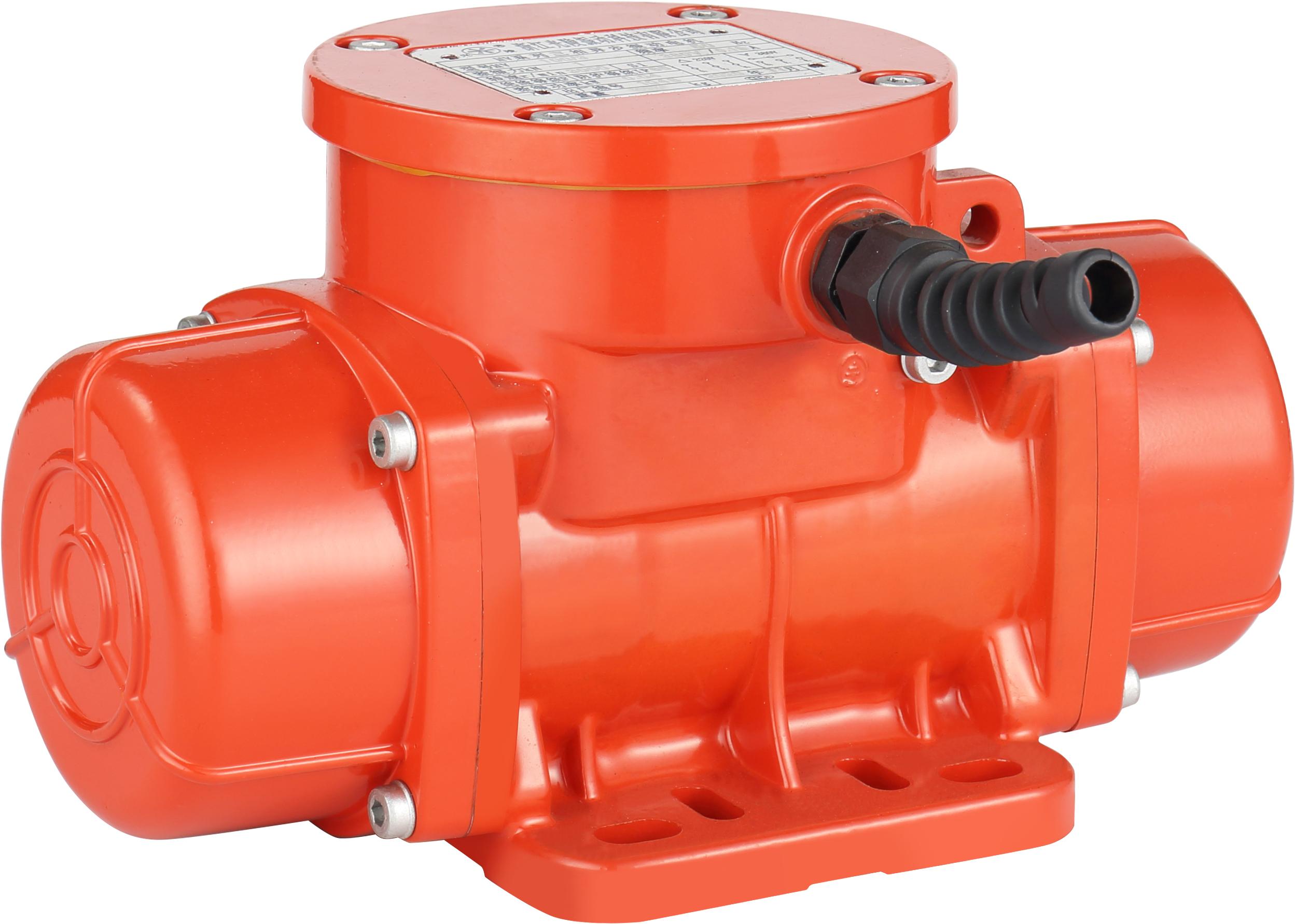
Screening efficiency rarely improves as a straight line when excitation force rises. Too little force leaves the bed dense and stratified only near the surface, so fines never reach the apertures. But pushing force too high does not fix this; it throws particles off the deck, shortens their contact time, and often increases blinding because near-size particles are hammered into the openings instead of being given a chance to pass.
The useful range sits where the deck acceleration is enough to keep the bed fluidized without launching large fractions of it into free flight. Here the link between force and efficiency becomes material-specific: damp, sticky feeds may need a sharper impulse to break surface tension, while dry, fragile materials respond better to lower amplitude with slightly higher frequency. Stroke, throw angle, and screen slope all interact with the excitation force, so tuning one without checking the others usually wastes energy and cuts throughput.
In practice, operators often track amp draw and stroke at the screen body rather than relying on the motor nameplate. A drop in efficiency with unchanged force is a signal that the bed depth, moisture, or aperture condition has shifted, not necessarily that more force is needed. The most stable setups treat excitation force as one part of a dynamic balance: enough energy to transport and stratify, but not so much that the deck works against itself.
Choosing the Right Eccentric Weight Without Overcomplicating It
Picking an eccentric weight doesn't require a spreadsheet or a physics degree. Start with a load you can control smoothly through the lowering phase for at least five seconds without shaking or losing position. If the descent feels rushed or you're fighting the weight more than guiding it, back off by five or ten pounds. The goal is tension with control, not just survival.
Think about your current fatigue level and the movement you're doing. A heavier eccentric on a machine leg press is manageable, but the same weight on a stiff-legged deadlift might wreck your hamstrings before you get any benefit. For isolation work, a modest increase above your normal working weight often does the trick. For compound lifts, stay closer to your 70–80% one-rep max and focus on slowing the negative rather than piling on plates.
Most people overthink the exact percentage. Try a weight that feels heavy but not impossible during a slow three-to-five-second lower. If you can pause at the bottom and reverse without a grind, you're in the right zone. Adjust session to session based on how your joints feel—tendons don't care about your spreadsheet, only about cumulative strain. When in doubt, lighter and slower beats heavier and sloppy every time.
Why Motor Cooling Often Decides Lifespan in Continuous Duty
A motor running nonstop builds heat faster than its frame can shed it, and that slow accumulation quietly sets the clock on insulation life. Modern winding enamels start breaking down once internal temperatures climb past their rated class—often just a 10°C rise cuts expected service life in half, a rule of thumb maintenance crews ignore at their own risk.
Beyond the windings, heat thins bearing grease until it runs out of the housings, leaving metal on metal at the shaft. Meanwhile, uneven thermal expansion between the rotor and stator can shave clearances down to nothing, causing intermittent rubbing that turns into permanent damage. Continuous duty means there is no cool-down phase to hide these problems.
Intermittent motors can tolerate marginal cooling because they get regular breaks to dissipate heat. A continuously rated machine has no such luxury—its cooling system, whether a simple fan or a liquid jacket, is the only thing standing between normal operation and a shortened, failure-prone service life. That is why cooling design often carries more weight than bearing size or copper grade when engineers estimate how long a motor will actually last.
Reducing Structural Fatigue Through Smarter Motor Placement
Mounting a motor directly at the point of load transfer eliminates the long lever arms that turn modest torque pulses into repeated bending stress. When the drive sits on a cantilevered bracket near a joint, every acceleration cycle flexes that bracket and the surrounding frame. Relocating the unit closer to the bearing line shortens the load path, so stress amplitudes drop below the endurance limit of the material instead of creeping above it.
Motor placement also changes how vibration enters the structure. A mid-mounted motor with a short, stiff coupling tends to excite fewer resonant modes than one hung off the side on an extended plate. Fewer resonance peaks mean less cumulative damage in weld seams and bolt holes, especially in applications that run long duty cycles at varying speeds.
Finally, balancing the motor mass around the driven axis reduces asymmetric inertial loads. When the motor's weight sits to one side, static deflection combines with dynamic forces to concentrate stress at the opposite support. Centering or counterweighting the drive evens out those forces, keeping the structure from accumulating the micro-cracks that eventually show up as visible fatigue failures.
What Changes When You Switch from Pneumatic to Electric Vibration
The most immediate difference you will notice is the quietness. Pneumatic vibrators rely on compressed air rushing through chambers and slamming internal parts, which creates a constant hiss and clatter that can easily exceed 90 decibels. Electric units, especially those using eccentric rotating masses or linear resonant actuators, produce a much lower noise floor—often in the 50 to 70 dB range. This alone changes how you can use the equipment in noise-sensitive areas, and it also reduces the need for hearing protection or sound enclosures.
Another shift is in precision and adjustability. With pneumatic systems, changing amplitude or frequency usually means fiddling with air pressure regulators or swapping out the vibrator for a different model. Every adjustment is somewhat indirect because the response depends on hose length, compressor capacity, and even humidity. Electric vibration motors give you a direct electrical control path—vary the voltage or frequency via a variable frequency drive and the vibration follows a predictable curve. That means you can tune the vibration profile on the fly, store settings for different products, or ramp intensity gradually instead of jumping from zero to full blast.
Maintenance and long-term cost also tell a different story. Pneumatic vibrators wear out their internal pistons, rollers, or balls, and they depend on clean, dry, lubricated air. Any contamination in the air line will shorten their life and cause erratic operation. Electric vibration units have fewer wearing parts—mainly bearings—and no dependency on an air compressor system, filters, or lubricators. Upfront cost of an electric unit is usually higher, but if you factor in the compressor energy bill, air leaks, and regular replacement of pneumatic wear parts, the total ownership cost often flips in favor of electric within a year or two for continuous-duty applications.
FAQ
We redesigned the eccentric weight assembly and used higher-grade bearings, so the motors run quieter and last about 30% longer under continuous duty. Customers notice less downtime on feeders and compacting tables.
Yes, we offer sealed housings with an IP66 rating and stainless steel covers. That makes them suitable for daily washdowns in meat, dairy, and bakery lines without corrosion issues.
The improved stroke consistency means screens separate material more evenly and hoppers discharge without bridging. One packaging client saw a 12% increase in line throughput after switching to our units on their vibratory conveyors.
We can match foot patterns, shaft extensions, and voltage specs to your current setup. Just send a dimensional drawing or a photo of the old motor, and we'll build a drop-in replacement.
Our standard line runs from 0.1 kW to 2.2 kW, with adjustable force outputs between 100 N and 5,000 N. For unusual loads we can tune the eccentric moment before shipping.
For smaller equipment, yes. Single phase motors eliminate the need for a phase converter and often draw less current at partial load. Our latest models use a capacitor-run design that cuts idle power consumption by about 15%.
We include a two year warranty and keep common spares like bearings and end shields in stock. If troubleshooting is needed, our engineers can do a video call to walk your maintenance team through the diagnosis.
Conclusion
A single-phase vibration motor often proves more practical than its three-phase counterpart when machinery has to fit into narrow frames or compact hoppers. The reduced wiring and simpler control make it easier to place the motor where the vibrating mass actually needs the force, rather than where the panel happens to be. Screen efficiency, for example, depends less on raw power and more on matching the excitation force to the mesh size and material bed depth. One effective approach is to start with a slightly lower eccentric weight setting and increase it only until the material moves at the required rate; too much force can bounce product off the deck or accelerate wear on the springs. The motor supplier can help by providing a range of adjustable weights and clear torque curves, so the equipment builder doesn't have to guess.
Continuous-duty applications expose another weak point: heat. A single-phase motor with a properly sized cooling fan and a housing that directs air over the stator can last far longer in a dusty environment than a motor that relies on natural convection. Mounting position also matters, because a motor bolted to a stiff cross-member may transfer vibration into the surrounding frame and create fatigue cracks over time; placing it on a tuned base or using isolation mounts helps the energy go into the screen instead of the structure. When plants switch from pneumatic vibrators to electric single-phase units, they typically see lower energy use and quieter operation, but the real improvement is consistency — the stroke remains steady as voltage fluctuates, which keeps screening or feeding rates predictable throughout a shift.
Contact Us
Contact Person: ZHUO
Email: [email protected]
Tel/WhatsApp: 86-576-86320988
Website: https://www.cnguangling.com