PE Pipe Machine Supplier: How to Find a Reliable Partner for Your Production Needs
2026-10-30
Every production line starts with a single machine—but not every supplier can be the partner your PE pipe operation needs. From inconsistent extrusion to delayed deliveries, the wrong choice quietly chips away at your bottom line. So how do you separate genuine reliability from polished sales pitches? At Yongte, we've spent years refining what dependable PE pipe machinery actually looks like. This guide cuts through the noise, walking you through the practical markers of a supplier worth your trust. Because when production stalls, you don't just need a machine—you need a partner who answers.
What Separates a True PE Pipe Extrusion Partner from a One-Time Seller
A one-time seller quotes you a price and disappears after the invoice clears. A genuine PE pipe extrusion partner sticks around when your production line hits an unexpected snag at 2 a.m., walks you through material adjustments over a video call, and remembers that your facility runs hotter in July than the datasheet assumes. That kind of institutional memory doesn’t come from a transaction—it comes from treating your operation as a shared project rather than a sales target.
The difference often shows up in the questions they ask before any order is placed. A seller wants to know how many meters you need and when. A partner wants to see your resin specifications, your cooling water temperature range, the wear patterns on your current screw, and whether your operators have been trained on die-head pressure fluctuations. They push back on specs that look mismatched, suggest trials you didn’t ask for, and occasionally talk you out of a bigger purchase because it would create turbulence in your melt flow.
Over time, that partner becomes the person you call before you change suppliers, not after. They track the lifespan of your barrels and calibrate your downstream haul-off speeds based on last season’s output data. They don’t just sell you a pipe head or a gear pump—they help you understand why your wall thickness drifts on Friday afternoons and what to do about it. When your line is running smoothly, you barely notice them. When it isn’t, you’re glad they exist.
Why Machine Build Quality Matters More Than Brochures Claim
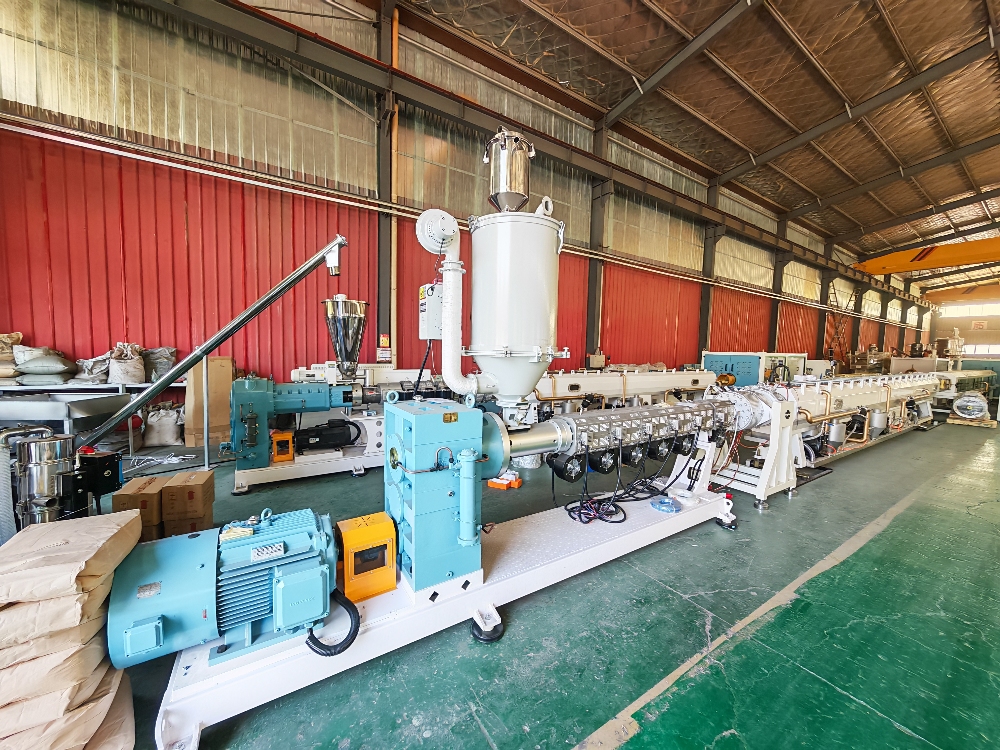
Spec sheets love to parade peak horsepower, cutting capacity, or cycle time, but they stay silent about how a machine feels after 500 real hours. A rigid frame, properly torqued fasteners, and bearings seated to tolerance are what keep a tool precise when the brochure numbers are long forgotten. You don't notice these things on day one—you notice them six months in, when the lever still moves without slop and the covers still align without gaps.
Build quality also reshapes the total cost of ownership in ways no brochure dares to calculate. A cheaper machine with eye-catching output often demands constant adjustment, early part replacements, and unplanned downtime. A well-built machine absorbs rough handling, holds alignment, and quietly saves money over years of use. That's why experienced buyers run their hands over weld beads, check cable routing, and inspect bearing seals before trusting any advertised performance figure.
At its core, build quality is a promise that marketing copy cannot make. It lives in the unglamorous details—sealed seams that keep out dust, rotating assemblies balanced to reduce vibration, wiring harnesses clipped away from heat. When a machine is the backbone of daily work, those invisible choices determine whether it becomes a reliable partner or a recurring headache. The brochure may get you to the showroom, but build quality is what keeps you from returning with a complaint.
Questions to Ask Before You Sign a PE Pipe Machine Contract
Before putting pen to paper, pin down the exact throughput and wall thickness range the line must hit on day one. Ask if the extruder's screw and barrel are optimized for the grade of PE you'll actually run, not just a generic demo recipe. Request a documented dry-run report with your own material, and clarify whether the quoted output figures assume virgin resin or include the regrind percentages you plan to feed back in.
Get the supplier to itemize what "standard configuration" covers. Some quotes omit the vacuum tank's closed-loop water chiller, the haul-off's belt material, or the cutter's dust extraction until after the order is placed. Ask for a line layout drawing with utility connection points and power consumption per module, then walk the reference site if possible. A machine that runs beautifully on the factory floor can underperform when your plant's voltage sag or cooling water temperature differs from the demo conditions.
Finally, negotiate service terms before the price discount. Will the commissioning engineer stay until you hit a mutually agreed output on your resin, or is the visit capped at a fixed number of days? Check whether spare wear parts for the screw, barrel, and die are included for the first 1,000 hours, and ask for a written remote-support response time. The cheapest contract often becomes the most expensive when a minor PLC fault shuts the line down for a week waiting on a timezone-delayed reply.
The Hidden Costs of Choosing the Wrong Extrusion Line Supplier
When a manufacturer signs with an extrusion line supplier that isn't fully aligned with their production realities, the true price often surfaces months later, buried in unplanned downtime and patchwork fixes. A line that seemed affordable on paper starts consuming engineering hours as operators wrestle with inconsistent melt temperatures, frequent barrel wear, or a control interface that fights them on every recipe change. These aren't dramatic failures—they're the slow bleed of a machine that never quite fits the polymer range or output targets it was sold for.
Beyond the immediate frustration, the wrong supplier choice quietly erodes output quality and customer trust. You might find yourself rejecting more extrudate for surface defects, adjusting die gaps far more often than normal, or stockpiling spare parts that should have lasted years but now need quarterly replacement. Each of these issues chips away at margins, but they rarely show up as a single line item—instead, they scatter across maintenance logs, overtime sheets, and late-delivery penalties.
Perhaps the most overlooked cost is the opportunity lost when your team is stuck fighting a poorly matched line instead of improving processes or developing new products. A supplier that lacks real application expertise won't warn you about resin-specific screw design trade-offs or downstream calibration nuances; they'll simply ship the machine and move on. The result is a production cell that never reaches its nameplate capacity, while your competitors with better-matched equipment quietly take the orders you couldn't fulfill on time.
How Field-Proven Performance Beats Lab Specs Every Time
Lab tests are tidy. Temperature stays fixed, surfaces are clean, and the operator follows a script. The field is none of that. Dust, humidity, voltage swings, and improvised mounting change how a product actually performs. Time after time, the spec sheet looks great until the real world has its say.
What sets dependable gear apart is not the number printed in a brochure, but the hours it survives when conditions turn messy. A motor rated at ideal load may struggle under uneven wear. A sensor calibrated in still air may drift when wind and vibration arrive. Field-proven results come from dealing with these surprises, not avoiding them.
That is why long-term testing on active sites matters more than a perfect score in a controlled chamber. When users share stories of kit that kept running through storms, dust, or misaligned setups, it tells you more than any datasheet. Real performance is earned outside, where no one controls the variables.
Signs Your PE Pipe Machine Supplier Will Still Be There in Five Years
When you buy a PE pipe extrusion line, you are not just picking a machine—you are entering a relationship that should outlast the warranty. One of the clearest signs a supplier will still be around in five years is their response time when something goes wrong. Do they answer the phone on a Sunday night, or do you get an automated email promising a callback within two business days? A supplier with real longevity treats your breakdown as their breakdown, sending a technician or at least a detailed video call within hours, not weeks. That level of urgency is not something you can fake for long; it comes from a company that has already weathered enough crises to know that a customer’s downtime is their own reputation on the line.
Another strong indicator is how they handle parts and upgrades. Ask for a list of wear parts—screws, barrels, heaters, calibration sleeves—and see if they can ship them from local stock or if everything has to come from a distant factory with a six-week lead time. A supplier that plans to be around in five years will have already built a regional parts hub or a network of service partners. They will also talk openly about retrofit kits for older models, not just push you toward buying a whole new line. If they still support machines they sold ten years ago, that is a powerful signal they expect to be supporting yours ten years from now.
Finally, watch how they talk about their own future. Companies that disappear are often vague about expansion, new hires, or R&D investment. A supplier worth trusting will mention their latest control system upgrade, a new test lab, or an apprenticeship program they just started. They might even invite you to visit their factory without a scripted tour. When a supplier is genuinely building for the long haul, they are not afraid to let you see the warts as well as the polished showroom. That transparency, combined with fast service and a real parts strategy, is about as close to a guarantee as you will ever get in this industry.
FAQ
Look for evidence that they design their own screw geometry and have tested it with various PE grades. Ask for melt temperature and pressure stability curves from recent trials. Suppliers that can discuss how they handle high-density versus low-density polyethylene differences are usually more dependable.
Request a live video walkthrough of their current workshop floor, focusing on machining tolerances of the barrel and screw. Ask to see the calibration sleeve surface finish and the gearbox brand inside the machine. If they hesitate to show internal components or real-time assembly, treat that as a warning sign.
Many agreements cover installation but not process tuning for your specific raw material. A reliable partner should offer on-site optimization for at least two different PE formulations and provide a clear response time for emergency breakdowns, including weekend coverage if your production runs continuously.
Separate the quoted price by module: extruder, die head, vacuum tank, haul-off, cutter, and control system. Some suppliers quote a low base but use cheaper motors or thinner steel on the vacuum tank. Ask for the brand and model of PLC, inverter, and temperature controller in writing before signing.
Discuss the output rate in kilograms per hour at a specific pipe diameter, not just maximum capacity. For example, a machine rated for 63mm pipe should give you stable output at 250–300 kg/h with HDPE. Ask what happens when you switch to smaller diameters—some extruders struggle with back pressure changes.
Yes, that often shows deeper process knowledge. A supplier who can recommend specific PE100 or PE80 grades, explain how melt flow index affects wall thickness consistency, and suggest regrind ratios is giving you value beyond the hardware. This can prevent production issues that hardware-only vendors overlook.
Very important, but dig into the details. Ask contact information of a customer running the same diameter range and raw material. Then call them and ask about actual uptime, not just satisfaction. A supplier without a single reference in your pipe class may still be good, but you need to test their technical team more rigorously.
Ask for a list of consumable and wear parts with expected service life in hours, not vague months. Request the price and local availability of the screw, barrel, and calibration sleeves. A trustworthy supplier will keep a safety stock of critical components and offer a scheduled maintenance audit after the first 2,000 hours.
Conclusion
Finding a PE pipe machine supplier who genuinely supports your production goals starts with separating committed partners from transactional sellers. A true extrusion partner asks about your material blends, output targets, wall thickness consistency, and downstream handling before quoting a price. One-time sellers push a standard configuration and disappear after delivery. Build quality often reveals itself in details that brochures never show: gearbox alignment, screw metallurgy, barrel heating zones, and the precision of the calibration sleeve stack. These factors determine whether your line holds dimensional tolerance at 500 kg/hour or drifts after a few weeks. Before signing any contract, demand references from plants running the exact model you are considering, not a similar machine. Ask about the supplier's spare parts inventory, their response time for emergency service, and whether technicians will be on site for installation and operator training. A supplier that hesitates on these points is not planning to support you after the invoice is paid. Written guarantees for output rate, energy consumption per kilogram, and screw service life should be part of the technical annex, not vague verbal promises.
The hidden costs of choosing the wrong extrusion line supplier surface within the first year of production. Frequent barrel heater failures, premature screw wear, and downtime from misaligned haul-offs add up far beyond the initial purchase price. A cheap line that runs 12 hours a day instead of 20 is not a bargain. Field-proven performance beats lab specs every time because real-world recycling ratios, regrind percentages, and ambient temperature swings expose weaknesses that factory demos never replicate. Ask to see production logs from a customer who has run the line for at least 12 months, ideally with your target material and output. Then watch for signs that the supplier will still be there in five years: they invest in local service engineers, maintain a stock of critical wear parts, publish software updates for the control system, and proactively contact past customers about retrofits or process improvements. A supplier with a decade-old reference list full of the same plants that still order from them tells you more than any polished presentation. Choose a partner who treats your production line as the beginning of a relationship, not the end of a transaction.
Contact Us
Contact Person: Ms Qin
Email: [email protected]
Tel/WhatsApp: 8613583233866
Website: https://www.yongteplast.com