
Ozone Generator Factory: Inside Modern Manufacturing and Quality Control
2026-11-02
Step inside a modern ozone generator factory and you'll quickly see that precision isn't just a buzzword—it's the foundation of every unit that ships. From automated assembly lines to rigorous quality-control checkpoints, the gap between a cheap imitation and a reliable machine becomes obvious. In this post, we're taking you behind the scenes at LUFUTATECH, where engineering discipline and real-world testing shape every ozone generator before it earns the badge.
Incoming Materials Face a Gauntlet of Checks
Every shipment that arrives at the loading dock doesn't simply get waved through. It first passes through a sequence of checks that can feel less like a receiving process and more like a trial by fire. Barcodes are scanned, paperwork is cross-referenced, and visual inspections begin before the pallets are even unstrapped.
The gauntlet doesn't stop at the dock door. Quality control teams pull samples based on risk profiles, not convenience. Dimensional checks, material certifications, and sometimes destructive testing all come into play. One batch might be rejected for a slight color variation that nobody would notice on a retail shelf, while another gets flagged because the moisture content drifted half a percent beyond spec.
What makes this gauntlet effective isn't any single checkpoint—it's the accumulated pressure. Suppliers quickly learn that cutting corners isn't worth the hassle because the system is designed to catch inconsistencies before they become production problems. The checks might seem excessive on a good day, but they're the reason a bad day doesn't turn into a recall.
The Assembly Line Blends Automation with Hand Finishing
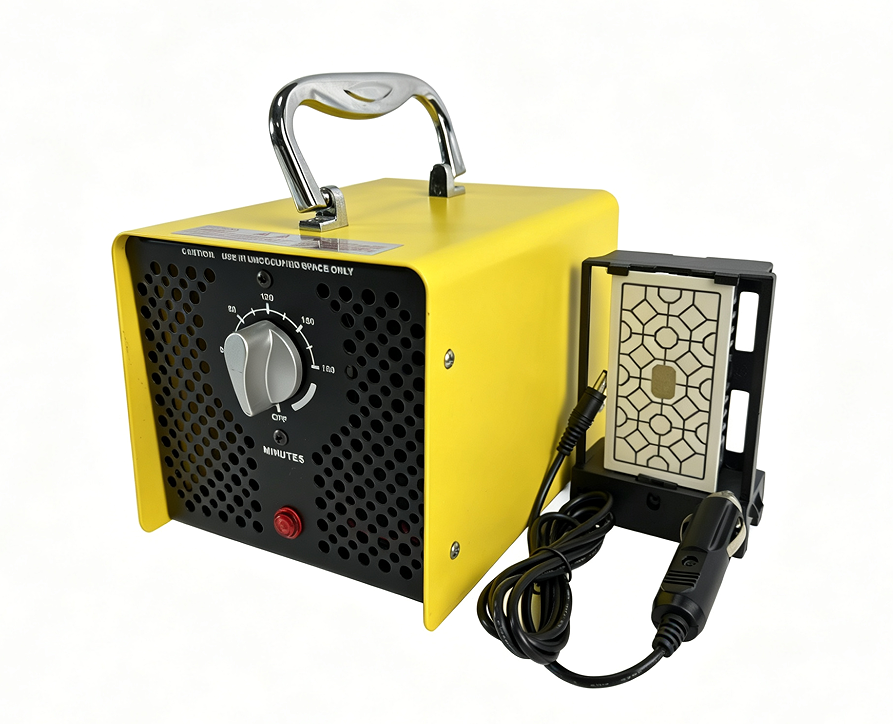
The line moves at a steady clip, robots handling the heavy lifting—welds, torque sequences, surface prep—while operators step in where machines fall short. It’s not a clean split between old and new; stations alternate so a part might get laser-measured one minute and hand-sanded the next.
Hand finishing isn’t a token gesture. Workers feather edges, buff out micro-scratches, and feel for inconsistencies that sensors miss. The automation handles repeatability, but the final pass relies on fingertips and judgment built over years.
This approach keeps throughput high without turning the product into a sterile, uniform copy. Each piece carries slight variations from the human touch—subtle enough to meet spec, but distinct enough that owners notice.
Real-World Conditions Recreated in the Test Bay
The test bay doesn't just simulate conditions—it rebuilds them. From scorching desert heat to icy mountain passes, every temperature extreme is dialed in with precision, and the air itself can be thickened to mimic high-altitude thinness or saturated with salt spray to replicate coastal corrosion. Engineers monitor how materials, seals, and electronics behave under these stresses, catching failures that only appear after years of real-world exposure in a matter of days.
Road surfaces are not left to chance either. The bay can reproduce cobblestone rattles, gravel washboards, and highway expansion joints, all while the vehicle is loaded to full gross weight or twisted on uneven terrain. Wind machines blast the front grille to test cooling under load, and a rain array delivers everything from fine drizzle to monsoon downpours at any angle. These aren't generic tests—they're scripted from actual driving data collected on public roads.
What sets this facility apart is how it layers conditions together. A vehicle might face 50°C heat, high humidity, and a simulated mountain grade simultaneously, just like a summer climb in the Rockies. By stacking these factors, the test bay uncovers interactions that isolated tests would miss—like a sensor that only fails when hot, wet, and vibrating at a specific frequency. That's the difference between a lab result and a road-proof design.
Every Station Has Its Own Quality Halt
There’s a particular kind of attention you develop after years of taking trains: you stop thinking of stations as interchangeable pauses and start noticing how each one holds its own breath. Some halts arrive with the smell of wet leaves and diesel, a wooden bench warped by rain, and a platform so narrow you can hear your own footsteps echo. Others feel almost like living rooms—warm light spilling from a ticket office window, a vending machine humming, the low murmur of two strangers discussing the weather. It’s not about how long the train waits. It’s about what the waiting does to you.
Take the small stop near the old mill, for example. The sign is faded but readable if you squint, and there’s a patch of wild mint growing between the tracks that releases its scent whenever a train brakes. Nobody designed that; it just happened, and now it belongs to the place. Compare that with the underground city station, where the halt is all polished concrete and the distant clatter of turnstiles. There, the quality of pause is sharper—no birds, no wind, just the electric tick of the departure board and the smell of warm metal. Both are halts in the technical sense, but they couldn’t feel more different if they tried.
Once you start noticing these qualities, a timetable becomes less of a schedule and more of a small anthology. The station where the morning light hits the bench at exactly the right angle, the one where a busker always plays the same three chords, the one where the coffee cart owner remembers your order after a single visit. None of these details are advertised. They simply exist, quietly shaping the few minutes you spend there. And that, maybe, is the point: every station’s quality halt isn’t something you pass through—it’s something you carry with you to the next stop.
Skilled Technicians Read What Machines Can’t
A machine logs pressure, temperature, and vibration around the clock, but it doesn't know the difference between a normal hot day and a failing bearing. Skilled technicians pick up on clues that never appear in a digital readout—a faint metallic tick, a slight change in the way a motor hesitates on startup, or the smell of insulation warming just a little too fast. They have learned to trust what their hands and ears tell them long before an alarm goes off.
That kind of reading comes from years of walking the same floors and listening to the same equipment. It's not a checklist or a diagnostic code. It's the ability to notice when something is off in a way that only feels obvious in hindsight. Machines can flag anomalies, but they cannot weigh context the way an experienced technician does.
A Unit’s History Travels with It from Build to Box
Every unit carries a legacy that begins long before the first component is placed. On the build floor, assembly notes, tooling adjustments, and even the shift that handled it leave subtle fingerprints. These details are not always visible, yet they shape how the unit performs when power is first applied.
By the time a unit reaches its box, that history has not been erased. It travels in the form of calibration records, test readings, and the quiet memory of the hands that tuned it. A unit is never just a product; it is the sum of moments that happened between build and box.
When the box is finally sealed, the history goes with it. It waits inside, ready to surface in the field, where every earlier decision finally meets the real world.
FAQ
Stainless steel housings, quartz or ceramic dielectric tubes, high-voltage transformers, cooling fans, and electronic control boards. Incoming batches are checked for dimensional accuracy and surface defects before they enter the production line.
Each cell is built on a dedicated fixture that holds the inner electrode and dielectric tube in precise alignment. Workers apply a controlled torque when sealing end caps, which helps avoid micro-cracks that could cause premature failure.
It drives the corona discharge inside the cell. Modern designs use variable frequency drives that adjust voltage and frequency based on oxygen flow, temperature, and humidity, keeping ozone output stable without overheating the dielectric.
Units are run on a calibrated test bench with a known oxygen feed. An inline UV ozone analyzer measures output against a target curve for at least 20 to 30 minutes, while thermal cameras check for hot spots or uneven discharge.
The team uses statistical process control on key parameters such as cell capacitance, leakage current, and ozone concentration. Any batch that drifts beyond preset control limits is quarantined and reworked rather than simply relabeled.
Yes. Ozone off-gas from test stations is passed through thermal destruct units before venting, and each workstation has ambient ozone monitors with alarms set well below occupational exposure limits.
Accelerated life testing applies continuous high voltage at elevated temperatures for hundreds of hours. The dielectric tubes are then inspected under magnification for pitting or carbon tracking, and only lots that pass are approved for final assembly.
Automated winding of transformer coils and laser-cut stainless steel electrodes have reduced part-to-part variation. In addition, many factories now use modular cell designs, so a failed cell can be swapped in the field without replacing the entire generator.
Conclusion
Raw materials don’t simply roll onto the floor; they run a gauntlet of dimensional, electrical, and contamination checks before any build begins. A batch with one out-of-spec capacitor gets quarantined, not quietly re-sorted. Once cleared, components move to an assembly line where robotic soldering and automated torquing handle repetitive precision, while experienced hands do the wiring, gasket seating, and final panel alignment that machines struggle to get right. The blend is deliberate: robots keep measurements consistent, but human eyes and fingertips still catch subtle misalignments no vision system has learned. Completed units then enter a test bay engineered to mimic harsh real-world conditions—high humidity, fluctuating voltage, backpressure, and continuous ozone output—so that every generator proves itself under load rather than just on paper.
Quality isn’t relegated to a single inspection table. Each station has its own halt trigger: if a torque reading drifts or a seal fails a leak-down check, the line stops until the issue is resolved. Even a small pressure drop in the ozone cell triggers rework, not a waiver. Skilled technicians still matter because they catch subtle problems—a faint hiss, a vibration pattern, a cloudy discharge tube—that sensors alone miss. From the moment a unit receives its serial number, its full build history, test results, and any rework notes travel with it through assembly, packaging, and shipping. A final audit pulls all records together, so the certificate matches actual test data rather than an idealized template. That traceability means a generator arriving on site isn’t an anonymous product; it carries the factory’s entire chain of decisions and checks.
Contact Us
Contact Person: Paul Luo
Email: [email protected]
Tel/WhatsApp: 0086-19966314501
Website: https://www.lufutatech.com