LED Fog Light Bulb Sourcing Tips for Reliable Suppliers
2026-09-28
Finding a dependable source for LED fog light bulbs can feel like navigating through thick fog itself—too many options, vague specs, and suppliers with big promises but little proof. If you're tired of sifting through inconsistent quality and empty warranties, this guide cuts through the haze. We'll walk you through practical sourcing tips—from checking real lumen output and IP ratings to verifying factory certifications and after-sales support. And for those who refuse to compromise on performance, LUXFIGHTER has built a reputation for fog lights that actually pierce through the worst weather. Ready to source with confidence? Let's get started.
Spotting Suppliers Who Actually Test Their LEDs
LED suppliers love to fill spec sheets with impressive lumen and CRI numbers, but that tells you almost nothing about whether their parts will survive a real application. A far better test is to ask for raw binning data from the exact production lot you would receive, not a cherry-picked sample. Watch how they respond when you request thermal derating curves, color shift measurements after 6,000 hours, or failure rate data from their own burn-in tests. Suppliers who genuinely test will send you detailed logs with date stamps, batch numbers, and test conditions. Those who just resell parts will stall, send a generic datasheet, or change the subject.
Another useful move is to look for signs that testing is built into their workflow, not treated as a one-time marketing exercise. Ask whether they own an integrating sphere or outsource photometric tests, and whether they test every reel or just a few pieces per shipment. In a factory visit or video call, you should see a designated test area with equipment that is actually powered on and used. If a supplier can't show you a failed lot report or explain how they quarantine out-of-spec bins, they probably aren't testing in any meaningful way. The difference usually shows up in field returns, not on a web page.
Why Cheap Fog Bulbs Fail Early (and What to Ask Instead)
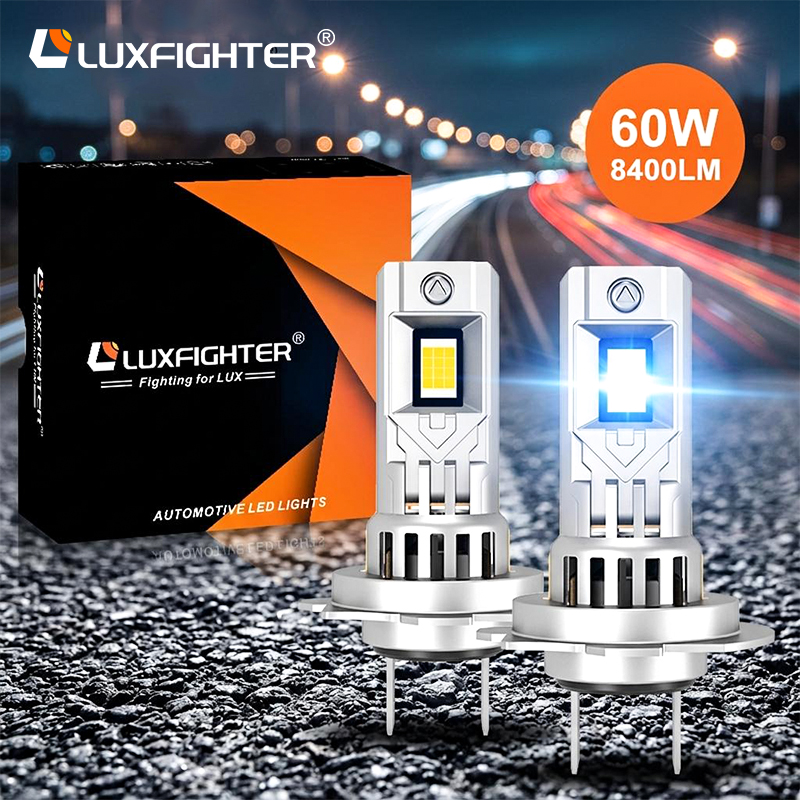
Most budget fog bulbs cut corners where it matters most: filament support and gas fill. The thin, poorly anchored filaments vibrate loose within weeks, while low-grade halogen gas allows tungsten to sputter onto the glass, dimming output fast. Road moisture then finds its way past weak seals, and the bulb dies long before any rated lifespan would suggest.
But the real issue isn't just premature failure—it's what you're not being told. Cheap bulbs often use thinner quartz and cheaper base materials that can't handle rapid temperature swings. When a cold puddle splashes a hot lens, thermal shock cracks the envelope. Instead of asking "How many hours will it last?", ask "What filament support and gas mixture does this use?" and "How does the seal handle moisture intrusion?" Those answers separate a bulb that fades in a season from one that actually survives.
A better question for your next purchase: "What's the failure mode under hard use?" Reputable bulbs are built with reinforced mounting, premium halogen or krypton fills, and UV-cut quartz that resists hazing. If a seller can't explain the internal construction beyond "long life," you're likely paying for a disposable part—not a fog light.
Decoding Lumen and Color Temperature Claims
Walk down any lighting aisle and you'll see bold numbers screaming for attention—900 lumens! 5000K daylight! But those figures rarely tell the whole story. Lumen ratings measure total light output, yet a cheap reflector or frosted lens can waste a third of that brightness before it ever reaches your desk. Meanwhile, color temperature only describes whether the light appears warm or cool, not how accurately it renders the colors of your food, skin, or artwork. A bulb labeled "bright white" might still leave your kitchen looking flat and gray if its spectrum is full of gaps.
Here's a practical trick: ignore the marketing adjectives and look for two less flashy specs. First, check the useful lumens or beam angle if you're lighting a specific area—a 1000-lumen floodlight spread over an entire backyard feels dimmer than a 300-lumen task lamp focused on a cutting board. Second, pair color temperature with the CRI (Color Rendering Index). Two bulbs can both claim 4000K, but one with a CRI of 95 will make a tomato look ripe and appetizing, while a CRI of 80 might turn it a muddy brown-red. Most budget LEDs hide their low CRI scores because that's where corners get cut.
Finally, remember that our eyes adapt faster than any spec sheet. A 2700K bulb feels cozy in a living room but uselessly dim in a garage, not because of lumens, but because our brains associate cool light with alertness. Before trusting a manufacturer's "equivalent to 60-watt" claim, look for independent photometric tests or simply buy one bulb and try it in your actual space. The gap between laboratory measurements and how a light performs beside your favorite reading chair is often bigger than any marketing team admits.
Key Certifications That Separate Reliable Vendors from the Rest
A reliable vendor treats certifications as living proof, not wall decoration. The ones worth your time can usually produce certificate numbers on request and invite you to verify those numbers directly on the issuing body's register. If a certificate has expired, covers a different legal entity, or only applies to one narrow product line while the vendor sells ten others, that gap tells you more than any sales pitch.
Pay attention to whether the certification actually covers the part of the business you are buying from. Some vendors flash an ISO badge earned by a parent company or a separate division, but the entity you sign a contract with has never passed an audit. Ask for the exact scope and legal name on the certificate; the answers often separate dependable suppliers from those running on borrowed credibility.
Ongoing compliance matters as much as the initial stamp. Serious vendors go through periodic surveillance audits, occasional unannounced checks, and can walk you through any nonconformities they have corrected. If a supplier hesitates to share the latest audit summary or sends only a low-resolution scan of an old certificate, treat that hesitation as a warning. Certifications only hold value when they are current, specific, and backed by a record of continuous improvement.
How to Vet a Supplier’s Quality Control Before You Commit
A printed certificate or a slick presentation deck tells you very little about how a supplier actually handles defects, rework, or batch consistency. Before you sign anything, push for a walkthrough of their inspection points on the production floor. Ask to see the rejected material bin, not just the finished goods shelf. If the factory hesitates to let you observe a live in-process check or a pre-shipment sample pull, treat that reluctance as a red flag rather than a scheduling inconvenience.
The next layer is their documentation rhythm. A dependable quality control system leaves a paper trail that is boringly consistent: first-article approval records, inline measurement logs with actual numbers, corrective action reports tied to specific date codes, and traceability from raw material lots to final cartons. Ask for a recent example where they caught a problem before it reached a client—then ask what changed afterward. Suppliers who can only describe their process in generalities usually rely on luck instead of procedure.
Finally, talk to a couple of their existing customers in a similar product category. Not the references handpicked for you—ask for any buyer who has ordered at least twice in the past year. One focused call about late-shipment quality, return rates, and communication during a defect dispute will reveal more than any audit checklist. If you cannot get that conversation, request a trial run with tightened AQL limits and personally inspect the pre-production samples side by side with the final ones. Your commitment should follow evidence, not enthusiasm.
Negotiating Warranty and Return Terms Without Scaring Off Good Suppliers
When you start asking about warranty coverage and return windows, suppliers often hear one thing: "this buyer is going to be a headache." That's why the tone and timing of your questions matter just as much as the substance. Instead of leading with a list of demands, frame the conversation around mutual risk reduction. Say something like, "We both want to avoid situations where a defect shows up after shipping—can we agree on a clear inspection window and what happens if something slips through?" This signals that you're not looking to exploit the policy, but to define a fair, workable process.
Another way to keep good suppliers comfortable is to anchor your asks to their own production realities. Ask what they can reasonably support rather than dictating a one-size-fits-all clause. A factory that specializes in custom tooling may be willing to cover replacement parts for 12 months but balk at covering labor or freight for returns. If you push for a blanket "all costs covered" guarantee, you might force them to build hidden margin into the quote—or quietly walk away. Instead, negotiate tiered terms: a short, no-questions-asked replacement window for obvious defects, and a longer, more limited coverage for latent issues, with freight responsibilities split based on fault.
Finally, put everything in writing, but make the wording collaborative rather than adversarial. Avoid legalistic phrases that sound like you're already preparing for a dispute. Terms like "seller shall be liable for all return shipping in any and all circumstances" can make even a reliable supplier defensive. Replace that with "for confirmed defects reported within 30 days of receipt, return shipping will be prepaid by the supplier; beyond that, we can discuss case-by-case." This shows you respect their boundaries and are open to reasonable exceptions—which is exactly the kind of buyer top suppliers want to keep.
FAQ
Ask for a physical sample, not just photos. Check the LED chip brand (Cree, Lumileds, Osram are safer bets), the color temperature consistency, and whether the housing holds up under heat. Run it for at least 30 minutes continuously to spot early failures.
If the price is 20-30% below the average from multiple suppliers, they’re likely cutting corners on LED chips, aluminum substrate, or waterproof seals. Ask them to list the exact components and compare with a mid-range sample you trust.
For Europe, insist on E-mark and RoHS. For North America, FCC and maybe SAE. CE alone isn’t enough because it’s self-declared. Also check IP67 rating for water and dust resistance—many suppliers only claim IP65 but can’t pass a high-pressure spray test.
Ask about built-in CANbus drivers or decoders. Even then, test on at least two different vehicle models with sensitive electrical systems, like a VW or BMW. A good supplier will offer a plug-and-play guarantee and accept returns if flickering appears.
A credible supplier offers at least two years, but more important is how they handle claims. Ask for a written policy on replacement shipping costs and whether they require the failed unit back. Avoid any supplier that says 'no returns after 30 days' or dodges questions about after-sales.
Request a live video walkthrough of the production floor, not a pre-recorded tour. Look for solder paste printers, reflow ovens, and an aging test rack. If they hesitate or show only a packaging line, they’re likely outsourcing. Also check if they can customize the LED board or driver—that’s harder for pure traders.
Conclusion
Finding a factory that actually tests its LED fog bulbs requires digging past polished spec sheets and asking for test data, not promises. Many low-cost options fail early because they skip thermal management or use undersized drivers, so instead of asking only about price, request details on junction temperature tests, binning practices, and how they validate lumen output over the first 1,000 hours. Lumen and color temperature claims are another minefield: a supplier might list raw emitter specs rather than measured output from the assembled bulb, which drops significantly once installed behind a lens. Ask for integrating sphere reports and CCT tolerance ranges, not just a single number like 6,000K. If a vendor cannot explain the difference between emitter lumens and delivered lumens, walk away.
Reliable suppliers stand out through certifications that match the market you sell into, such as ECE or SAE for automotive lighting, plus an ISO 9001 audit trail for production consistency. But paper certificates are not enough; ask a potential partner to walk you through their incoming material checks, in-process soldering inspection, and final photometric sampling. This is where you separate vendors who merely assemble parts from those who control their own quality. When it comes to warranty and return terms, frame the conversation around realistic field failure rates and shared responsibility rather than demanding unconditional replacement. Good suppliers respond well to data-driven discussions about failure thresholds, lead time for replacement stock, and who covers return shipping — this keeps negotiations serious without making you look like a risky buyer.
Contact Us
Contact Person: Gavin Chen
Email: [email protected]
Tel/WhatsApp: (+86)756-6831079
Website: https://www.luxfighter.com/