
How Professional Frame Circuit Breakers Protect Industrial Power Systems
2026-08-21
What happens when a short circuit strikes a busy factory floor? Without a professional frame circuit breaker, the answer could be downtime, damage, or worse. These heavy-duty protectors don’t just interrupt faults—they manage massive energy safely. Here’s how they work, and why engineers trust Chang Song for mission-critical installations.
The Hidden Risks Lurking in Industrial Power Networks
Aging switchgear, outdated protective relays, and undocumented tap changes often coexist in the same distribution loop. These legacy components rarely communicate with modern monitoring tools, so subtle signs of trouble, like rising contact resistance or intermittent ground faults, go unnoticed until a breaker fails to trip or a busbar overheats.
The blurring line between operational technology and enterprise networks has also introduced quieter failure modes. A contractor's laptop plugged into a local engineering port can accidentally bridge VLANs, letting broadcast traffic flood deterministic control buses. In some plants, routine firmware updates on network switches have disrupted timing signals that motor drives depend on, causing unexplained trips without a clear electrical fault.
Perhaps the most dangerous risk is the false sense of security from redundancy. Dual feeders and automatic transfer switches may look robust on paper, but if both are routed through the same cable tray or protected by relays with identical settings, a single physical incident or protection miscoordination can take down both paths simultaneously. Maintenance teams often discover this only after an outage exposes the shared points of failure.
How Frame Breakers Interrupt Fault Currents Before Damage Spreads
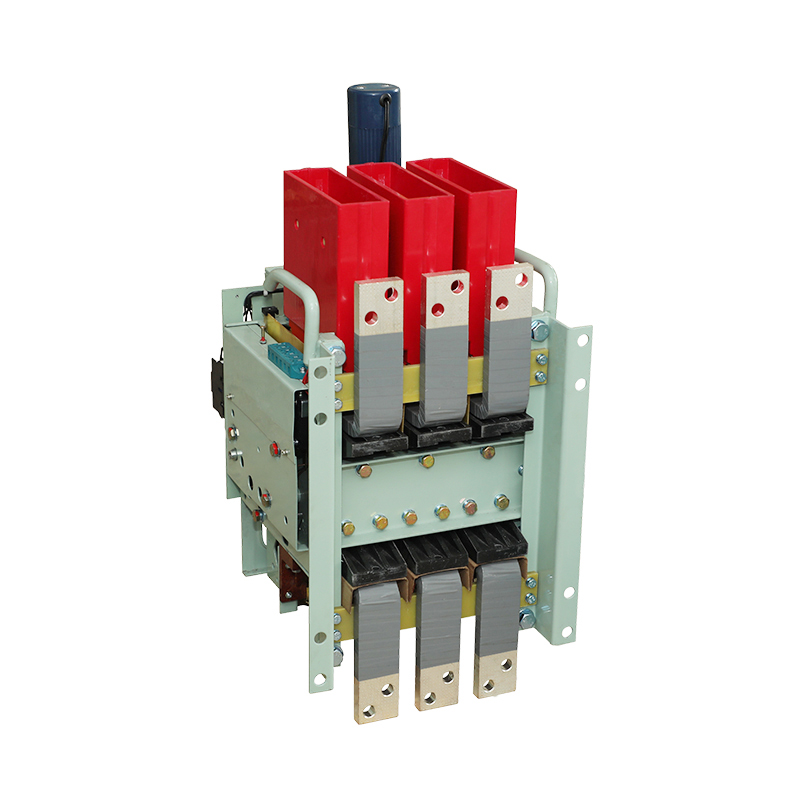
When a short circuit or ground fault hits, current can spike to levels far beyond normal operating range within milliseconds. Frame breakers are built to detect that surge through thermal-magnetic or electronic trip units and open their contacts before the energy has time to cascade into downstream equipment, wiring, or enclosures. The key is speed: the faster the breaker clears the fault, the less let-through energy reaches the rest of the system.
Inside a frame breaker, the arc that forms as contacts separate gets routed into arc chutes, where it is stretched, cooled, and split into smaller segments until it can no longer sustain itself. This controlled interruption happens while the frame itself holds everything rigidly in place, preventing mechanical distortion under high fault stress. As a result, the fault is isolated at its source instead of propagating through the distribution network and causing cascading failures.
Why Coordination with Downstream Devices Matters More Than You Think
Downstream devices rarely behave like ideal loads. A motor drive pulls inrush current at startup, a barcode scanner takes 300 milliseconds to signal readiness, and a relay might bounce for several cycles before settling. If the upstream controller assumes instant, clean responses, you get nuisance trips, missed triggers, or corrupted handshakes. The gap between datasheet "typical" values and the real sequence of events is where most integration bugs hide.
Coordination forces you to design around state transitions, not just steady-state operation. Power sequencing, communication timeouts, and retry logic all depend on what the downstream device actually expects, not what your controller wants to send. For example, enabling a sensor's power rail 50 ms too early can leave it in an undefined mode, while a downstream actuator that draws a brief 2x current spike can brown out the shared supply and reset the very controller trying to manage it.
The payoff shows up in fault recovery. When a downstream device reports a fault, goes offline, or restarts, the upstream logic needs a defined path to re-sync without cycling the whole system. Teams that skip this end up with production lines that stop for reasons nobody can reproduce, because the failure only appears during a narrow timing window. A few extra lines of state-aware coordination code often prevent hours of field debugging.
Real-World Settings Where These Breakers Earn Their Keep
Older apartment buildings with cramped breaker panels are a prime example. Aluminum wiring from the 1960s runs hot under load, and a space heater in one bedroom can push a 15-amp circuit past its limit. These breakers sit tight instead of tripping at the first surge, letting the room warm up but cutting power the moment the wire temperature climbs too high. That kind of patience prevents nuisance trips every time a hair dryer starts, while still stopping the slow heat buildup that leads to melted insulation.
Food trucks and garage workshops throw a different challenge at them. A commercial blender or an air compressor motor draws several times its running current for a split second on startup. Standard breakers often misinterpret that inrush as a fault and kill the circuit mid-recipe or mid-cut. In these mobile kitchens and workbenches, the breakers use a delayed thermal response to ride out the starting spike, then clamp down if the overload persists. You can run a stand mixer and a small fridge on the same outlet without every other start-up plunging the workspace into darkness.
Damp, salty air around marinas and outdoor fountains punishes ordinary electrical protection. Moisture creeps into standard breakers, corroding contacts and causing false trips or, worse, no trip at all. The breakers meant for these settings have sealed cases and arc-quenching chambers that keep internal parts dry. A dock power pedestal feeding a boat lift or a submersible pump for a koi pond keeps working through rain and fog, only interrupting when a genuine ground fault or overload occurs.
Smart Monitoring Features That Turn Breakers into System Guardians
Most traditional breakers only react when something has already gone badly wrong—an overload trips, a short circuit snaps the circuit open. Smart monitoring changes that equation entirely. A new generation of breakers now watches the line around the clock, sampling current draw, voltage stability, temperature at the terminal, and even tiny leakage signatures. These readings aren't just stored; they are compared against expected behavior for the specific load profile. A slight but persistent rise in operating temperature or a growing imbalance on a three-phase supply can be flagged long before it becomes a hard fault.
The real advantage comes from how the data is put to work. Instead of a one-size-fits-all trip curve, users can set custom thresholds for specific circuits or equipment. A motor starting up may draw a brief inrush that an ordinary breaker would misinterpret as trouble, while a smart unit recognizes the normal pattern and stays quiet. When something does drift outside safe parameters, the breaker can send an immediate alert to a phone or building management system, and in many cases it can be commanded remotely to open or close. That turns a passive safety device into an active control point for load shedding, planned maintenance, or emergency isolation.
Over time, these systems build a detailed operational picture. Logging energy use by circuit reveals which areas waste power, which phase carries too much load, and which equipment starts to draw more current as it ages. Self-test routines can verify the breaker's own trip mechanism and communication link on a schedule, while event records provide a clear sequence for troubleshooting after an incident. The result is not just protection against faults but a quieter, more predictable electrical infrastructure where problems are caught as trends rather than surprises.
Maintenance Practices That Keep Protection Ready for the Unexpected
A pressure relief valve that hasn't been cycled in two years might look fine on the outside, but the internal spring could be losing tension or the seat might be building up a layer of residue that changes its cracking pressure. Routine checks that only glance at gauges and warning lights miss the slow drift toward failure. Instead, write down the exact torque needed on critical fasteners, then verify it with a calibrated wrench every quarter. Compare vibration readings from the same motor mount month over month—if the baseline shifts by more than ten percent, investigate before it becomes a cracked casting.
Backup systems often fail because nobody touched them after installation. Run the emergency generator under full load for thirty minutes each month, not just a five-minute idle test, because low-load operation can glaze cylinder walls and clog injectors. Check battery electrolyte levels in standby lighting units and replace any that show uneven cell voltages rather than waiting for the next power outage. For water-based suppression systems, drain a small amount from the lowest point of every dry pipe to catch trapped condensation that could freeze or corrode from the inside out.
Finally, make maintenance a shared observation task rather than a solo checklist. Ask the second-shift operator to feel the pump housing for unusual warmth during their walkthrough, or have the electrician sniff near the transfer switch for any hint of ozone after a heavy rain. Those small sensory notes—written on a greaseboard, not buried in a spreadsheet—often flag a developing fault weeks before any instrument does. When everyone knows what 'normal' feels, sounds, and smells like, protection equipment stops being a static asset and starts behaving like a partner that tells you when it's not ready.
FAQ
The electronic trip unit samples current thousands of times per second. When the instantaneous or short-time threshold is crossed, the trip coil releases stored energy in the operating mechanism. Contacts separate within a few cycles, and the arc is driven into splitter plates where it cools and extinguishes. This keeps fault energy from reaching downstream cables and switchgear.
By setting the main breaker's short-time delay and instantaneous pickup above the feeder breaker's clearing time, a downstream fault only opens the nearest device. The main breaker waits a few hundred milliseconds while the feeder clears, which prevents a small branch fault from shutting down an entire process line. Fine-tuning these curves requires comparing published time-current data for both devices.
The frame determines the maximum continuous current capacity, physical contact size, and short-circuit withstand rating. Even if you install a smaller trip unit, the frame's bus connections, arc chamber volume, and mechanical bracing are fixed. Oversizing a frame for future load growth can avoid a complete breaker replacement later, but you pay more up front and need more panel depth.
Many professional models include a maintenance mode or arc flash reduction switch. Activating it lowers the instantaneous or short-time pickup temporarily, so a fault during maintenance clears much faster. A faster trip drops the arc duration and the incident energy a worker might be exposed to. Zone selective interlocking between breakers adds another layer by making the upstream device trip only when the downstream breaker fails to clear the fault.
Exercise the mechanism at least once a year to keep lubrication from drying out. Check contact wear indicators and measure contact resistance across each pole. Clean insulating surfaces and verify torque on all bolted connections. Perform a secondary injection test on the trip unit to confirm pickup and delay settings match the coordination study. If the breaker sits in a dusty environment, use a vacuum rather than compressed air to avoid forcing particles into the mechanism.
Thermal-magnetic units respond to heat and current, which makes them simple but sensitive to ambient temperature and harder to coordinate precisely. Electronic units measure current with sensors and apply digital algorithms, so they stay accurate over a wider temperature range and offer adjustable long-time, short-time, instantaneous, and ground-fault settings. The electronic version also logs events and can communicate with a plant SCADA system, while a thermal-magnetic unit only tells you it tripped.
In any process where downtime costs more than the added hardware. Draw-out construction lets you rack the breaker out, isolate it with shutters, and swap a spare unit without de-energizing the whole switchboard. This matters for hospitals, data centers, continuous chemical lines, and steel mills where a one-hour shutdown for breaker repair can cost tens of thousands of dollars.
High harmonic content from drives can fool simple sensing circuits. Inrush currents from transformers or motors can exceed instantaneous pickup if it is set too tight. Also, a feeder breaker and upstream breaker may both see the fault if no short-time delay or zone selective interlocking is used. Checking the actual waveform with a power quality meter and reviewing the protection settings often reveals the cause without weakening the protection.
Conclusion
Industrial power networks rarely fail without warning signs, but the consequences of a short circuit or ground fault can spread in milliseconds. Busbars overheat, insulation breaks down, and upstream transformers face mechanical stress long before operators even notice a voltage dip. Professional frame circuit breakers are built to step into that narrow window between initiation and catastrophe. Unlike smaller molded-case devices, they combine heavy-duty contacts, arc chutes, and adjustable trip units to interrupt fault currents at their source, often limiting let-through energy to a fraction of what a standard breaker would allow. That energy limitation matters because it protects cables, buswork, and connected equipment from thermal and magnetic damage. Just as critical is selective coordination: a properly configured frame breaker clears the fault closest to the problem while letting downstream breakers respond to smaller overloads, preventing a localized issue from knocking out an entire production line.
In practice, these breakers earn their keep in places where downtime is not an option—automotive assembly plants, chemical processing facilities, water treatment stations, and hospital power loops. But modern frame breakers are no longer just mechanical switches. Integrated sensors track current, temperature, contact wear, and operating counts, feeding data to local displays or plant-wide SCADA systems. That visibility turns a circuit breaker into a continuous guardian, alerting maintenance teams to loose connections or degrading insulation before a genuine fault occurs. Still, smart features only pay off if the breaker itself remains mechanically sound. Regular exercising of the operating mechanism, contact resistance checks, thermal scans of terminations, and periodic injection testing of trip units keep the device ready for the unexpected. The result is not just protection against rare catastrophic faults, but a quieter, ongoing defense against the everyday stresses that slowly weaken industrial power systems.
Contact Us
Contact Person: Tonglun Chen
Email: [email protected]
Tel/WhatsApp: 8618906642555
Website: https://www.cncsele.com