

Centrifugal Compressor Supplier Selection Tips for Industrial Buyers
2026-09-15
Centrifugal compressor suppliers love to talk about efficiency, uptime, and 'custom solutions'—but not all of them can back it up when your process is on the line. If you're an industrial buyer, the real question isn't who has the flashiest brochure; it's who will still answer the phone after the PO is signed. That's where a practical selection framework makes all the difference. Drawing on real-world experience from Seize Air, this post unpacks the supplier traits that actually matter, from engineering support to aftermarket reliability, so you can choose with confidence instead of crossing your fingers.
Match the Compressor Map to Your Real Process Envelope, Not the Nameplate Rating
Compressor nameplate ratings often reflect a single design point under idealized conditions, but real process envelopes shift with feed gas composition, suction pressure swings, and ambient temperature changes. Selecting a machine solely on that stamped number can leave you with a unit that surges at turndown or wastes energy at normal loads.
Pull the actual compressor performance map and overlay your operating window—every startup, shutdown, and seasonal variation included. You may find that a smaller frame handles your true flow range better, or that a different impeller trim moves the surge line safely away from your minimum expected flow.
Field experience shows that matching the map to the process envelope, rather than the nameplate, reduces recycle valve openings, lowers vibration trips, and extends dry gas seal life. It is a simple shift in selection practice that pays off in both uptime and utility costs.
Confirm Who Owns Rotor Dynamics, Bearing Selection, and Coupling Alignment
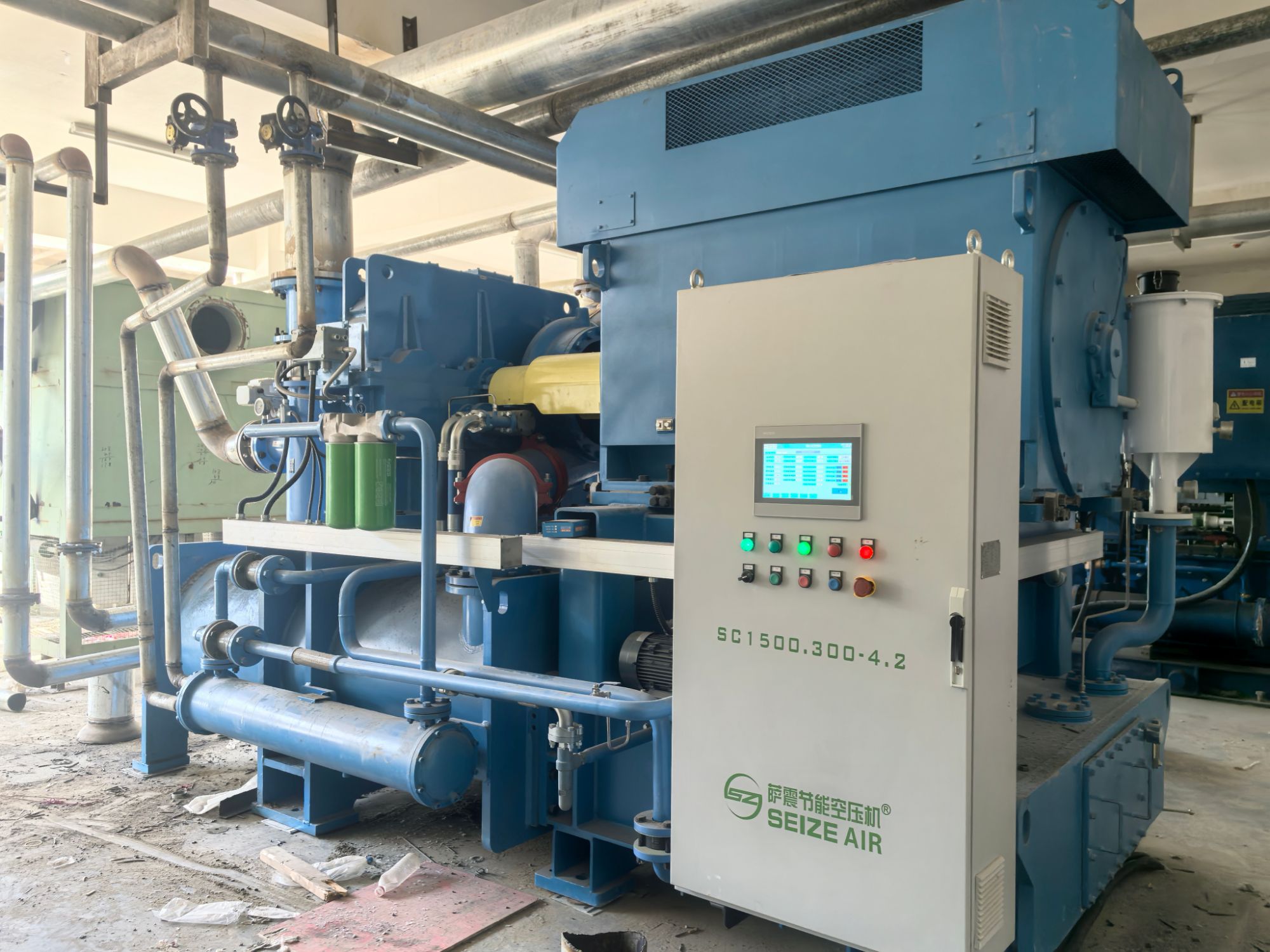
Rotor dynamics, bearing selection, and coupling alignment rarely live in one department. That’s exactly why ownership gets fuzzy. Design engineers assume the reliability team will catch dynamic issues. The reliability team assumes the OEM has already sized the bearings. Field technicians align the coupling to the spec they’re given, but nobody checks if that spec matches the actual rotor behavior. You end up with three boxes checked on paper and a machine that shakes itself apart within a year.
The fix isn’t a new procedure. It’s a named owner for each of the three areas before the first drawing is released. One person approves the lateral and torsional analysis and signs the damping assumptions. Another person owns bearing clearance, preload, and lubrication strategy. A third—usually from maintenance—owns the alignment standard and the final laser check before startup. When those names are written down, the endless “I thought you had it” conversations stop.
What matters most is that these roles are confirmed, not just implied by job title. A senior rotating equipment engineer might own rotor dynamics on paper, but if they’re not involved in the actual design review, the ownership is fake. The same goes for bearing selection: if the reliability engineer only sees the bearing after it’s ordered, they can’t really own the decision. Coupling alignment is trickier because it’s often handed to a contractor, so the owner has to verify the contractor’s method, not just the final numbers. Confirming ownership means confirming that the owner has the authority and the access to actually influence the outcome.
Require a Gas-Specific Performance Test, Not a Standard Air Test Curve
A standard air test curve might look tidy on a datasheet, but it tells you almost nothing about how a valve, regulator, or flow sensor will behave when the actual process gas hits the inlet. Air is a relatively forgiving medium—its density, viscosity, and compressibility sit in a comfortable middle ground. Switch to hydrogen, and you get a gas roughly 14 times less dense than air, with a tendency to leak through seals that would hold air just fine. Switch to carbon dioxide, and the higher density and different sonic velocity shift the entire performance envelope. Relying on an air-derived curve forces you to extrapolate across physical properties that simply don’t scale linearly, and the resulting error can be the difference between a stable process and an unexpected shutdown.
A gas-specific performance test means running the component under the exact gas or a close, physically justified surrogate, while measuring the same parameters you care about in the field: flow coefficient, leak rate, response time, pressure drop, and seal integrity. For example, a mass flow controller calibrated on air will read incorrectly on methane unless the conversion factor accounts for both thermal properties and the actual flow geometry—something generic correction tables rarely capture. Likewise, a solenoid valve that seals perfectly against 6 bar of air may weep helium at 2 bar because helium’s small atomic size and low viscosity exploit micro-channels in the seat. The only way to know is to test with helium, not to assume the air result transfers.
The extra effort of specifying a gas-specific test pays off in reduced commissioning time, fewer field failures, and the confidence that what you measured on the bench is what you will see on the process line. It also forces manufacturers to be honest about their hardware’s limitations instead of hiding behind a generic air curve that looks impressive but means little. When you write the purchase specification, state clearly: “Performance verification must be conducted with [process gas] at the specified operating pressure and temperature; air-only testing is not acceptable.” That one sentence moves the conversation from optimistic extrapolation to engineering reality.
Trace Where Impellers Are Machined, Balanced, and Overspeed Tested
Every impeller carries a unique serial number that follows it through the machining cell, balance stand, and overspeed pit. Operators log each operation at the point of completion, tying the serial number to a specific machine, fixture, and tooling setup. This creates a step-by-step record that shows exactly where material was removed, which balance corrections were applied, and which test cell spun the part to its proof speed.
The balance and overspeed records are not standalone files. They reference the same job traveler and inspection reports generated during machining. If a dimensional issue appears later, the trace data can be filtered by machine, operator, or date range to isolate whether the problem originated in a particular setup. The overspeed test log includes ramp rates, dwell times, and vibration signatures, so any anomaly can be tied back to the specific rotor assembly and test rig.
For critical applications, these records are retained for the life of the asset. Auditors or end users can request the full history and see the physical location of each process step, the environmental conditions at the time, and the signatures of the technicians who approved the work. That level of detail turns a simple traceability question into a verifiable chain of custody for the impeller.
Check the Service Team’s Field Turnaround Record and Regional Parts Stock
A quick glance at the team's field turnaround log often reveals more than a dashboard ever could. Look beyond average response times and dig into the outliers — the jobs that took twice as long due to missing parts, repeat visits that could have been avoided, or gaps between arrival and actual repair start. These patterns point to where support is genuinely needed.
Regional parts stock should be judged by what it enables, not just by what it holds. Compare stock levels against actual consumption from recent service calls, and identify items that sit untouched while urgent orders pile up elsewhere. Adjusting inventory placement to match real demand can cut downtime more effectively than adding headcount.
When turnaround records and parts availability are reviewed together, it becomes clearer which regions are well supported and which ones are quietly running on improvisation. Use that combined view to shift stock before problems surface, and give the service team a realistic chance to meet expectations on the first visit.
Compare Installed Power, Turndown, and Start-Stop Behavior at Reference Sites
Reference site data shows installed power ratings alone don't tell the full story. Two facilities may list similar nameplate capacity, but actual electrical draw at partial load can differ by 20–30% depending on how the equipment is configured. Looking at turndown ratios across the sites reveals that some units can operate efficiently down to 10–15% of rated output, while others struggle below 40% and cycle unnecessarily.
The start-stop behavior is equally telling. At one site, the system averages fewer than two starts per hour with run times over 30 minutes, which limits wear on contactors and reduces thermal stress. At another, short cycling events occur every 8–12 minutes during mild weather. Logging these patterns over a week provides a clearer basis for matching system design to actual load profiles than relying on datasheet values alone.
FAQ
Look beyond the brochure. A dependable supplier will freely discuss their design margins, material traceability, and how they handle off-design conditions. Ask for the names of engineers who worked on recent projects; if they hesitate or only point to salespeople, that's a warning sign.
Request a list of installations with similar gas composition, pressure ratio, and flow range, then contact the plant operators directly. Ask about vibration trends, seal leakage, and unscheduled downtime. A supplier confident in their equipment will encourage those conversations rather than hide behind NDAs.
It's huge—often more than the quoted polytropic efficiency at a single design point. Ask whether the impellers are milled, welded, or cast, and how they handle fouling or erosion. A supplier that brings up erosion testing or surface treatments unprompted usually has real field experience.
A full string test with the actual driver, gearbox, lube system, and control panel catches integration problems that individual component tests miss. It also forces the supplier to commit to performance before shipping, not after installation. If they resist or offer only a witness test of the bare compressor, keep looking.
Get written commitments for spare parts availability, emergency rotor repair options, and remote diagnostics access. Ask how many field service engineers cover your region and whether they have experience with your specific process gas. If response times are vague or tied to best effort language, expect disputes later.
Request the supplier's energy consumption at part-load and varying ambient conditions, not just the design point. Factor in expected seal replacement intervals, bearing life, and impeller cleaning frequency. A slightly higher upfront price often disappears within two years of efficiency gains alone.
Absolutely, but don't just tour the shop floor. Spend time in the quality control area and ask to see nonconformance reports. How a supplier documents and resolves internal issues tells you more about long-term reliability than a polished showroom.
Watch for inconsistent technical clarifications, sudden changes in the offered performance curves, or pressure to skip the model test. Also beware of suppliers who quote a compressor without doing a full gas analysis; that shortcut almost always leads to rework or field failures.
Conclusion
Industrial buyers often over-index on nameplate specifications, but a centrifugal compressor that looks right on paper can fall short once it meets real process swings, varying gas composition, and off-design operation. Instead of accepting standard air test curves, push suppliers to map the actual compressor characteristic against your expected flow, pressure, and molecular weight envelope, including start-up, turndown, and upset cases. At the same time, clarify who owns rotor dynamics, bearing selection, and coupling alignment; if these responsibilities are split across subcontractors or left ambiguous, the first sign may be a vibration issue that no one fully owns. A gas-specific performance test is not a nice-to-have—it is the only way to confirm surge margin, head rise, and efficiency for the actual gas mixture rather than a proxy.
Manufacturing and service discipline matter just as much. Ask where impellers are machined, balanced, and overspeed tested, and whether the supplier can show traceability for each rotor assembly rather than relying on a generic quality certificate. Field support is another differentiator: a strong regional parts stock and a service team with proven turnaround records can prevent weeks of downtime, while reference sites reveal how installed power, turndown behavior, and start-stop cycles hold up under realistic operating patterns. Comparing these operational details across a shortlist often separates suppliers who sell hardware from those who understand the full lifecycle cost of the machine.
Contact Us
Contact Person: Mia
Email: [email protected]
Tel/WhatsApp: +86 19821985894
Website: https://www.seize-air.com