

Calcium Chloride 94% Granules Key Benefits Uses and Handling Tips for Industrial Buyers
2026-10-18
Industrial buyers sourcing calcium chloride often face a critical choice: settle for lower purity and inconsistent granule size, or partner with a supplier that delivers consistent 94% granules with clear handling guidance. In this post, we break down the key benefits, real-world uses, and safety-focused handling tips for Calcium Chloride 94% Granules—straight from the expertise of Shouguang Golden Chemical. Whether you're managing dust control, de-icing, or concrete acceleration, understanding what sets this grade apart can save you time, reduce waste, and improve operational safety.
Why Calcium Chloride 94% Granules Outperform Flake and Pellet Alternatives
Flake calcium chloride tends to arrive as a mix of shards and dust, which makes metering a chore and leaves residue in hoppers. Pellets, on the other hand, often dissolve too slowly or crumble unevenly after rough handling. The 94% granule form skips both problems: uniform, rounded particles flow through spreaders and injection systems without bridging, and they break down at a steady, predictable rate once water hits them.
For operators running dust control or deicing routes, that consistency translates into fewer clogs and less guesswork. Granules spread more evenly across a lane or unpaved road, so you don’t end up with heavy spots that over-treat and thin patches that wash away. The 94% concentration also means less insoluble material competing with the active calcium chloride, which keeps mixing tanks cleaner and reduces the frequency of filter changes.
Storage life adds another edge. Flake picks up moisture quickly and can fuse into a solid block if the bag isn’t sealed perfectly. Pellet stockpiles tend to shed fines during repeated handling, lowering the effective purity at the bottom of the bin. Granules hold their shape longer, stay free-flowing in humid conditions, and let you use nearly the entire container instead of chipping away at caked remnants.
Dust Control That Survives Heavy Traffic and Dry Seasons
Most dust control methods work fine until the first loaded truck rolls through. Then the surface breaks, fines rise, and the cycle of watering and grading begins again. The real problem isn't the dust itself—it's the lack of a binding agent that can flex under tire pressure without losing cohesion. In high-traffic areas, especially during dry months when moisture evaporates fast, you need a treatment that penetrates deeper than the top inch and locks particles together even when the ground shrinks and cracks.
A practical approach combines two layers: a deep-penetrating stabilizer that bonds soil aggregates, followed by a surface seal that resists abrasion. The first layer keeps the base from turning to powder under repeated wheel loads. The second layer prevents that powder from becoming airborne. For dry seasons, the key is using materials that don't rely on continuous moisture to stay effective. Synthetic polymer emulsions and certain lignin-based products outperform plain water or calcium chloride because they form a flexible crust that doesn't re-dissolve after a few days of sun.
Maintenance also changes. Instead of daily watering, you only need occasional touch-ups at high-stress points like corners and loading zones. This cuts water usage dramatically—important when every gallon counts—and keeps the road surface intact longer. The result isn't just less dust in the air. It's fewer potholes, better traction, and a surface that holds up from the first truck of the morning to the last one at dusk, week after week without turning into a dust bowl.
Concrete Acceleration Without Sacrificing Workability
Faster strength gain usually comes at a cost: the mix tightens up, slump drops, and finishing becomes a struggle. The goal is to speed up hydration without letting the concrete seize before it is placed and compacted.
A workable solution is to pair a non-chloride accelerator with a high-range water reducer. The accelerator pushes early strength development, while the water reducer keeps the cement particles dispersed and the mix flowable. Together they allow the concrete to remain open during placement yet reach form-stripping strength several hours earlier than a plain mix.
Mix design adjustments also help. Cutting the water-cement ratio can accelerate strength, but it often ruins workability unless the aggregate grading is adjusted and set-controlling admixtures are fine-tuned. With the right proportioning and admixture balance, the concrete stays fluid and easy to pump while still gaining strength on an accelerated schedule.
Safe Storage and Handling Practices for High-Purity Granules
High-purity granules demand a storage environment that ignores convenience. Keep them sealed in original, airtight containers and place those containers inside a secondary enclosure with controlled humidity—below 40% RH for most metal or ceramic powders. Temperature swings are worse than constant heat, so avoid shelves near windows, vents, or exterior walls. Even a brief exposure to ambient air can introduce moisture and airborne particulates that compromise purity levels.
Handling should be done with clean, powder-free nitrile gloves and, if the granule size is sub-micron or the material is reactive, a fitted respirator. Use dedicated plastic or coated-metal scoops—never reuse a scoop that touched a different material. Transfer granules slowly inside a laminar flow hood or at least a still-air area; rapid pouring creates static and dust clouds that settle onto the granules themselves.
For long-term storage, consider double-bagging under nitrogen or argon if oxidation is a concern. Label every container with the exact material grade and date of opening. Do not return unused granules from a working container back into the master stock—that is the fastest way to cross-contaminate an entire batch. Instead, keep a small "working aliquot" jar that gets discarded or cleaned after each session.
De-Icing and Anti-Icing: Getting the Mix Ratios Right
Getting the mixture right matters more than most ground crews realize. Too much glycol and you waste money while creating a slick mess; too little and the fluid freezes before it can do its job. The target is a solution that stays liquid at the expected ambient temperature and runway conditions, not just a generic “50/50” guess.
For Type I de-icing fluids, the ratio of glycol to water typically shifts with the outside air temperature. At -10°C, a 50% glycol mix may be adequate, but drop to -30°C and you need closer to 60% or 70% glycol to keep the freezing point depressed enough. Anti-icing fluids (Type II or IV) work differently — they form a thicker protective layer, and their mix ratios are often dictated by holdover time requirements more than raw freezing point alone.
Always verify the actual fluid concentration with a refractometer or hydrometer before spraying. A truck’s onboard mixing system can drift, especially after refills or temperature swings. And never mix different brands or types without checking compatibility — some additives clash and reduce effectiveness even when the ratio looks right on paper.
What Industrial Buyers Should Check Before Ordering Bulk Calcium Chloride
Before committing to a bulk calcium chloride order, confirm the exact grade and form you need. Industrial applications vary widely: dust control often tolerates lower purity flakes, while food or pharmaceutical processing demands anhydrous pellets with controlled impurity levels. Request a detailed certificate of analysis that lists calcium chloride content, magnesium and alkali metal chlorides, sulfate, and insoluble matter. If your operation runs in sub-zero temperatures, pay attention to the freeze point of the solution you plan to mix; not all 77–80% flakes perform the same in brine systems.
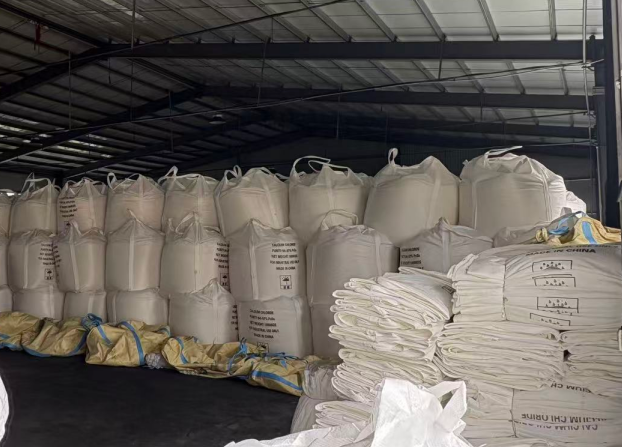
Packaging and handling conditions can create hidden costs. Check whether the supplier offers supersacks, drums, or bulk truckloads that fit your unloading equipment and storage capacity. Ask about moisture resistance of the packaging, caking tendency during long storage, and whether the material is treated with an anti-caking agent. Also verify the supplier’s ability to hold a consistent particle size distribution, because a shift from pellets to fines can clog hoppers or feeders and slow down your process.
Logistics and compliance are equally important. Confirm lead times, minimum order quantities, and whether the supplier can provide split deliveries to multiple sites. If you handle calcium chloride for water treatment, road deicing, or concrete acceleration, make sure the product meets relevant industry standards or local environmental regulations. Finally, get a reference from a current buyer with a similar use case to validate that the product behaves as promised after repeated deliveries.
FAQ
The 94% grade offers a dependable concentration with fewer unwanted impurities. Compared to flakes, granules produce less dust, flow more evenly through equipment, and dissolve at a controlled rate, which helps avoid clogging and waste.
Keep the bags tightly sealed and store them in a dry, covered space away from ground moisture and high humidity. Use a first-in-first-out rotation and avoid leaving partially used bags open, as even brief exposure to damp air can cause hardening.
Common applications include dust suppression on unpaved roads, ice melting and anti-icing, accelerating concrete set times, weighting tractor tires, producing liquid brine, and acting as a desiccant in enclosed storage or packaging lines.
Granules are less prone to creating airborne dust, which reduces inhalation risks and product loss. They also meter more consistently through hoppers and spreaders, and their slower dissolution rate gives better control in mixing operations.
Wear chemical-resistant gloves, safety goggles, and a dust mask or respirator if dust may be generated. Avoid spreading in strong winds, and clean up spills promptly because calcium chloride can make floors dangerously slippery.
Yes, simply add the granules to water in a well-ventilated area or closed mixing tank. Stir until fully dissolved, and confirm the concentration with a hydrometer or refractometer. Remember that mixing releases heat, so allow the solution to cool before transferring.
Higher purity means less inactive material, so you get more consistent de-icing, dust control, or concrete acceleration per pound. It also leaves less residue in tanks, spray nozzles, and pumps, which cuts down on maintenance.
Ask for a certificate of analysis to verify purity and moisture content. Check that the packaging is moisture-resistant, confirm the granule size range is consistent, and compare delivery lead times for both bagged and bulk orders.
Conclusion
Calcium chloride 94% granules bring several practical advantages that flake and pellet forms simply cannot match. Their uniform particle size and high purity dissolve more predictably, making them a favorite for dust control on unpaved roads and lots that see constant heavy vehicle traffic. Unlike flakes that can blow away or pellets that leave uneven coverage, these granules stay where they are applied and keep working through dry spells. In concrete work, they accelerate set times without turning the mix stiff or difficult to place. Contractors often find that dosing is easier to adjust because the granules dissolve steadily and don't clump, so workability remains consistent even in colder weather.
Safe handling matters as much as performance. These granules are hygroscopic, so they pull moisture from the air and can form a hard crust if left open; storing them in sealed bags or silos on pallets away from ground moisture prevents waste. For de-icing and anti-icing, getting the mix ratio right depends on pavement temperature and expected traffic, but starting around 25–30% by weight in brine often works for pre-treatment, while heavier applications suit post-storm cleanup. Before ordering bulk, buyers should verify purity certificates, moisture content, particle size distribution, and packaging integrity, and ask for a small sample to test dissolution speed in their own conditions. These checks catch inconsistent batches that could hurt road performance or concrete schedules.
Contact Us
Contact Person: Tom Cui
Email: [email protected]
Tel/WhatsApp: +8618663670626
Website: https://www.jinjigoldenchem.com