
Best Ground Mount Solar Racking Manufacturer for Residential and Commercial Projects
2026-10-25
Finding the right ground mount solar racking for both residential and commercial projects can be a challenge—most manufacturers specialize in one or the other. Topfencesolar breaks that mold by delivering rugged, adaptable systems that perform equally well on a home backyard array or a multi-megawatt commercial site. Here’s what sets their engineering apart.
When the Best Roof Is No Roof at All
A roof is often treated as a non-negotiable in building design, but some of the most memorable spaces challenge that assumption. Courtyards, atriums, and roofless pavilions let the sky become part of the room, shifting with daylight and weather in ways no ceiling ever could. The absence of a roof isn't just an aesthetic gesture; it changes how people breathe, move, and linger in a place.
In hot, humid climates, open-roof structures encourage natural ventilation instead of relying on mechanical cooling. A shaded courtyard can stay surprisingly comfortable because hot air rises and escapes, pulling cooler air through surrounding rooms. Even in temperate regions, a roofless reading nook or dining space can extend the usable season, letting occupants feel the breeze and hear rain without getting wet if the overhangs are deep enough.
That said, going roofless demands more thought about drainage, sun angles, and material durability. Floors must handle standing water, walls need to resist wind-driven rain, and furniture can't be too precious. When those details are handled well, the result feels less like a missing piece and more like a deliberate invitation to stay connected to the outdoors.
Ground Racking That Doesn’t Need a Crane to Install
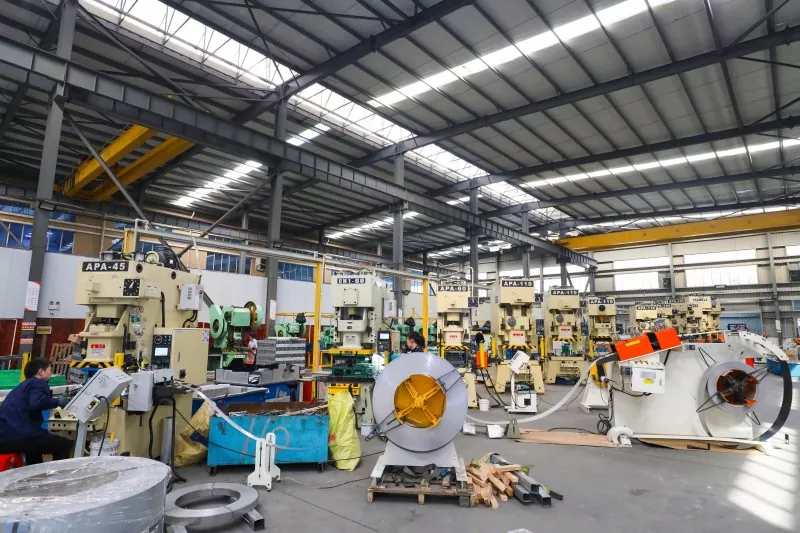
Most ground-mount solar racking still assumes you have a crane on site, but this system flips that assumption. The posts, rails, and clamps arrive in manageable bundles that two people can carry across a job site without heavy equipment. Instead of waiting for a lift, crews can set the foundation sleeves, slide the uprights into place, and bolt the rails while standing on the ground. It keeps the install timeline moving even when access is tight or the ground is soft.
The secret is in the component weight and the pre-assembled joints. Each piece is deliberately sized to stay under fifty pounds, and the connections use a pin-and-lock design rather than welded or oversized brackets. That means no field drilling, no torque multipliers, and no need to rent a telehandler for a week. For smaller commercial jobs or rural sites where crane scheduling adds cost and delay, this approach removes a major bottleneck.
What often gets overlooked is how much safer the install becomes. Without a suspended load swinging over the array, crews aren't coordinating hand signals or working around exclusion zones. The racking goes up in a logical sequence, row by row, with each section fully secured before the next starts. It's a quieter, simpler process that still delivers the same structural capacity as crane-dependent systems.
Matching the Mount to the Soil, Not the Other Way Around
Most failures in outdoor installations don't come from the hardware itself, but from a stubborn insistence that the ground should adapt to the product. Sandy loam, heavy clay, rocky fill, or a high water table each behave differently under load, and pretending otherwise leads to leaning posts, cracked footings, and repeated callbacks. The smarter approach is to read the soil first, then choose the mounting system that fits those conditions—whether that means a wider base plate for soft ground, a deeper anchor for frost heave, or a completely different anchoring method altogether.
Take the case of a simple signpost. In well-drained gravel, a standard driven spike might hold for years, but that same spike in silty clay will work loose after a few freeze-thaw cycles. Instead of doubling down with more concrete or a heavier hammer, you switch to a screw pile or a gravel-packed sonotube. The mount changes, not the dirt. The same logic applies to deck footings, fence posts, and even greenhouse frames: once you stop treating soil as a uniform blob, the right hardware choice becomes obvious and the installation actually lasts.
The real skill isn't forcing a universal bracket into whatever you dig up; it's recognizing that the ground is the one variable you can't easily rewrite. Amend it a little, sure, but large-scale soil replacement is expensive and rarely stable. Matching the mount to the soil means observing drainage, probing for rocks, and accepting that the cheapest anchor on paper may be the most costly one in practice. When the hardware fits the earth, you end up with a quiet, uneventful installation—and that's exactly the goal.
Why Residential Buyers Are Choosing Ground Arrays
The shift toward ground arrays among residential buyers isn't driven by a single factor but by a quiet realization that rooftop space often fails to match energy ambitions. Many modern homes have complex roof lines, skylights, or shading from neighboring trees that make rooftop solar impractical. Ground arrays, by contrast, can be positioned for optimal sun exposure, tilted to the exact angle for local latitude, and placed away from obstructions. This flexibility means homeowners no longer have to compromise on output simply because their roof wasn't designed with solar in mind.
Beyond performance, there's a growing preference for ground arrays because they simplify maintenance and future system upgrades. Rooftop panels can require professional roof inspections, potential re-roofing coordination, and awkward access for cleaning or repairs. Ground-mounted systems sit at a comfortable working height, often allowing homeowners to brush off snow or debris without calling a crew. When inverters or panel technology improves, swapping components or even expanding the array is straightforward—no need to worry about roof load capacity or penetrating shingles again.
The decision also reflects a broader change in how people view their property. Instead of treating solar as an afterthought bolted onto existing structures, buyers are choosing ground arrays as a deliberate landscape feature. Open yards, side lots, or even unused corners become productive energy zones. With bifacial panels gaining popularity, ground arrays can capture reflected light from the ground, boosting yield in ways rooftop mounts rarely achieve. For many, this is less about abandoning the roof and more about treating the entire property as an energy asset.
Commercial Projects That Skip the Concrete Pour
Concrete has long been the default choice for commercial foundations and slabs, but a growing number of builders are walking away from the pour altogether. In warehouses, retail shells, and even mid-rise office structures, alternative systems like screw piles, helical anchors, and engineered wood floor cassettes are replacing traditional wet trades. The appeal isn't just about skipping the mixer truck—it's about cutting weeks off the schedule, avoiding weather delays, and reducing the massive carbon footprint tied to cement production.
Take a big-box distribution center, for example. Instead of waiting for a 40,000-square-foot slab to cure, crews now install adjustable steel piers that are torqued into the ground and immediately ready for load. Above them, prefabricated timber or steel decking drops into place with crane picks measured in hours, not days. This approach eliminates the need for formwork, rebar tying, and the army of finishers that usually follows a pour. For developers, that translates to earlier tenant fit-outs and faster lease commencement—no small advantage in a tight market.
There are trade-offs, of course. Heavy vibration, point loads, or specialized equipment may still demand a concrete pad in certain zones. But for many commercial projects, the old assumption that every building must start with a pour is quietly being retired. The next time you walk into a new retail store or a modern self-storage facility, look down: the floor beneath you might not be concrete at all, but a carefully layered system of steel, insulation, and composite decking that never saw a single sack of cement.
The Corrosion Detail Most Spec Sheets Leave Out
Most corrosion spec sheets lead with alloy chemistry, coating thickness, and salt-spray hours. The detail that gets skipped is how water leaves the assembly. A lap joint without a defined drainage path can hold condensation or washdown water for days, long after the exposed surfaces have dried. The result is a crevice corrosion cell that starts in a spot no flat-panel test ever sees.
The problem is not just standing water; it is the oxygen differential between the wet crevice and the surrounding dry metal. That difference drives aggressive attack even on grades marketed as corrosion-resistant. A simple 1/8-inch drain notch or a capillary break at the lowest edge of each horizontal lap changes the failure mode from hidden perforation to cosmetic staining.
When reviewing a spec, ask for the drainage and crevice geometry, not just the coating performance. If the drawing doesn't show how water escapes from every bolted, lapped, or hemmed connection, the extra salt-spray rating is buying confidence, not protection.
FAQ
Look beyond the spec sheet. A dependable manufacturer backs their aluminum or galvanized steel with a realistic corrosion warranty, provides detailed wind and snow load calculations for your specific site, and offers mounting feet or ballast options that work with your soil conditions instead of forcing a one-size-fits-all approach.
They can be, especially if your roof has shading, poor orientation, or limited space. Ground mounts let you set the ideal tilt and azimuth, and they stay cooler because air circulates underneath. The trade-off is land use and sometimes higher upfront cost, but for many homes the energy gain offsets that over time.
The manufacturer should provide stamped engineering letters or calculations for your local code requirements. Ask about the maximum design wind speed and snow load in pounds per square foot. Also check how the rack anchors to the ground—concrete piers, ground screws, or driven piles all behave differently in extreme weather.
Gentle slopes are easiest, but many manufacturers offer adjustable legs or specialized foundations for uneven ground. If you have rocky soil or high water tables, ground screws or ballasted designs might be more practical than concrete. A good manufacturer will ask about your soil report before recommending a layout.
Absolutely, especially near coastal areas or places with de-icing salts. Look for anodized aluminum or hot-dip galvanized steel with a coating thickness of at least 85 microns. Cheaper powder-coated steel may look fine initially but can rust at cut edges or fastener points within a few years.
Yes, but confirm they have experience at both scales. Residential work requires simple assembly and minimal heavy equipment, while commercial projects need efficient row spacing, cable management, and often tracker compatibility. A manufacturer that offers modular components and clear load tables can serve both markets without compromising either.
Ask about lead times, whether they provide installation guides or training, how they handle missing or damaged parts, and if they have local references for similar projects. Also request a sample or detailed drawings so you can check build quality, hole alignment, and finish durability before committing.
Conclusion
For many residential and commercial sites, the smartest solar decision starts with acknowledging that the roof isn't always the right place for panels. A ground mount system opens up better tilt angles, easier access for maintenance, and no risk of compromising an aging or shaded roof. The best manufacturers in this space have clearly paid attention to what installers actually face: racking that can be assembled without a crane, steel profiles matched to soil conditions rather than forcing every project into the same foundation design, and details like corrosion resistance that don't show up on a basic spec sheet but matter after a decade of weather exposure. Residential buyers are increasingly choosing ground arrays for these reasons, especially when they have the land and want maximum output without touching the house structure.
On the commercial side, the ability to skip a concrete pour is a quiet game changer. It cuts site preparation time, reduces heavy equipment needs, and keeps the project schedule tight. A well-designed ground mount system uses driven piles or earth screws that adapt to the actual soil, not the other way around. That flexibility, combined with modular components that can be hand-carried into place, means smaller crews can handle larger builds. The corrosion detail is another telltale sign of a serious manufacturer: hot-dip galvanizing thickness, stainless steel hardware in contact points, and drainage design that prevents standing water. When these factors come together, the result is a racking solution that serves residential and commercial projects with the same core promise—durable, practical, and built for how installers really work.
Contact Us
Contact Person: Nancy
Email: [email protected]
Tel/WhatsApp: +86-13365923720
Website: https://www.topfencesolar.com/