
Best FPV Racing Drone Motors to Boost Speed, Agility, and Flight Control
2026-11-17
The fastest lap times are rarely won on straight-line speed alone. They come from motors that let you cut tighter lines, recover from prop wash without losing momentum, and snap back on the throttle the moment you need it. If your current setup feels vague or slow to react, the motors are often the missing link. In this guide, we break down the best FPV racing drone motors for speed, agility, and precise flight control—and highlight where Retek fits into the conversation.
Find the Motor Size That Suits Your Home Track
Picking a motor usually starts with the layout itself. A tight, twisty home track with short straights rarely needs a high-rpm screamer; it rewards something that responds cleanly out of corners and doesn't feel twitchy on the infield. Measure the longest straight before you shop, because that distance tells you more than the motor's printed top speed ever will. If the space is compact, a modest 21.5T brushless or 20T brushed motor often turns quicker laps than a faster wind you never fully open up.
Traction and voltage matter just as much as the number on the can. On painted wood or low-nap carpet, too much torque turns laps into a fight for rear grip, especially with foam tires that need heat to hook up. Try matching the motor's power band to the surface you actually run on most often. A 17.5T with adjustable timing can be more useful than a hotter wind because you can soften the bottom end for dusty garage floors or add a little punch for race nights.
Leave some headroom instead of chasing the biggest motor that fits. Gearing changes, tire wear, and a warmer room can make a borderline setup overheat in the last third of a run. A motor that feels slightly conservative in practice usually delivers more laps overall, because you spend less time nursing the throttle and more time placing the car where you want it.
Why a Lower KV Can Still Feel Faster in Tight Sections
The perception of speed in tight sections has more to do with torque delivery than raw rpm. A lower KV motor doesn’t spin up as violently when you blip the throttle, and that softer hit lets the tires stay hooked on loose dirt, roots, or rock. With a high-KV setup, any small input can turn into sudden wheelspin, so you end up backing off more than you think. The slower-revving setup often feels calmer, but it is actually allowing you to stay on the power longer through zero-traction corners.
Gearing hides a lot of the difference. You can run a lower KV motor on higher voltage or with a larger pinion and recover the top-end speed that people associate with faster laps. What you get in the middle is a more usable, chugging pull that doesn’t need constant clutch work or perfect rev matching. The bike moves forward as soon as the throttle opens, rather than waiting for the motor to spool up. On a switchback climb, that immediacy is often mistaken for extra speed.
Heat behavior also plays a role. Lower KV motors tend to waste less energy as heat when you are crawling through technical terrain. A cooler motor holds its power longer, so the last few minutes of a ride don’t feel soft or lazy. That consistency makes a big difference when the trail is so tight that you rarely see full RPM anyway.
Battery Voltage and Motor Pairings That Hold Full Throttle
When you pin the throttle on a loaded setup, voltage sags instantly. A pack might read 12.6V at rest but drop to 10.9V under sustained load. Motor choice determines how much current gets pulled, and that current draw dictates the sag. Pairing a high KV motor with a weak or low C-rate battery makes the system feel soft at the top end, not because the motor lacks power but because the voltage cannot keep up.
The practical fix is to match the unloaded RPM ceiling with the battery's realistic loaded voltage. On 3S, motors around 3000–3500KV can work, but only if the pack holds above 10V under full throttle. Step up to 4S and a 2200–2600KV motor often holds wide open longer because lower current draw per watt reduces voltage collapse. It is not a rule carved in stone; it is about measuring under-load voltage, not the label on the pack.
Another variable is capacity and cell health. Two batteries can carry the same voltage and C-rating, but the larger capacity or fresher pack will sag less at full throttle. If you want a full-throttle hold, pick a motor one notch lower in KV than the maximum speed recommendation, then let the battery operate in its comfortable band. The result feels faster because the voltage stays flat instead of falling away after the first two seconds.
Shave Rotating Weight, Change Direction Like a Different Quad
Most riders chase peak horsepower, but a quad that flicks through a corner does it with less rotating mass at the wheels. Every pound pulled from tires, rims, hubs, and brake rotors works twice: the engine doesn't have to muscle as much inertia, and the chassis fights less gyroscopic resistance when you lean or change line. It shows up as cleaner turn-in and a front end that stops pushing wide when the trail tightens.
Wheel assemblies are the obvious place to start because that's where the leverage is worst. A lighter rear sprocket carrier or axle might not show up in a straight-line drag, but in rapid left-right transitions the lower stored energy lets the quad settle sooner. You feel it most on rutted singletrack and choppy off-camber sections where direction changes come constantly.
Pay attention to the tire before chasing grams in the hub. Rotating inertia grows with the square of the distance from the axle, so a lighter carcass or a narrower front tire can shift handling more than a machined part. Swap the heavy stock rubber first, then work inward. The quad won't just be lighter on a scale; it'll respond like a shorter, more willing machine when you need to plant the front wheel.
What Hot Motors Do to Lap Times After the First Minute
Heat changes everything once the tires are warm and the brakes have been leaned on for a few laps. A motor that runs hot doesn't just lose a few horsepower on the straights; it forces the driver to manage throttle openings earlier, often rolling into the gas less aggressively out of slow corners. The result is a lap time that bleeds tenths not in one obvious spot, but quietly across every exit. By the second or third minute, the ECU starts pulling timing to protect the pistons, and that protection is exactly what turns a sharp qualifying lap into a defensive, survival-mode pace.
Some drivers mistake the change for tire degradation or brake fade, but the telltale sign shows up in the data: straight-line speed drops while cornering minimums stay nearly identical. That pattern points to heat soak rather than mechanical grip loss. After the first minute, the cooling system begins losing the battle against sustained load, and the oil temperature climbs past the point where the engine can maintain its ideal spark advance. The lap time doesn't fall off a cliff, it degrades in small, repeatable chunks that stack up lap after lap.
The fix rarely lives in a single lap. It lives in how the car is brought up to temperature before the session, how much airflow the radiator sees at partial throttle, and how willing the driver is to sacrifice one corner exit to keep the water temp under the threshold. Hot motors punish impatience. A driver who runs the first minute flat out often pays for it in the next three, watching the predictive lap timer drift upward while the engine quietly defends itself from the abuse.
Dialing Motor Timing for the Rear-End Grip You're Missing
Most rear grip complaints show up on throttle, not mid-corner. The car feels planted until the motor comes on, then the rear walks out. That points to timing before tires or sway bars. Back the motor timing down a couple degrees, or pull some advance out of the endbell if you have an adjustable can, and the hit softens enough to keep the rear tires underneath the car.
Go one degree at a time. On high-bite surfaces the chassis is already sensitive, so a small timing change feels larger than the number suggests. A stable exit should squat and drive instead of skating; if the motor starts running hotter than normal, you have pulled too much timing and the powerband is working against the car. Keep the rear hooked up and the clock will tell you when it is right.
FAQ
For tight cornering, prioritize lower rotating mass and strong low-end torque over peak KV. A slightly wider stator with quality magnets tends to give that instant punch out of hairpins without making the quad feel floaty. Also keep the motor weight close to the propeller hub so direction changes stay crisp.
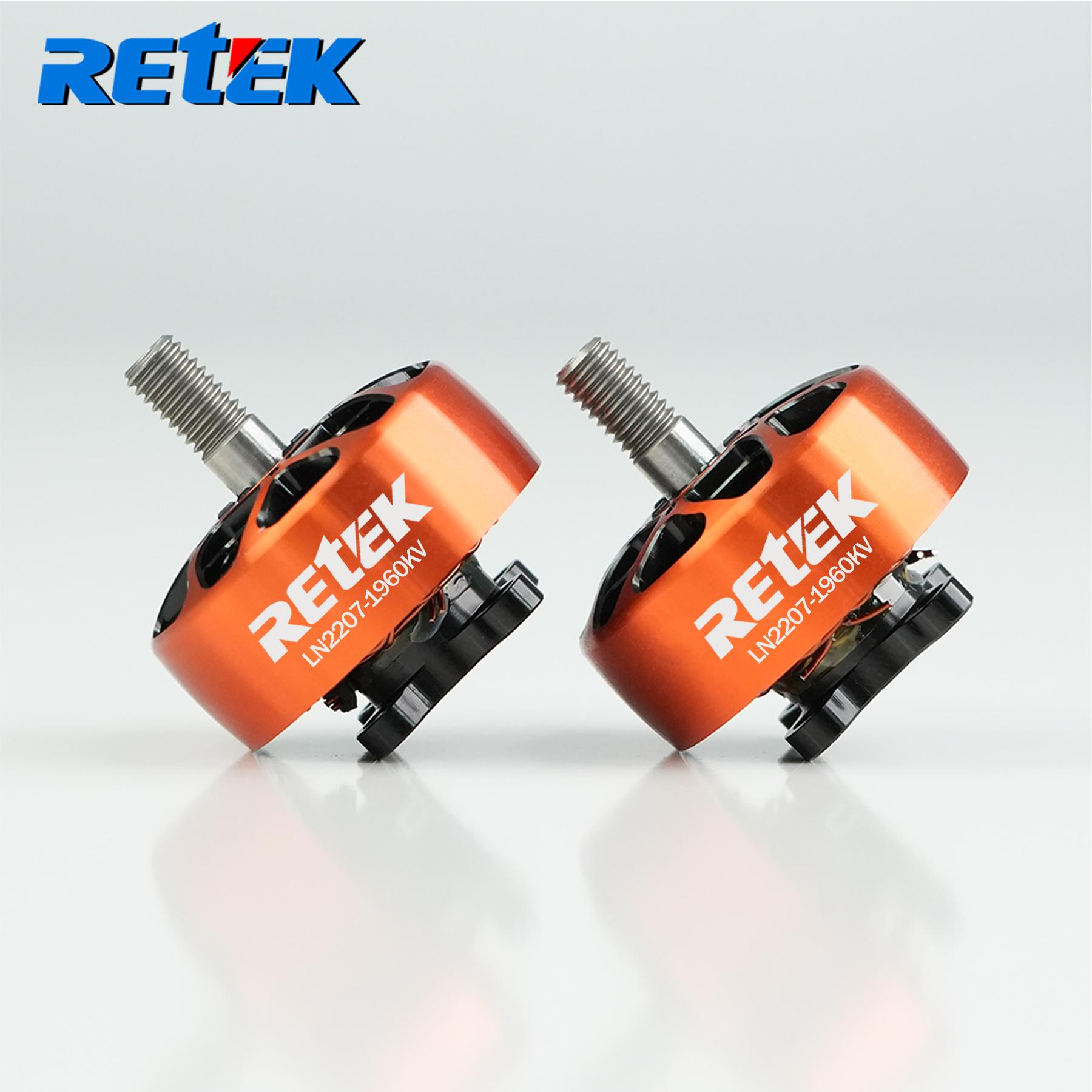
Think of 2207 as a nimble option for lighter frames and technical tracks, while 2306 trades a bit of that agility for more mid-range authority on faster layouts. If your build is under 600g all-up, 2207 often feels more locked in; above that, the extra stator volume of 2306 helps maintain RPM under load.
Not necessarily. Higher KV gives more unloaded RPM, but on a race course you need the motor to hold RPM when the quad changes direction and the props bite. Too much KV can create excess heat, sag batteries, and make throttle feel twitchy. Matching KV to battery voltage and prop pitch usually produces quicker lap times than chasing the highest number.
Bearings affect how smoothly the bell spins and how much vibration reaches the flight controller. Worn or low-grade bearings create noise that the gyro has to filter, which can soften response. Upgrading to sealed, high-speed bearings often gives cleaner logs and lets you run lower filtering without changing the motor itself.
Titanium shafts mainly save weight and resist bending in crashes. That weight reduction is near the center of rotation, so it does not transform handling by itself. The bigger benefit is durability over a season and fewer bent bells after gate hits. If you race often and replace motors after hard impacts, the premium can pay for itself.
Curved magnets sit closer to the stator along a more consistent arc, which can smooth out torque delivery and reduce cogging. Straight magnets are simpler and often lighter, but may have slight torque ripple. In flight, curved magnet motors tend to feel more predictable through the lower throttle range, especially when managing altitude in tight sections.
Check for bell play, gritty bearings, and loose screws after each race day. Clean debris out of the windings with compressed air, and avoid lubricating bearings unless the manufacturer recommends it because oil can attract dust. If a motor starts sounding different or comes down hotter than its mates, swap or inspect it before it fails mid-heat.
Matching matters more than most pilots expect. A heavy, aggressive prop needs a motor with enough stator volume and torque to accelerate it quickly, while a light prop on a torquey motor can feel overly sensitive. Testing two or three prop pitches on the same motors is one of the fastest ways to change the quad's character without swapping the whole power system.
Conclusion
Most backyard and parking-garage courses punish motors that are too tall or too wide long before they reward outright pull. A 2207 or 2306 stator that feels explosive on a wide-open regional layout can make a tight home track feel nervous, because the extra rotating mass resists quick direction changes and forces harder corrections. Squeezing a lower KV motor on a slightly higher cell count often produces a more usable powerband: the quad still holds a corner exit without spiking, and the throttle becomes easier to meter through chicanes. Pairing battery voltage to the motor wind rather than chasing peak RPM keeps full-throttle sections from sagging, so the last lap of a heat feels closer to the first.
Shaving rotating weight at the bell and prop hub changes direction so dramatically that the same frame can feel like a different quad, especially when you enter a hairpin late. Once motors start heat-soaking, lap times drift: a hot motor loses timing consistency and the rear end begins to wander under load, so a conservative timing setting often buys more late-race grip than a few extra degrees of advance. The goal is not just more speed on the straight, but a motor and tune combination that keeps the rear planted and the steering calm from the first gate to the last.
Contact Us
Contact Person: Sean
Email: [email protected]
Tel/WhatsApp: +86-13338694967
Website: https://www.retekmotion.com