
Aromatic Carbonyl Intermediate CRO Solutions for Advanced Organic Synthesis
2026-09-20
Every synthetic chemist knows the moment: a promising route stalls at an aromatic carbonyl intermediate that refuses to cooperate. Whether it's a stubborn ketone, an aldehyde prone to side reactions, or a carboxylic acid derivative demanding too much, these intermediates often decide the fate of a whole project. That's where a partner with deep expertise in CRO solutions for advanced organic synthesis can change the game. DSL Chemicals specializes in turning these bottlenecks into scalable, reliable processes—so your next breakthrough isn't held back by the chemistry that should be enabling it.
Custom Routes to Aromatic Carbonyls When Off-the-Shelf Won't Do
When standard Friedel-Crafts acylations or oxidations of benzylic alcohols fail because of sensitive functional groups or stubborn regiochemistry, the real work begins. Aromatic carbonyls are everywhere in bioactive molecules and materials, yet the usual toolbox—acid chlorides, strong Lewis acids, stoichiometric oxidants—often leaves you stuck. Custom routes tend to emerge from rethinking the bond disconnection: instead of forcing a carbonyl onto an already decorated arene, you might build the ring around the carbonyl or use a masked acyl anion equivalent.
One useful detour involves directed ortho-metalation followed by trapping with a carbonyl electrophile, but that only works if the directing group tolerates the conditions. For electron-rich or highly substituted arenes, palladium-catalyzed carbonylative couplings with aryl halides and carbon monoxide surrogates can install ketones or esters without harsh acids. Photoredox routes have also gained ground, turning simple aldehydes or carboxylic acids into acyl radicals that add to aryl rings via atom transfer. Each option carries its own baggage: ligand cost, pressure equipment, or messy radical byproducts.
The deciding factor is usually not yield alone but how many steps you save and whether the route survives on a gram scale. A clever one-pot sequence that looks great in a paper can collapse when you need twenty grams for a lead optimization campaign. So the custom route has to be robust, not just elegant. Sometimes the best answer is to modify the aromatic core first—introduce a halogen or boronate early—then let a mild carbonylative step finish the job. That kind of planning, born from failed attempts with off-the-shelf methods, is what separates a workable synthesis from a pretty idea.
Keeping Reactive Carbonyl Intermediates Stable from Flask to Reactor
Reactive carbonyl intermediates—enolates, acyl halides, iminium species, and the like—rarely survive the journey from a round-bottom flask to a pilot-scale reactor without careful planning. What works at gram scale often falls apart when heating, mixing, and hold times shift under process conditions. Stability here is not just a kinetic curiosity; it dictates whether a route can be scaled at all. The first step is usually mapping the intermediate's half-life against temperature, solvent, and counterion, because what looks like a trivial change in a lab notebook can mean the difference between a clean telescoped process and a decomposition cascade.
In flow chemistry, the picture sharpens considerably. A continuous reactor can generate a carbonyl intermediate and immediately feed it into the next step, shrinking residence time from hours to seconds. But that advantage disappears if the intermediate precipitates, fouls a heat exchanger, or reacts with trace moisture before it reaches the quench. Engineers often lean on inline analytics—Raman, FTIR, or UV—to watch the intermediate in real time, then adjust temperature or flow rate before the system drifts out of spec. The goal is not to make a fragile intermediate robust; it is to design the reactor and the telescoped sequence so the intermediate never has to be robust at all.
What Most CROs Overlook About Aromatic Carbonyl Chemistry
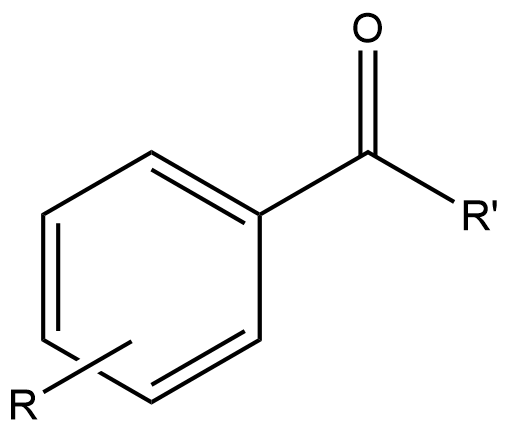
Aromatic carbonyls are often treated as routine functional groups, but their behavior diverges sharply from aliphatic ketones and aldehydes in ways that can quietly derail a synthesis. The most common oversight is underestimating how the ring's resonance delocalization drains electron density from the carbonyl carbon, making it substantially less electrophilic. This changes the kinetics of nucleophilic additions, reductions, and even enolate formation. A para-methoxyacetophenone, for example, is far less reactive toward Grignard reagents than cyclohexanone, yet many route designs still assume comparable reactivity.
Another blind spot involves the interplay between ring substituents and the carbonyl's electronic demands. Electron-donating groups at the para or ortho position can further suppress the carbonyl's partial positive character, while electron-withdrawing groups sharpen it. In practice, this means a seemingly minor change—moving a methoxy from meta to para—can turn a sluggish condensation into a side-reaction-prone one, or vice versa. CROs that rely solely on steric arguments for substituted benzaldehydes often miss these electronic shifts.
Steric effects around the carbonyl also deserve more attention than they usually receive. Ortho substituents can twist the carbonyl out of conjugation with the ring, altering not only its reactivity but also its photochemical and electrochemical profile. This non-planarity reduces resonance stabilization and can unexpectedly accelerate additions that would otherwise be slow. Conversely, planar systems with strong donor-acceptor conjugation can undergo dearomatization or single-electron transfer pathways that standard conditions fail to predict.
From Enolate Quench to Isolated Intermediate in One Step
Quenching an enolate usually means adding an electrophile and waiting for the final product to appear. The intermediate that forms at that moment—whether a silyl enol ether, an aldol adduct, or a trapped enolate—rarely survives workup long enough to be isolated. By choosing the right quench reagent and keeping the mixture cold, it is possible to stop the reaction at the intermediate stage and isolate it directly from the crude mixture, without any extra purification steps.
Slowing down any subsequent proton transfer or elimination is what makes the isolation possible. A bulky silyl chloride or a carefully matched counterion can lock the enolate oxygen in place before it has a chance to collapse. The result is a single-flask operation where the quench and the isolation happen as one continuous workflow, giving a bench-stable intermediate that can be stored, characterized, and used later in a different transformation.
Sidestepping Common Pitfalls in Carbonyl Functionalization
A frequent source of yield loss in carbonyl functionalization is the competition between desired nucleophilic addition and α-deprotonation. With strongly basic nucleophiles such as organolithiums, ketones often undergo enolization instead of clean addition, leading to aldol byproducts and recovered starting material. Switching to softer organocuprates or preformed enolates, and running the reaction at -78°C with slow addition, suppresses this pathway. For carboxylic acid derivatives, using a Weinreb amide prevents the common over-addition that occurs when Grignard reagents attack esters multiple times, because the tetrahedral intermediate is stabilized by metal chelation.
Reduction steps also hide traps that can be avoided by matching the reagent to the exact carbonyl type. Lithium aluminum hydride is powerful but often pushes esters all the way to primary alcohols; if an aldehyde is the target, DIBAL-H at low temperature gives a controlled single hydride delivery. For substrates containing both a ketone and an ester, the Luche reduction using sodium borohydride and cerium(III) chloride selectively reduces the ketone while leaving the ester intact. Monitoring the reaction by TLC or IR rather than relying on a fixed overnight stir prevents over-reduction and simplifies purification.
Protecting group choices frequently derail a sequence when conditions clash. For example, removing a Boc group with trifluoroacetic acid will cleave a tert-butyl ester or acetal if either is present, so an orthogonal pair such as Fmoc for amines and benzyl for alcohols is often a better design. Another overlooked issue is repeated protection-deprotection cycles, which accumulate losses and add steps; mapping the whole route before the first reaction usually reveals whether a group can be carried through untouched. Selecting protecting groups that are stable under both planned and unplanned exposure—such as a silyl ether that tolerates mild acid but not fluoride—keeps the sequence robust.
Tailored CRO Support for Multi-Step Aromatic Carbonyl Synthesis
Multi-step aromatic carbonyl synthesis rarely follows a clean, linear path. Intermediates can be moisture-sensitive, prone to over-oxidation, or quick to rearrange under slightly acidic conditions. Our approach starts by mapping the full sequence with attention to these failure points, not just the final target. We routinely adjust protecting group timing, solvent choices, and temperature windows so that each carbonyl-forming step proceeds with the selectivity needed before moving forward.
Rather than relying on a fixed reaction protocol, the team uses real-time LC-MS and inline IR to track intermediate formation and disappearance. This allows rapid iteration on conditions like Lewis acid loading in Friedel-Crafts acylations or oxidant stoichiometry in ketone formation. In one recent program, a troublesome diaryl ketone step was rescued by switching from a batch addition to a slow reverse-quench, cutting the dimeric byproduct from 18% to under 2% without changing the core reagent set.
Scale-up is handled with the same granular focus. Mixing efficiency, heat removal, and quench kinetics are evaluated at every step before moving beyond 100 grams. Deliverables include full analytical packages—NMR, HPLC purity, residual solvent, and metal content—so each intermediate and final aromatic carbonyl compound arrives ready for downstream use without additional purification surprises.
FAQ
We work with a broad range of aromatic carbonyl compounds, including substituted benzaldehydes, aryl ketones, quinones, and acyl chlorides. The exact scope depends on the project, but we regularly handle halogenated, nitro, and heteroaryl variants as well.
Aromatic carbonyls are versatile building blocks. They show up in cross-coupling reactions, condensations, reductions, and asymmetric transformations. Because the carbonyl group activates the ring and offers a handle for further modification, these intermediates often sit at a key branching point in a synthetic route.
A CRO brings dedicated capacity and problem-solving without the overhead of building internal capability. For aromatic carbonyls, that often means faster access to non-stock derivatives, help with tricky regioselectivity or air-sensitive steps, and a clear path from milligram screening to multi-kilogram batches.
Yes, that is a core part of what we do. We take on targets with multiple functional groups, steric hindrance, or sensitive substituents. Route scouting usually starts with a literature and feasibility review, then we move into experimental validation before committing to a scale-up plan.
Every batch is checked by HPLC or GC for purity, and structural identity is confirmed by NMR and mass spectrometry. For chiral or moisture-sensitive compounds we add extra assays like chiral HPLC, Karl Fischer titration, and residual solvent testing. Documentation is provided with each shipment.
We see strong demand from medicinal chemistry teams, agrochemical development, and material science groups. Pharmaceutical projects often need fluorinated or nitrogen-containing aromatic ketones, while materials work may call for extended conjugated carbonyl systems or quinoid building blocks.
Scale-up starts with a careful thermal safety assessment, especially for exothermic condensations or oxidations. We then optimize stoichiometry, solvent choices, and addition rates in small reactors before moving to larger vessels. For air- or moisture-sensitive intermediates, we use inert atmosphere handling and in-process controls to keep impurity profiles tight.
Conclusion
When commercial aromatic carbonyl building blocks can't provide the substitution pattern or electronic bias your sequence demands, the work shifts from simple sourcing to custom route design. A CRO focused on these intermediates will map out the enolate geometry, choose between direct acylation and Weinreb ketone synthesis, and lock down the quench conditions before trying to isolate anything. Too many campaigns fall apart because the same base that cleanly deprotonates also promotes ring deprotonation or self-condensation, or because a supposedly dry solvent still carries enough water to hydrolyze the acylating agent. Getting from flask to reactor without losing the intermediate means treating those variables as part of the design, not as troubleshooting items after the first failed batch.
The practical difference shows up in multi-step syntheses where a reactive carbonyl intermediate has to survive transfer, storage, or immediate downstream use. Instead of isolating an unstable α-bromoketone as an oil, a seasoned team might quench the enolate directly into a masked form, such as a silyl enol ether or a dithiane, then isolate that bench-stable intermediate in a single operation and carry it forward. They also know where the common carbonyl functionalization failures live: over-addition of organometallics to both ketone and ester, loss of stereochemistry during aqueous workup, or unwanted aldol byproducts that only appear at scale. Tailored support means the route is built around the aromatic system's actual sensitivity, adjusting protecting groups, addition rates, and workup pH for each step rather than forcing a generic protocol. That is what turns a fragile enolate quench into an isolated intermediate with the right purity for advanced synthesis.
Contact Us
Contact Person: Wei Zhang
Email: [email protected]
Tel/WhatsApp: 862163529955
Website: https://www.dslchem.com